Self-test
Is this type yours?
- ◎When your hair air-dries, S-shaped waves form; straighter at the roots and more defined toward the ends.
- ◎Your hair gets wavier as it grows; with a very short cut it looks almost straight.
- ◎In humid weather or after a workout your hair puffs up and the waves get messy.
- ◎When you brush it dry, your hair turns puffy and shapeless.
- ◎On days you use heavy wax or oil, the waves flatten out and your hair feels heavy.
- ◎After taking off a cap or beanie, the waves are crushed on one side and puffed up on the other.
In depth
What happens at the root?
What really determines whether hair is wavy or curly is the shape and angle of the follicle the strand grows from. Wavy hair grows from a slightly curved follicle, and its cross-section is oval rather than round. The internal structure of curly strands differs on each side; this asymmetry bends the strand in one direction and creates the wave. Worldwide, hair curl spans a wide range from straight to very tightly coiled, and wavy hair sits in the middle of that range. Because the cuticle scales stand a little more open at every bend, wavy hair loses moisture more easily than straight hair, and in humid weather it pulls water from the air and frizzes.
There's an interesting thing about wavy hair in men: in a short cut the wave is almost invisible and only shows up as the hair grows. That's why many men only realize their hair is wavy when they go longer between haircuts. On the scalp side, people with wavy hair get both extremes at once: the roots can get oily while the ends stay dry. So instead of a one-size-fits-all product, think about gentle cleansing that keeps the scalp balanced together with light moisture for the lengths. Brushing dry hair and rubbing it with a rough towel break up the wave clumps and increase frizz.
Priorities
What does it need?
01
Light but sufficient moisture
Wavy hair tends to be dry but doesn't like heavy products. A light conditioner or leave-in cream adds moisture without weighing the waves down.
02
Balance against frizz
Frizz happens when the strand pulls moisture from the air. Hair that is well moisturized with a closed cuticle frizzes less in humid weather.
03
Defining the waves
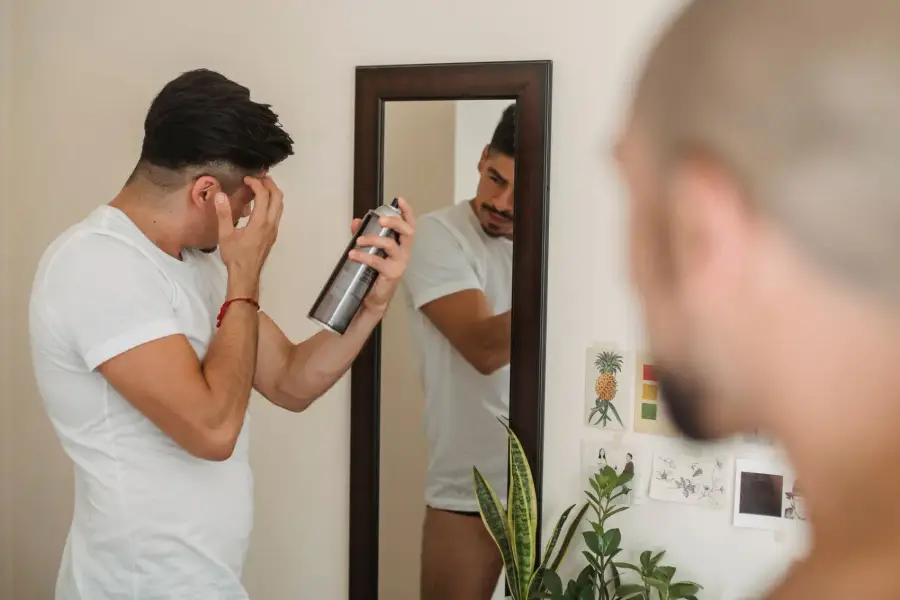
Sea salt spray, a light cream or mousse keeps the waves together. For men's hair, the goal is a defined but natural, textured look.
04
Scalp cleansing
Even if the ends are dry, the scalp needs regular cleansing, especially after workouts and wearing a helmet. A gentle shampoo cleans the scalp without drying out the lengths.
05
The right haircut length
Wavy hair takes shape after a certain length. Talking with your barber about the length where your waves will sit makes daily styling easier.
Wavy hair
Light but sufficient moisture
Step by step
Your care routine
3 steps
- 01
Focus on the scalp
Apply shampoo only to the scalp while massaging; the foam that runs down the lengths is enough. That way the dry ends don't get worn out.
- 02
Adjust the frequency
If there's no greasiness or sweat, washing every other day is usually enough for wavy hair. If you need to wash on workout days, choose a gentle shampoo or just rinse with conditioner.
- 03
Finish with lukewarm water and conditioner
Wash with lukewarm water, apply a light conditioner to the lengths and detangle with your fingers. Make the final rinse cool.
What you can add to your routine
Scalp and strand are separate
Even if the ends of wavy hair are dry, the scalp produces its own oil and carries its own community of microorganisms. Not cleaning the scalp enough can set the stage for dandruff and itching.
Balance after sweating
Sweat and sebum that build up during a workout change the scalp's moisture and pH balance. A gentle wash the same day helps preserve microbiome balance.
Reading labels
Ingredient guide
✓What helps
- Gentle surfactants (glutamate, isethionate, betaine derivatives): clean the scalp without drying out the lengths.
- Light humectants (glycerin, panthenol, hyaluronic acid): hold water without weighing the waves down.
- Light oils (in small amounts): reduce dryness and frizz at the ends.
- Sea salt sprays: give a textured, natural wave look; use a small amount on damp hair so they don't cause dryness.
- Styling polymers (mousse and gel formulas): keep the wave clumps together.
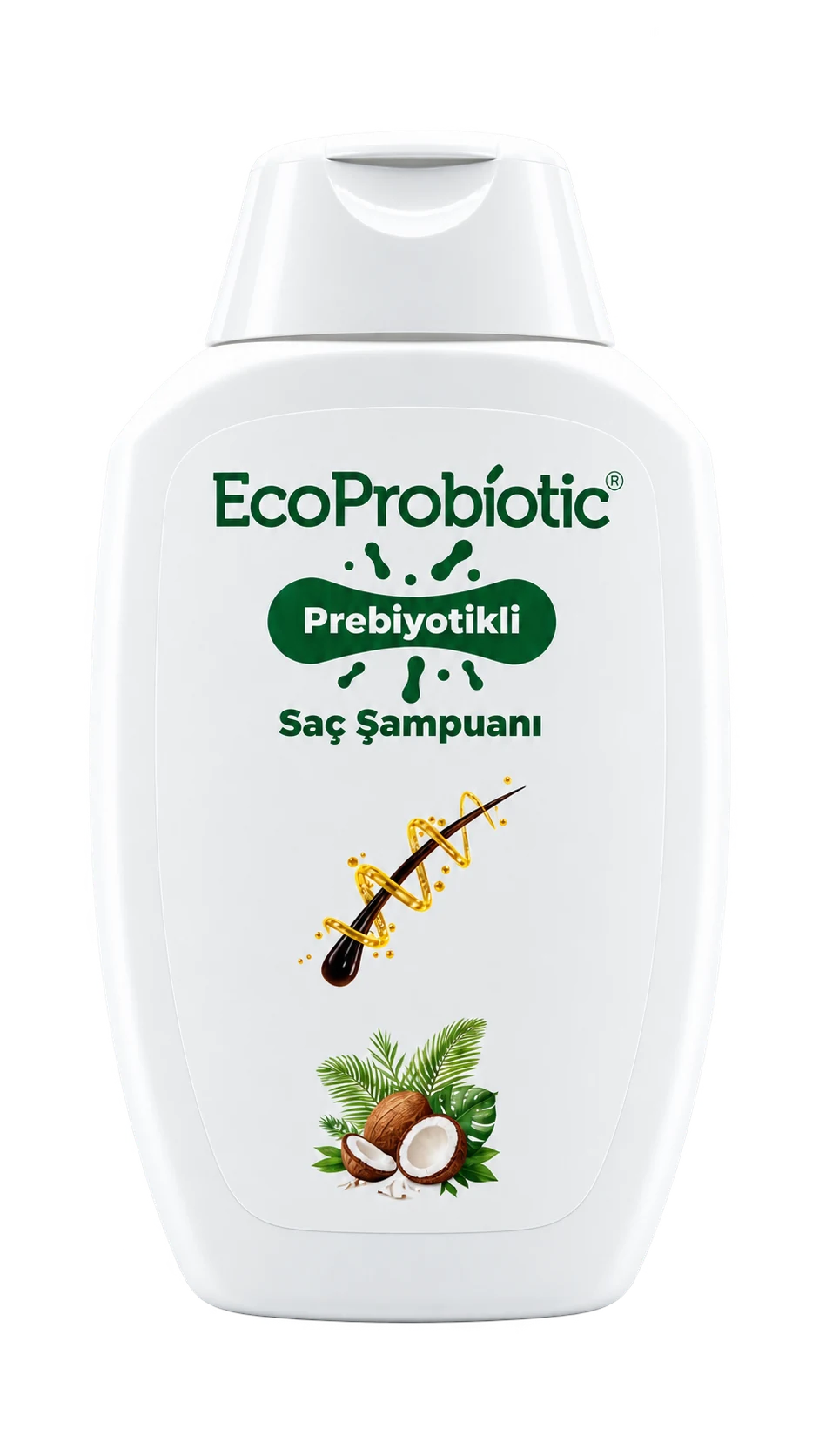
- Shampoos with prebiotic ingredients: can help support scalp microbiome balance.
!Be careful with
- Strong sulfates: can further dry out the already dry ends of wavy hair.
- Heavy oils and shiny wax: flatten the waves and make hair look plastered down.
- Frequent use of sea salt spray: can dry out the strand when used without moisture.
- Heavily alcohol-based sprays: can increase frizz.
- Products with heavy silicones: can build up and flatten the waves if you don't clarify.
Caution
Common mistakes
- ✕Combing and brushing wavy hair when it's dry.
- ✕Drying your hair by rubbing it hard with a towel.
- ✕Trying to flatten your waves with heavy wax or oil.
- ✕Touching your hair constantly while it dries; the wave clumps break apart.
- ✕Spraying a lot of sea salt spray on dry hair.
- ✕Constantly straightening your hair with a blow dryer and flat iron because you don't want the waves.
Popular searches
Most asked about Wavy hair
Your questions
Frequently asked questions
01Why does my hair get wavier as it grows?+
Waves come from the shape of the follicle and the inner structure of the strand; in a short cut the strand isn't long enough to bend, so the wave doesn't show. As your hair grows, this natural bend appears. In other words, your hair didn't become wavy later on; the wave was always there.
02Why does wavy hair get frizzy?+
The cuticle of wavy hair stays slightly open at the bends and easily pulls moisture from the air. Hair that lacks moisture frizzes more in humid weather. Light moisture care and not combing your hair while it's dry reduce frizz.
03What's the best product for wavy hair for men?+
For a natural, textured look, sea salt spray or a light cream is a good place to start. If you want a more controlled style, you can use a very small amount of matte clay or paste after your hair dries. Heavy, shiny wax usually flattens the waves.
04Should wavy hair be washed every day?+
If your scalp gets greasy or you work out every day, you can wash daily with a gentle shampoo. If your scalp is dry, washing every other day and rinsing with just water and conditioner in between protects your waves better.
05Is blow-drying wavy hair bad for it?+
Not when done right. Drying with a diffuser attachment, on medium heat and held away from the hair limits damage and protects your waves. Very hot direct air, on the other hand, dries out the strand and increases frizz.
Scientific basis
Sources
- 01Worldwide diversity of hair curliness: a new method of assessment
Loussouarn G, Garcel AL, Lozano I, et al. · International Journal of Dermatology 46(s1):2-6 · 2007 · doi:10.1111/j.1365-4632.2007.03453.x
Introduced a method that classifies hair curl by measures such as curve diameter and number of waves, and showed a wide worldwide diversity ranging from straight to very tightly coiled.
- 02The what, why and how of curly hair: a review
Cloete E, Khumalo NP, Ngoepe MN · Proceedings of the Royal Society A 475:20190516 · 2019 · doi:10.1098/rspa.2019.0516
Brings together why hair curls, the structure of a curly strand and its mechanical behavior, concluding that curl is a multilayered trait that starts at the hair follicle.
- 03Human hair and the impact of cosmetic procedures: a review on cleansing and shape-modulating cosmetics
Cruz CF, Costa C, Gomes AC, Matamá T, Cavaco-Paulo A · Cosmetics 3(3):26 · 2016 · doi:10.3390/cosmetics3030026
A review of how shampooing and shape-changing treatments affect the cuticle and cortex of the hair shaft.
- 04The shampoo pH can affect the hair: myth or reality?
Gavazzoni Dias MF, de Almeida AM, Cecato PM, et al. · International Journal of Trichology 6(3):95-99 · 2014 · doi:10.4103/0974-7753.139078
Showed that shampoos with a pH above 5.5 can increase the negative electrical charge and friction on the hair shaft, setting the stage for cuticle damage and breakage.
- 05Hair shaft damage from heat and drying time of hair dryer
Lee Y, Kim YD, Hyun HJ, Pi LQ, Jin X, Lee WS · Annals of Dermatology 23(4):455-462 · 2011 · doi:10.5021/ad.2011.23.4.455
Showed that using a hair dryer very close to the hair and at high heat increases cuticle damage, while drying from about 15 cm (6 inches) away with constant movement clearly reduces the damage.
- 06Hair cosmetics: an overview
Gavazzoni Dias MF · International Journal of Trichology 7(1):2-15 · 2015 · doi:10.4103/0974-7753.153450
A comprehensive review that summarizes, from a dermatological perspective, the ingredients of hair cosmetics such as shampoos, conditioners and styling products and their effects on the hair shaft.