Definition
What is Atopic dermatitis?
Atopic dermatitis, commonly called eczema, is a chronic skin condition marked by itching that flares up and calms down in cycles. The outermost layer of the skin, the barrier, normally works like a shield that keeps water in and irritants and microbes out. In atopic dermatitis, the mortar between the bricks of this shield is weak: skin loses water quickly, is left defenseless against outside irritants, and the immune system overreacts to even minor triggers. The result is skin that is dry, tight, red and, above all, itchy.
In men, eczema is often brushed off for years without a name, mistaken for 'dry skin', 'razor irritation' or an 'allergy'. Eczema that starts in childhood and goes quiet in the teen years can come back in adulthood with work stress, poor sleep, dry air from central heating, harsh shower gels or a new work environment. In some men it appears for the first time in their 20s or 30s. In adults, the most commonly affected areas are the inner elbows and backs of the knees, the neck, eyelids, hands and the skin under the beard.
Atopic dermatitis is not contagious and is not caused by poor hygiene; on the contrary, washing too often and too harshly makes it worse. It belongs to the same 'atopic' family as asthma, hay fever and food allergies, and the risk is higher if one of these runs in your family. The good news: eczema isn't a permanent 'flaw' but a manageable condition. With a routine that repairs the barrier every day, knowing your triggers and, when needed, treatments recommended by your dermatologist, most men can keep their flares under control.
Check yourself
How do you spot it?
- ✓Itching that gets worse in the evening and at night, sometimes waking you from sleep
- ✓Dry, pink-to-red patches on the inner elbows, backs of the knees, neck and nape
- ✓Flaking, burning and noticeable stinging after shaving under the beard and along the jawline
- ✓Thin, wrinkled, itchy dryness on the eyelids and around the eyes
- ✓Cracks on the hands, redness and oozing between the fingers
- ✓Thickened, leathery skin in areas that have been scratched for a long time
- ✓Small fluid-filled blisters and crusting during a flare
- ✓On darker skin, brown-gray discoloration instead of redness
- ✓Marks and lightening or darkening of the skin after scratching
Why it happens
Main causes
01
Genetic predisposition
The risk is higher if your mother, father or a sibling has eczema, asthma or hay fever. Differences in the genes that code for barrier proteins make the skin more fragile.
02
Weak barrier
Atopic skin has fewer barrier lipids such as ceramides and loses more water. That's why it gets irritated easily, even from an ordinary shower, a cold wind or a synthetic sweater.
03
An overreactive immune system
In atopic dermatitis, the immune system is prone to an allergy-type response. This response fuels itching and inflammation and can also reduce the production of barrier proteins.
04
Microbiome imbalance
During flares, the diversity of the skin microbiome drops and inflammation-linked bacteria take the lead. This imbalance can increase inflammation and itching.
05
Stress and lack of sleep
Flares become more frequent during periods of heavy workload, exams, military service or family stress. Stress hormones slow barrier repair, and sleep broken up by itching adds even more stress.
06
Environment and workplace
Dry air from central heating, air-conditioned offices, and jobs that involve contact with dust, cement, detergents or machine oil constantly strain the barrier. In adult men, a large share of hand and face eczema is linked to these daily exposures.
In daily life
Triggers that cause flare-ups
Medical approach
Treatment options
01
Regular moisturizing (the foundation of treatment)
In all guidelines, the cornerstone of treatment is barrier-repairing moisturizers. Your dermatologist may recommend using a generous amount of a fragrance-free barrier cream at least twice a day, even when you're not having a flare. The better you protect your skin between flares, the more the risk of a new flare may decrease.
02
Topical corticosteroids
During flares, your doctor may prescribe corticosteroid creams of different strengths to calm the inflammation. These creams should be used only on the areas your doctor recommends and for the recommended length of time; using them on your own for long periods on thin-skinned areas like the face, around the eyes and the groin can lead to skin thinning.
03
Topical calcineurin inhibitors
For sensitive areas like the face, eyelids and neck, your dermatologist may recommend non-steroidal creams that regulate inflammation. These creams are a common option especially for stubborn eczema in the beard area and around the eyes.
04
Phototherapy
For widespread eczema that isn't controlled well enough with creams, controlled narrowband ultraviolet light therapy can be given in dermatology clinics. Since it requires several sessions a week, it needs to be planned around your work schedule.
05
Systemic and biologic treatments
In moderate to severe atopic dermatitis, when quality of life and sleep are significantly affected, your dermatologist may recommend oral immune-modulating medications, injectable biologics or newer targeted tablets. These treatments require regular blood tests and medical follow-up.
06
Managing infection and itching
For patches that ooze, form yellow crusts or worsen quickly, your doctor will check for infection and arrange appropriate treatment if needed. If itching at night is disrupting your sleep, be sure to tell your dermatologist; controlling the itch is an important part of treatment.
Did you know? · Atopic dermatitis
7.3% · A large survey of US adults found the prevalence of atopic dermatitis to be 7.3%; about 40% of patients had moderate to severe disease.
Step by step
Care routine for Atopic dermatitis
5 steps
- 01
A short, lukewarm shower
Keep your shower to 5-10 minutes and the water lukewarm. Very hot water strips barrier lipids and makes itching worse.
- 02
Soap-free cleanser
For your body, choose a low-pH, fragrance-free, soap-free cleanser. Lather up only the armpits, groin and feet; on most days, simply rinsing the rest of your body with water is enough.
- 03
The three-minute rule
Pat dry with a towel and apply your barrier cream within the first three minutes, while your skin is still slightly damp.
- 04
Gentle shaving
If you have eczema in your beard area, use a sharp single- or twin-blade razor and shave with the grain. Instead of an alcohol-based aftershave, go for a fragrance-free, soothing post-shave balm.
- 05
Sun protection
Use a fragrance-free sunscreen with mineral filters or one suitable for sensitive skin on your face and neck.
Care you can use in your routine
EcoProbiotic MenCare range ↗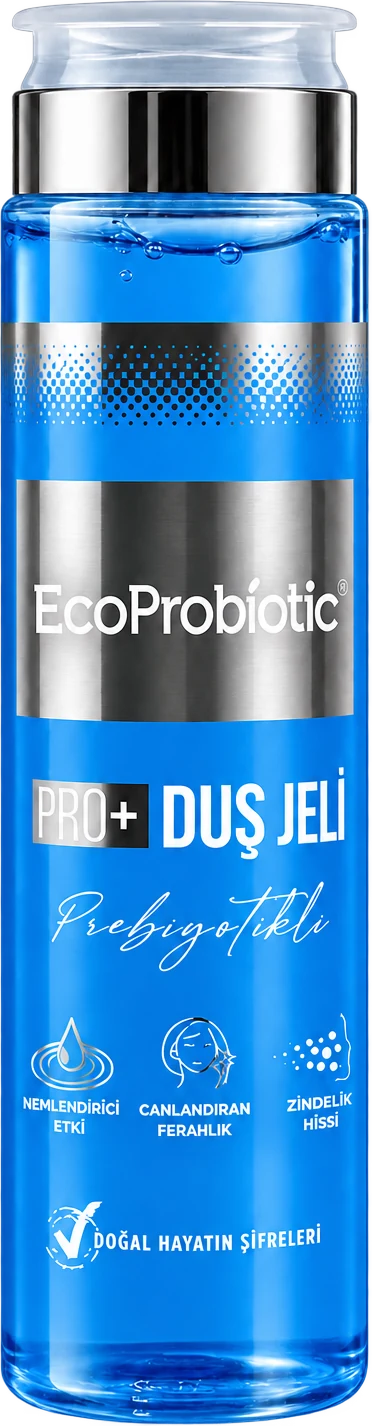 Body01Prebiotic Shower GelThoroughly cleanses the areas that hold sweat; moisturises the skin and supports its barrier. Morning or evening, every day.View ↗
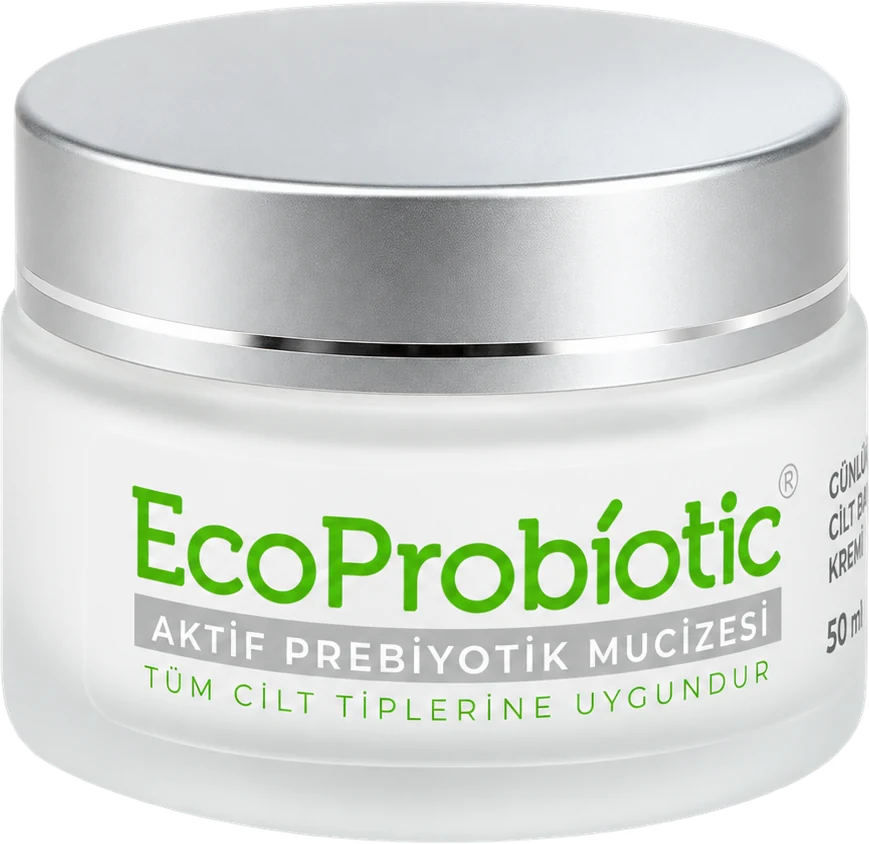 Moisturising02Prebiotic Face CreamA thin layer morning and evening; on shaving days, right after you shave. Moisturises the skin and supports its barrier.View ↗
Caution
What to avoid, and when to see a doctor?
Avoid these
- ✕Scrubbing your whole body with bar soap
- ✕Putting alcohol-based cologne or aftershave on irritated skin
- ✕Loofahs, exfoliating mitts and harsh scrubs
- ✕Using a prescription steroid cream for months without asking your doctor
- ✕Putting oils sold as 'natural' on patches without testing them first
- ✕Wearing a wool sweater directly against your skin
- ✕Waiting weeks for a flare to 'go away on its own'
- ✕Trying to calm the itch with hot water
See a dermatologist
- →If itching regularly interrupts your sleep
- →If patches are oozing, forming yellow crusts or spreading quickly
- →If you have pain, blurred vision or intense redness around your eyes
- →If eczema on your hands makes it hard to do your job
- →If there is no improvement after two to three weeks of regular moisturizing
- →If you have fever, fatigue and a widespread rash together
- →If a cream you were prescribed before is working less or your skin has started to thin
Common misconceptions
Myth or fact?
✕Common belief
Eczema is a childhood disease; adult men don't get it.
✓Fact
Atopic dermatitis is common in adults too. Eczema that starts in childhood can continue into adulthood or come back years later, and in some men it appears for the first time as an adult.
✕Common belief
Eczema comes from dirt, so you need to wash more often and more harshly.
✓Fact
Quite the opposite. Eczema is caused by a weak barrier, not poor hygiene. Harsh and frequent washing damages the barrier further; what you need is lukewarm water, a gentle cleanser and regular moisturizing.
✕Common belief
Steroid creams are always harmful and should never be used.
✓Fact
Corticosteroids used at the strength, on the areas and for the length of time your doctor recommends are an important tool for calming flares. The problem is uncontrolled, long-term use; being too afraid to use them at all can also make flares last longer.
Popular searches
Most asked about Atopic dermatitis
Your questions
Frequently asked questions
01Can you get eczema for the first time as an adult?+
Yes. Adult atopic dermatitis is either a continuation of childhood eczema or reappears after years of being quiet, triggered by stress, the work environment or a change in climate. In some men it starts for the first time in adulthood with no childhood history at all. Because contact dermatitis and psoriasis can look similar, it's important to have a dermatologist make the diagnosis.
02Does growing a beard make eczema worse?+
A beard alone doesn't cause eczema, but sweat, sebum and product residue that build up under it can strain the barrier. Washing your beard with a gentle, low-pH cleanser, drying it thoroughly and using a fragrance-free beard moisturizer helps. If frequent shaving triggers your eczema, a short beard may be an option that irritates your skin less.
03Can I work out if I have eczema?+
Yes, and it may even help since exercise reduces stress. The key is not leaving sweat on your skin for long: wear cotton or breathable clothing, take a short, lukewarm shower after your workout, then apply moisturizer. If you use a pool, rinse off the chlorinated water when you get out.
04Why does eczema get worse with stress?+
Stress hormones slow down the repair of the skin barrier and can increase the immune system's inflammatory response. You also tend to scratch more when you're stressed and your sleep gets interrupted, which makes your skin even more sensitive. Regular sleep, exercise and getting support when needed make a real difference in coping with flares.
05Is eczema contagious?+
No. Atopic dermatitis is not an infection; it doesn't spread through touch or by sharing towels or a bed. However, bacteria can get into itchy, broken patches, so you should see a doctor about areas that ooze or form yellow crusts.
06Which cream should I choose for eczema?+
A rich, fragrance-free, dye-free cream with barrier ingredients like ceramides and glycerin is a good place to start; formulas with prebiotic ingredients may help support microbiome balance. A cream or ointment texture is usually more effective than a lotion. During flares, moisturizer alone may not be enough and should be used together with the anti-inflammatory treatment your doctor recommends.
Scientific basis
Sources
- 01Atopic Dermatitis in America Study: A Cross-Sectional Study Examining the Prevalence and Disease Burden of Atopic Dermatitis in the US Adult Population.
Chiesa Fuxench ZC, Block JK, Boguniewicz M, Boyle J, Fonacier L, et al. · J Invest Dermatol · 2019 · doi:10.1016/j.jid.2018.08.028
The prevalence of atopic dermatitis among US adults was found to be 7.3%; 60.1% of patients had mild, 28.9% moderate and 11% severe disease.
- 02Atopic dermatitis.
Langan SM, Irvine AD, Weidinger S · Lancet · 2020 · doi:10.1016/S0140-6736(20)31286-1
A comprehensive review summarizing how atopic dermatitis relates to barrier dysfunction, the immune response and the microbiome, along with current treatment options.
- 03Atopic dermatitis.
Weidinger S, Novak N · Lancet · 2016 · doi:10.1016/S0140-6736(15)00149-X
A review covering the itchy, relapsing course of atopic dermatitis and the central role of moisturizing and inflammation control in treatment.
- 04Common loss-of-function variants of the epidermal barrier protein filaggrin are a major predisposing factor for atopic dermatitis.
Palmer CN, Irvine AD, Terron-Kwiatkowski A, Zhao Y, Liao H, et al. · Nat Genet · 2006 · doi:10.1038/ng1767
Common loss-of-function gene variants of the barrier protein filaggrin were shown to be one of the major predisposing factors for atopic dermatitis.
- 05Temporal shifts in the skin microbiome associated with disease flares and treatment in children with atopic dermatitis.
Kong HH, Oh J, Deming C, Conlan S, Grice EA, et al. · Genome Res · 2012 · doi:10.1101/gr.131029.111
During atopic dermatitis flares, skin bacterial diversity decreased and the share of an inflammation-linked bacterium increased; with treatment, diversity rose again.
- 06Antimicrobials from human skin commensal bacteria protect against Staphylococcus aureus and are deficient in atopic dermatitis.
Nakatsuji T, Chen TH, Narala S, Chun KA, Two AM, et al. · Sci Transl Med · 2017 · doi:10.1126/scitranslmed.aah4680
Beneficial bacterial strains that produce antimicrobial substances, common on healthy skin, were shown to be rare in people with atopic dermatitis, and this was linked to colonization by harmful bacteria.
- 07Clinical efficacy of emollients in atopic dermatitis patients - relationship with the skin microbiota modification.
Seité S, Zelenkova H, Martin R · Clin Cosmet Investig Dermatol · 2017 · doi:10.2147/CCID.S121910
In a double-blind study of 60 patients, a moisturizer containing a harmless bacterial biomass reduced the number and severity of flares, and the skin microbiome stayed more balanced.
- 08The global burden of atopic dermatitis: lessons from the Global Burden of Disease Study 1990-2017.
Laughter MR, Maymone MBC, Mashayekhi S, Arents BWM, Karimkhani C, et al. · Br J Dermatol · 2021 · doi:10.1111/bjd.19580
According to Global Burden of Disease data, atopic dermatitis was shown to be one of the skin diseases that places the greatest burden on quality of life.
- 09The human skin microbiome.
Byrd AL, Belkaid Y, Segre JA · Nat Rev Microbiol · 2018 · doi:10.1038/nrmicro.2017.157
A key review summarizing how the skin microbiome interacts with the barrier and the immune system and its role in diseases like atopic dermatitis.
- 10The role of topical probiotics in skin conditions: A systematic review of animal and human studies and implications for future therapies.
Knackstedt R, Knackstedt T, Gatherwright J · Exp Dermatol · 2020 · doi:10.1111/exd.14032
A systematic review showing that probiotics applied to the skin hold promise for supporting microbiome balance in conditions such as atopic dermatitis and acne, but that more research is needed.