Definition
What is Shaving irritation (razor burn)?
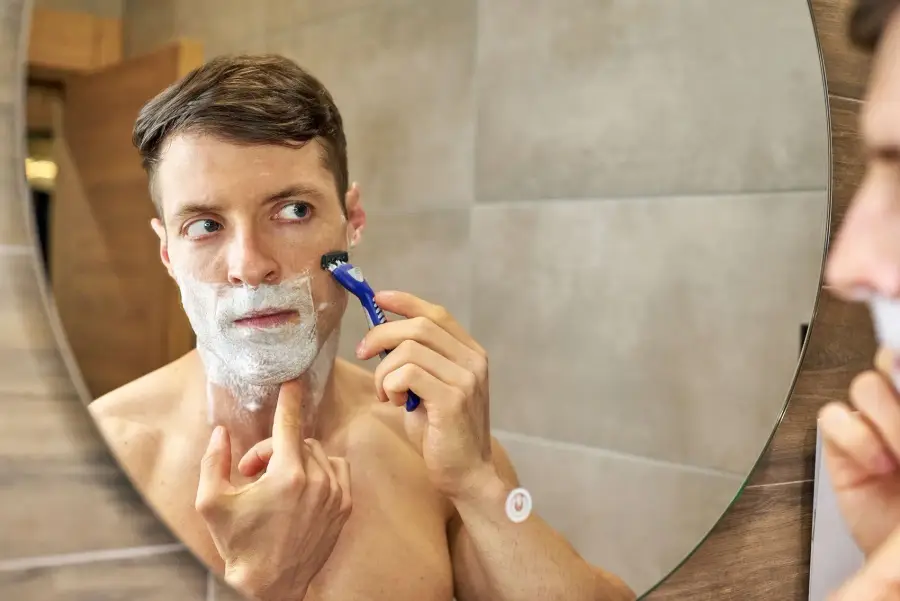
Shaving irritation (razor burn) is a superficial skin reaction that appears right after shaving or within a few hours, with redness, burning, stinging, itching and sometimes small red spots. As the blade cuts the hair, it also scrapes away part of the outermost protective layer of the skin. This micro-damage temporarily weakens the skin's line of defense; the skin loses more water, becomes exposed to irritants and responds with inflammation.
Razor burn is different from ingrown hairs. With ingrown hairs, the shaved hair grows back into the skin and inflamed bumps form over several days; shaving irritation, on the other hand, starts right after shaving and usually calms down within a few hours to a few days. The two can also occur together in the same person. The neck and under the jaw are the most commonly affected areas because the hair grows in different directions there and the skin is thinner.
In a survey study of shaving-related skin problems, the most common issues men reported were irritation and dryness, razor burn, nicks and ingrown hairs; these problems were linked both to the person's skin type and to their shaving technique. In other words, the solution is largely in your hands: proper prep, the right blade, the right direction and post-shave care that repairs the barrier.
Check yourself
How do you spot it?
- ✓Redness and a feeling of heat starting right after shaving
- ✓Burning, stinging and pain that gets worse when you apply aftershave
- ✓Itching, especially on the neck and under the jaw
- ✓Small red spots or bumps in the shaved area
- ✓Tightness, dryness and flaking of the skin
- ✓Small nicks and scrapes
- ✓Symptoms that calm down within a few hours to a few days
Why it happens
Main causes
01
Dry, unprepared shaving
Dry hair is much tougher and takes more force to cut. Shaving without softening the hair with water and without using shaving foam or gel makes the blade drag more against the skin.
02
A dull blade
A dull blade can't cut hair cleanly; it tugs and leaves more marks on the skin. The American Academy of Dermatology recommends replacing your blade or disposable razor every 5–7 shaves to reduce irritation.
03
Pressing down and going over the same spot
Pressing the blade into the skin and passing over the same area again and again increases the mechanical force on the skin. Biomechanical studies show that controlling these forces is critical for reducing irritation and redness.
04
Shaving against the grain
Shaving against the direction of hair growth for a smoother result puts more strain on the skin and raises the risk of both irritation and ingrown hairs.
05
Sensitive skin
Some men's skin is more sensitive to shaving. If you have conditions such as rosacea, eczema or seborrheic dermatitis, shaving irritation appears much more easily.
06
Irritating aftershave products
Aftershaves containing alcohol, menthol and heavy fragrance come back as burning and redness on skin whose barrier is already weakened.
In daily life
Triggers that cause flare-ups
Medical approach
Treatment options
01
Take a break from shaving
If the irritation is intense, taking a few days off from shaving is the most effective step for letting the barrier recover. During this time, you can keep your hair short with a trimmer.
02
Soothing, restorative care
A fragrance-free moisturizer with ingredients such as glycerin, ceramides, niacinamide and panthenol may support barrier repair. A cold compress can quickly relieve the burning feeling.
03
Short-term anti-inflammatory cream
If redness and itching are very intense and don't clear up within a few days, a dermatologist may recommend a low-potency anti-inflammatory cream for a short period of a few days. Don't use these creams on your own or for long periods.
04
See a doctor at signs of infection
If the redness has turned into inflamed bumps, yellow crusts have formed or the pain is increasing, folliculitis may have developed; a dermatologist may recommend antibacterial treatment.
05
Change your shaving method
With frequently recurring irritation, switching to an electric shaver or beard trimmer reduces the force on your skin. For some men, a single-blade razor also causes less redness. In the long run, laser hair removal can also be discussed with a dermatologist.
Did you know? · Shaving irritation (razor burn)
57.6% · In a study of 59 men, redness was measured on 57.6% of the shaved area right after shaving with a multi-blade cartridge razor; with a single-blade safety razor the figure was 40.3%.
Step by step
Care routine for Shaving irritation (razor burn)
5 steps
- 01
Shave after your shower
Soften your hair and skin with lukewarm water for a few minutes; shaving after your shower takes care of this step automatically.
- 02
Foam or gel
Use an alcohol-free, fragrance-free shaving gel or cream for sensitive skin and leave it on your stubble for a minute.
- 03
With the grain, without pressing
Shave with a sharp blade in the direction of hair growth using light, long strokes; rinse the blade after each pass and go over the same area as little as possible.
- 04
Cool rinse and pat dry
Rinse your face with cool water and pat it dry with a soft towel; don't rub.
- 05
Post-shave repair
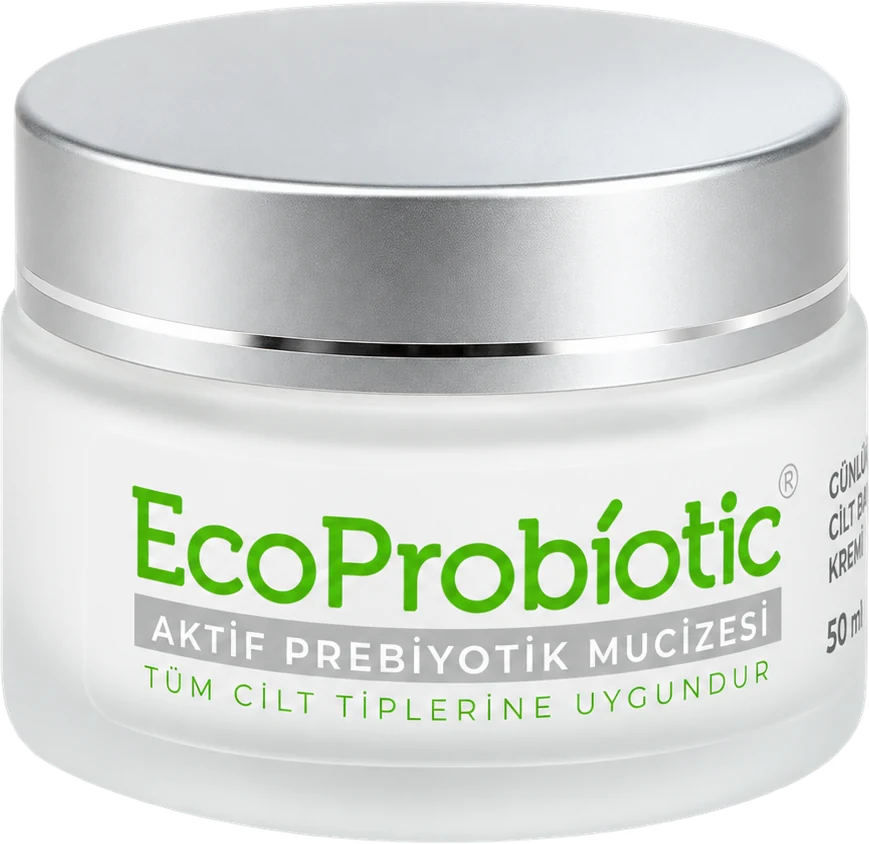
Apply an alcohol-free, fragrance-free aftershave balm or moisturizer with prebiotics and glycerin; then apply sunscreen.
Caution
What to avoid, and when to see a doctor?
Avoid these
- ✕Shaving a dry face
- ✕Keeping on with a dull blade
- ✕Pressing the blade down and going over the same spot repeatedly
- ✕Shaving against the grain (especially on the neck)
- ✕Alcohol-based aftershave and cologne
- ✕Sharing your razor with someone else
- ✕Applying acids, retinoids or exfoliants to irritated skin
See a dermatologist
- →If the irritation doesn't clear within a few days or comes back with every shave
- →If the redness has turned into inflamed pimples, yellow crusts or discharge
- →If dark spots or scars have started to form in the shaving area
- →If ingrown hairs and hard bumps come along with it
- →If you have a condition such as rosacea, eczema or seborrheic dermatitis and shaving flares it up
Common misconceptions
Myth or fact?
✕Common belief
The more blades, the less irritation.
✓Fact
The number of blades alone isn't decisive. In one study, a single-blade safety razor caused less redness than a three-blade cartridge razor. What matters is a sharp blade, good prep and the right technique; you'll need to experiment to find which razor suits you.
✕Common belief
If aftershave stings, it's working.
✓Fact
Stinging is a sign that alcohol and fragrance are irritating skin whose barrier has been scraped away. The goal after shaving is to soothe and moisturize your skin, not to burn it.
✕Common belief
Shaving makes hair grow back thicker and coarser.
✓Fact
Shaving doesn't affect the hair follicle; it doesn't change the thickness, color or growth rate of hair. The blunt tip of a cut hair just feels coarser.
Popular searches
Most asked about Shaving irritation (razor burn)
Your questions
Frequently asked questions
01How long does razor burn last?+
Mild irritation usually calms down within a few hours to two or three days. Taking a break from shaving and using a barrier-repairing moisturizer during this time speeds up recovery. If it lasts longer than a week or you have inflamed bumps, see a dermatologist.
02Electric shaver or razor?+
Because electric shavers have less contact with the skin, they usually cause less irritation on sensitive skin, but they don't cut as close as a razor. If you prefer a razor, a sharp blade, good prep and shaving with the grain noticeably reduce irritation. The best method is the one your skin reacts to least.
03What should I put on my face after shaving?+
An alcohol-free, fragrance-free aftershave balm or moisturizer containing glycerin, ceramides, niacinamide or prebiotics is the best choice. Cologne and alcohol-based lotions wear the barrier down even more.
04Why is the redness on my neck worse than on my face?+
On the neck, hair grows in different directions, the skin is thinner and shirt collars rub against it. That's why it helps to check the direction of hair growth on your neck beforehand, not press the blade down and, if needed, leave your neck short with a trimmer.
05I have to shave every day. What can I do?+
Shaving after a shower, a quality shaving gel, a sharp blade, a few passes with the grain and a repairing moisturizer after every shave noticeably reduce the toll of daily shaving. If your job requires you to shave every day and the problem continues, you can talk with your dermatologist about options such as laser hair removal.
Scientific basis
Sources
- 01Multispectral near-infrared spectroscopy study evaluating the effect of razor design on shaving-induced erythema
Boodoo C, Duta D, Swift N, et al. · Skin Research and Technology · 2024 · doi:10.1111/srt.13598
In 59 men, showed that a single-blade safety razor caused significantly less post-shave redness than a three-blade cartridge razor.
- 02Facial hair shaving behavior and skin problems of shaved areas of males
Sukakul T, Bunyaratavej S, Chaweekulrat P, et al. · Journal of Dermatology · 2021 · doi:10.1111/1346-8138.16034
In 340 men, found that the most common shaving problems were irritation and dryness, razor burn, nicks and ingrown hairs, and that these were linked to skin type and shaving technique.
- 03Insights into shaving and its impact on skin
Cowley K, Vanoosthuyze K · British Journal of Dermatology · 2012 · doi:10.1111/j.1365-2133.2011.10783.x
Emphasized that skin problems caused by poor shaving practices are common but often overlooked, and that their causes are frequently misunderstood.
- 04Male skin and ingredients relevant to male skin care
Draelos ZD · British Journal of Dermatology · 2012 · doi:10.1111/j.1365-2133.2011.10784.x
Showed that post-shave moisturizers containing glycerin and emollients support barrier function, and that ingredients like niacinamide can strengthen this effect.
- 05The biomechanics of blade shaving
Cowley K, Vanoosthuyze K · International Journal of Cosmetic Science · 2016 · doi:10.1111/ics.12330
By measuring the forces acting on skin and hair during shaving, showed that managing these forces is important for reducing irritation and inflammation.
- 06Innovative approaches to avoid electric shaving-induced skin irritation
Rietzler M, Maurer M, Siebenhaar F, et al. · International Journal of Cosmetic Science · 2016 · doi:10.1111/ics.12329
Examined the balance between effective hair cutting and skin comfort in electric shaving, as well as approaches to reduce irritation.
- 07Development of a novel in vitro strategy to understand the impact of shaving on skin health: combining tape strip exfoliation and human skin equivalent technology
Costello L, Goncalves K, Maltman V, et al. · Frontiers in Medicine · 2023 · doi:10.3389/fmed.2023.1236790
Developed a laboratory method combining tape stripping and human skin equivalent models to study the effect of shaving on the skin's protective surface layer.
- 08How to shave
American Academy of Dermatology · AAD Public Education · 2024
Recommends wetting your hair before shaving, using a shaving cream suited to sensitive skin, shaving with the grain and replacing your blade every 5–7 shaves to reduce irritation.
- 09The human skin microbiome
Byrd AL, Belkaid Y, Segre JA · Nature Reviews Microbiology · 2018 · doi:10.1038/nrmicro.2017.157
Showed that beneficial microbes living on the skin contribute to defense by making it harder for harmful microbes to settle in and by training the immune system.