Definition
What is Acne?
Acne is a chronic, inflammatory condition of the pilosebaceous unit, the structure formed by a hair follicle and its attached oil gland. The oil glands produce excess sebum, dead cells at the pore opening stick together and block the duct, the acne-associated bacterium that naturally lives on the skin gains the upper hand in this closed, oil-rich environment, and the immune system responds with inflammation. The result is blackheads and whiteheads, red bumps, inflamed pimples and sometimes deep, painful cysts.
In men, acne usually starts more severely during puberty, because rising testosterone and other androgens enlarge the oil glands and increase sebum production. Male acne doesn't stay on the face; it often spreads to the back, chest and shoulders, and severe, scarring types are known to be more common in men. Acne fades for many men after their teens, but a significant group keeps dealing with it into their twenties and thirties. Not every bump in the beard area is acne; ingrown hairs and folliculitis can look similar, so telling them apart matters.
Some everyday habits can feed acne: walking around for hours in a sweaty shirt after a workout, a helmet or beanie strap rubbing against your chin, drying out your face with harsh soaps, popping pimples and certain supplements taken to build muscle. Acne is not a sign of dirty skin; the solution is the treatment your dermatologist recommends combined with a simple, consistent routine that doesn't wear your skin down. Most acne treatments show clear results within 8–12 weeks.
Check yourself
How do you spot it?
- ✓Blackheads (open comedones) and whiteheads (closed comedones) on the nose, forehead and chin
- ✓Small red bumps that feel tender to the touch (papules)
- ✓Pimples with a yellow-white head of pus (pustules)
- ✓Deep, painful cysts and nodules that last for weeks
- ✓Widespread breakouts on the back, chest and shoulders (common in men)
- ✓Breakouts concentrated along the jawline and neck, where helmet or beanie straps touch
- ✓A T-zone that quickly turns shiny and oily during the day
- ✓Brown or red marks left behind after a pimple heals
- ✓Pitted or raised scars
Why it happens
Main causes
01
Androgen hormones
Testosterone and other androgens enlarge the oil glands and increase sebum production. In men this effect peaks during puberty; in some men the oil glands stay highly sensitive to hormones, so acne continues into adulthood.
02
Clogging at the pore opening
Cells lining the pore wall normally shed in an orderly way. In acne-prone skin these cells stick together and block the pore opening, forming the first stage: the microcomedone.
03
Bacterial balance and inflammation
A closed, oil-rich pore is an ideal environment for certain subtypes of the acne-associated bacterium to take over. The immune cells' response to this turns a closed comedone into a red, inflamed pimple.
04
Friction, pressure and sweat
Helmets, beanies, backpack straps, weight benches and tight gym shirts constantly rub against the skin and trap heat. Combined with sweat, this mechanical pressure can cause flare-ups known as "acne mechanica," especially on the back, shoulders and jawline.
05
Supplements and anabolic steroids
Anabolic-androgenic steroids used to build muscle are linked to severe, sudden-onset acne. Research on whey protein is mixed: one case-control study found whey use more common among young men with acne, while a six-month randomized trial found no significant worsening of acne in men taking whey.
06
Genetic predisposition
In men whose mother or father had severe acne, acne may start earlier, be more severe and last longer.
In daily life
Triggers that cause flare-ups
Medical approach
Treatment options
01
Topical retinoids
These vitamin A–derived creams unclog pores, reduce new comedone formation and calm inflammation. Guidelines strongly recommend them as a cornerstone of acne treatment. Since dryness and redness can occur in the first weeks, start at the frequency your dermatologist suggests; plan the timing with your dermatologist so they don't irritate the areas you shave.
02
Benzoyl peroxide and topical antibiotics
Benzoyl peroxide reduces the bacterial load and doesn't cause resistance. Topical antibiotics aren't used alone; they're combined with benzoyl peroxide or a retinoid to limit resistance. Keep in mind that benzoyl peroxide can bleach towels and pillowcases; using white fabrics makes life easier.
03
Salicylic acid and azelaic acid
Salicylic acid dissolves the oil inside pores and helps with blackheads and comedones. Azelaic acid targets both inflammation and the marks left after pimples. Guidelines list these two ingredients as conditional recommendations.
04
Oral antibiotics
For moderate to severe inflammatory acne, especially when it has spread to the back and chest, tetracycline-class antibiotics may be used for a limited time after a dermatologist's evaluation, and always together with topical treatment.
05
Oral vitamin A–derived treatment
For acne that is severe, scarring, emotionally draining or unresponsive to other treatments, guidelines strongly recommend oral vitamin A–derived treatment. Because it requires regular blood tests and close follow-up, it is used only under a dermatologist's supervision; during this time you should also follow your doctor's advice on heavy weight training and alcohol.
06
Procedures for scars and marks
Scar treatments such as chemical peels, lasers and microneedling can be planned with your dermatologist once your acne is under control. Starting scar treatment while breakouts are active is generally not recommended.
Did you know? · Acne
42.5% · In a US survey of 1,013 people over age 20, 42.5% of men aged 20–29 reported having acne; the rate was still above 20% among men in their 30s.
Step by step
Care routine for Acne
4 steps
- 01
Gentle cleansing
Use lukewarm water and a soap-free gel cleanser close to your skin's natural acidity. If your face feels tight afterward, the product is too harsh.
- 02
Shave smart
If you have active breakouts, shave with a single-blade razor or an electric trimmer, with the grain and without pressing; don't run the razor over pimples again and again.
- 03
Light moisturizer
Even oily skin needs moisturizer. A non-comedogenic gel moisturizer with prebiotics and ceramides supports your barrier.
- 04
Sunscreen
Acne treatments can make your skin sun-sensitive, and the sun darkens acne marks. Use a mattifying, non-comedogenic, broad-spectrum sunscreen every morning.
Care you can use in your routine
EcoProbiotic MenCare range ↗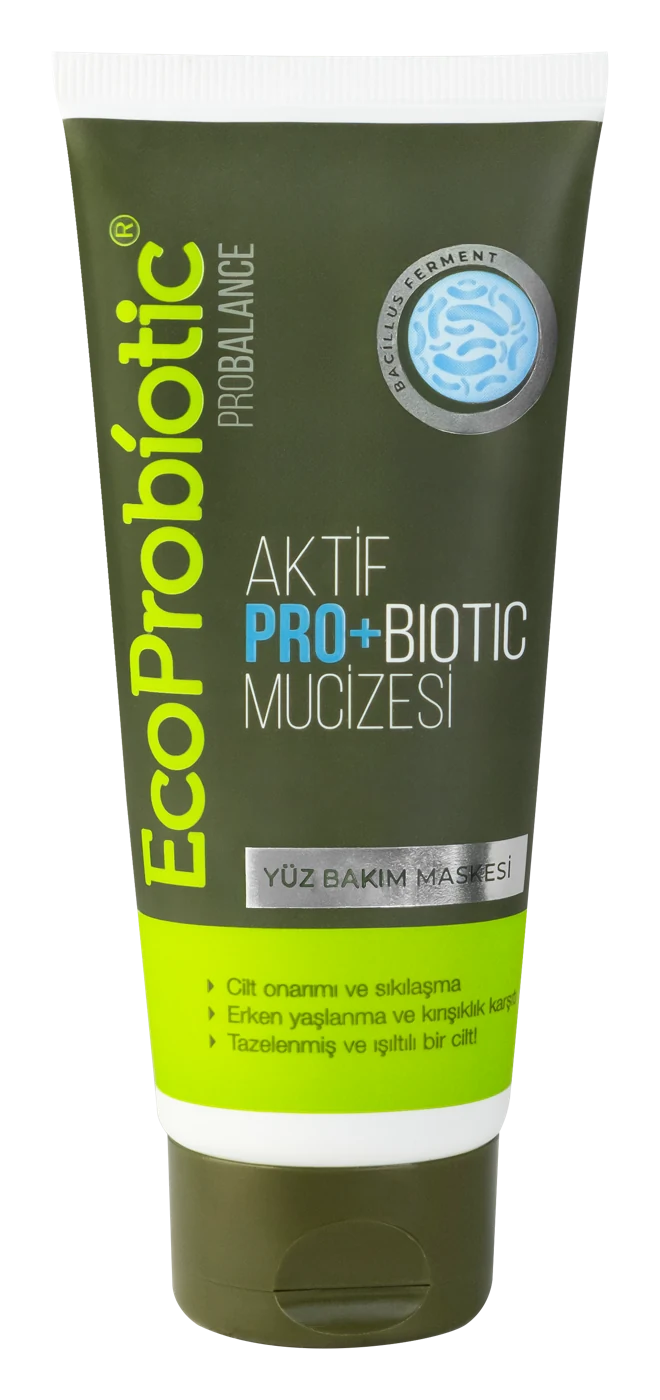 Weekly care01Prebiotic Volcanic Clay MaskOnce or twice a week, for ten minutes. Absorbs excess oil and leaves the skin matte and clean.View ↗
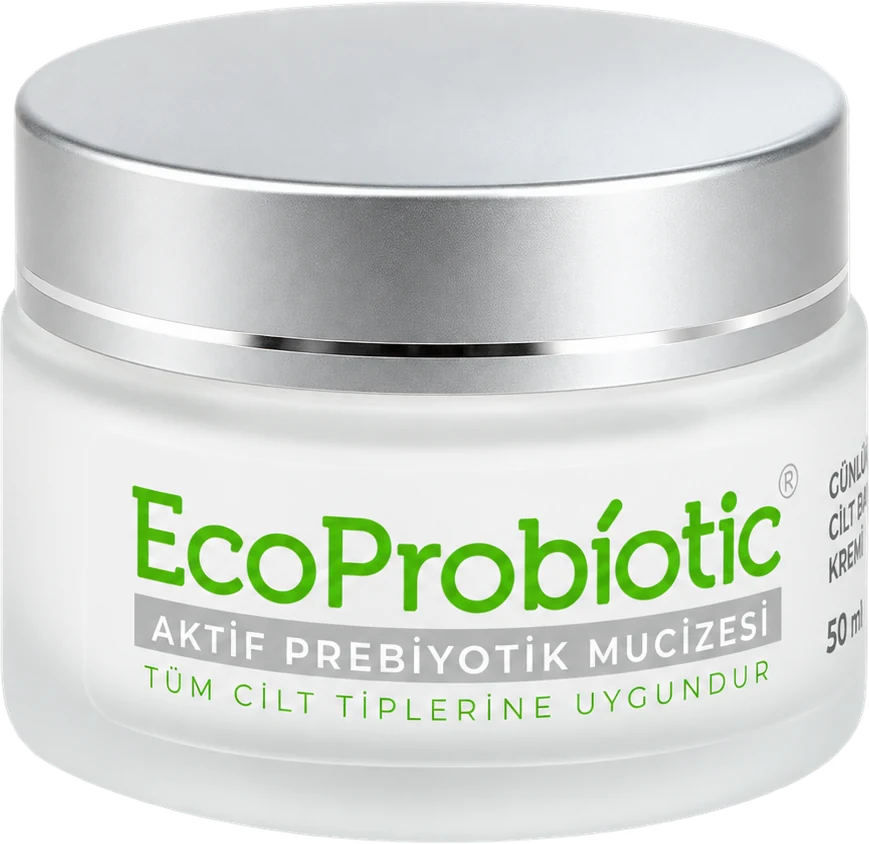 Moisturising02Prebiotic Face CreamA thin layer morning and evening; on shaving days, right after you shave. Moisturises the skin and supports its barrier.View ↗
Caution
What to avoid, and when to see a doctor?
Avoid these
- ✕Popping pimples, opening them with a needle or running a razor over them (raises the risk of scars and marks)
- ✕Washing your face more than twice a day and using harsh bar soaps
- ✕Alcohol-based aftershaves, cologne and "drying" home remedies (toothpaste, lemon, baking soda)
- ✕Gritty, harsh physical scrubs and scrubbing hard with a face brush
- ✕Using antibiotic creams on their own for months
- ✕Anabolic steroids and hormone-containing products without medical supervision
- ✕Staying in sweaty gym clothes for hours
- ✕Switching treatments after 2–3 weeks; most treatments take 8–12 weeks to show results
See a dermatologist
- →If you have deep, painful, cyst-like pimples
- →If your breakouts have started leaving scars, pits or lasting marks
- →If widespread acne is developing on your back, chest and shoulders
- →If you had a sudden, severe flare-up after using supplements or steroids
- →If over-the-counter products haven't helped within 2–3 months
- →If acne is affecting your confidence, work or social life
Common misconceptions
Myth or fact?
✕Common belief
Acne in men goes away on its own after age 20.
✓Fact
Although acne fades with age for many men, about 42% of men aged 20–29 and one in five men in their 30s reported acne. Waiting for it to go away on its own can raise the risk of scarring.
✕Common belief
Protein powder definitely causes acne.
✓Fact
The evidence is mixed. Some observational studies found a link between whey use and acne, while a six-month randomized trial found no significant worsening of acne in men taking whey. Tracking how your own skin responds and talking with your dermatologist is the healthiest approach.
✕Common belief
You shouldn't put moisturizer on oily, acne-prone skin.
✓Fact
Skipping moisturizer weakens your barrier and makes the dryness caused by treatment creams worse. A light, non-comedogenic moisturizer is part of the treatment.
Popular searches
Most asked about Acne
Your questions
Frequently asked questions
01I use protein powder. Is it causing my breakouts?+
It could be, but it's not certain. The research is mixed: some studies found a link between whey and acne, while a controlled trial saw no significant worsening. Before you stop the supplement, note when your breakouts flare and review it with your dermatologist. Anabolic steroids and hormone-containing products, on the other hand, are much more strongly linked to severe acne.
02Are the bumps in my beard area acne or ingrown hairs?+
If you also have blackheads, whiteheads and pimples on your forehead and nose, acne is more likely. If the bumps are only in the area you shave, you can see a hair in the middle and they get worse after shaving, they may be ingrown hairs or folliculitis. A dermatologist can tell them apart, and treatment differs accordingly.
03As an athlete, how can I reduce my back acne?+
Shower right after your workout, don't stay in a sweaty shirt, choose breathable fabrics and reduce friction from backpack straps. Using the body wash your dermatologist recommends in the shower can also help. Widespread, inflamed back acne may require oral treatment.
04How long does acne treatment take?+
A single inflamed pimple usually calms down within a few days to two weeks. With acne treatment, though, creams usually show clear results in 8–12 weeks. That's why it's important to stay patient instead of switching products after 2–3 weeks, and to review the results with your dermatologist.
05Does drinking milk cause acne?+
One meta-analysis found a link between milk and dairy consumption and acne; however, most of the studies were observational and the effect varies from person to person. Before cutting out dairy completely, it can help to keep a food diary and observe your own triggers.
06When do acne marks fade?+
Brown marks can fade on their own over months; using sunscreen consistently speeds up the process. Pitted scars, however, don't disappear on their own and can be addressed with dermatological procedures once your acne is under control.
Scientific basis
Sources
- 01Guidelines of care for the management of acne vulgaris
Reynolds RV, Yeung H, Cheng CE, et al. · Journal of the American Academy of Dermatology · 2024 · doi:10.1016/j.jaad.2023.12.017
The American Academy of Dermatology's current guideline gives strong recommendations for topical retinoids, benzoyl peroxide and, in severe acne, oral vitamin A–derived treatment.
- 02The prevalence of acne in adults 20 years and older
Collier CN, Harper JC, Cafardi JA, et al. · Journal of the American Academy of Dermatology · 2008 · doi:10.1016/j.jaad.2007.06.045
42.5% of men aged 20–29 and 20.1% of men aged 30–39 reported acne; acne remained a common problem well past adolescence.
- 03A global perspective on the epidemiology of acne
Tan JK, Bhate K · British Journal of Dermatology · 2015 · doi:10.1111/bjd.13462
Used global data to show that acne is one of the most common skin diseases worldwide and is very frequent during adolescence.
- 04Systematic review of the epidemiology of acne vulgaris
Heng AHS, Chew FT · Scientific Reports · 2020 · doi:10.1038/s41598-020-62715-3
Systematically reviewed studies on acne epidemiology, summarizing its prevalence and possible risk factors such as genetics and diet.
- 05Cutibacterium acnes (Propionibacterium acnes) and acne vulgaris: a brief look at the latest updates
Dréno B, Pécastaings S, Corvec S, et al. · Journal of the European Academy of Dermatology and Venereology · 2018 · doi:10.1111/jdv.15043
Showed that the problem in acne is less the amount of bacteria and more the balance between subtypes and a loss of microbial diversity, which triggers inflammation by stimulating innate immunity.
- 06Dairy Intake and Acne Vulgaris: A Systematic Review and Meta-Analysis of 78,529 Children, Adolescents, and Young Adults
Juhl CR, Bergholdt HKM, Miller IM, et al. · Nutrients · 2018 · doi:10.3390/nu10081049
Found a link between milk and dairy consumption and acne; however, most of the included studies were observational.
- 07Whey protein and male acne: A double-blind, randomized controlled trial
Sompochpruetikul K, Khongcharoensombat T, Chongpison Y, et al. · Journal of Dermatology · 2024 · doi:10.1111/1346-8138.17109
In men with mild to moderate acne, taking whey protein daily for six months did not significantly worsen acne compared with the control group.
- 08The Effect of Whey Protein Supplements on Acne Vulgaris among Male Adolescents and Young Adults: A Case-Control Study from North of Jordan
Muhaidat J, Qablan A, Gharaibeh F, et al. · Dermatology Research and Practice · 2024 · doi:10.1155/2024/2158229
Among 201 young male gym-goers, whey supplement use was more common in those with acne than in those without.
- 09Cutaneous Manifestations of Anabolic-Androgenic Steroid Use in Bodybuilders and the Dermatologist's Role in Patient Care
Furth G, Marroquin NA, Kirk J, et al. · JMIR Dermatology · 2023 · doi:10.2196/43020
Highlighted the link between anabolic-androgenic steroid use in bodybuilding and acne, including severe, sudden-onset forms.
- 10Changing our microbiome: probiotics in dermatology
Yu Y, Dunaway S, Champer J, et al. · British Journal of Dermatology · 2020 · doi:10.1111/bjd.18088
Reviewed laboratory and clinical findings on oral and topical probiotics in skin diseases including acne, noting that the results are promising but limited.