Definition
What is Oily skin, blackheads and large pores?
Oily skin is when the oil glands produce excess sebum, making the face look shiny and greasy. Sebum is actually part of the skin's natural protective layer: it holds in moisture, keeps the surface soft and contributes to your line of defense. The problem starts when production exceeds what the skin needs; excess oil mixes with dead cells at the pore opening, forms a plug, and your face quickly gets shiny during the day.
A blackhead (open comedone) is sebum and cell debris that builds up in a pore with an open mouth and darkens when it's exposed to air; in other words, it isn't dirt. Large pores become noticeable for three main reasons: high sebum production, loss of elasticity in the tissue around the pore, and the size of the hair follicle. Research shows that men have larger pores and that pore size is more strongly linked to sebum levels in men; beard hair also makes the follicles on a man's face more visible.
Under the influence of androgen hormones, male skin produces more sebum than female skin, and this production barely declines with age. Hot, humid weather, heavy sweating, the habit of drying out your face with harsh soaps and sun damage can make things worse. It isn't possible to permanently "close" pores; but with proper cleansing, regular pore care and sun protection, you can noticeably improve their appearance.
Check yourself
How do you spot it?
- ✓Noticeable shine on the forehead, nose and chin a few hours after washing
- ✓Stubborn blackheads on the sides of the nose and on the chin
- ✓Visible, orange-peel-like pores on the cheeks and nose
- ✓Oil marks left on tissues or your phone screen
- ✓A thick, rough feel to the skin
- ✓Frequent whiteheads and small pimples
- ✓Sunscreen or moisturizer that won't "sit" on the skin and slides off
- ✓A gray, tired-looking complexion by the end of the day
Why it happens
Main causes
01
Androgen hormones
Testosterone and its derivatives enlarge the oil glands and increase production. That's why male skin is oilier than female skin and sebum production doesn't drop significantly with age.
02
Genetics and skin type
The size and number of oil glands are largely inherited. Men whose families have oily skin and large pores often see the same picture.
03
Loss of elasticity and sun damage
Age and unprotected sun exposure weaken the supporting tissue around the pores. Slackening tissue makes the pore opening look wider and more visible.
04
Hair follicle size
In the beard area, hair follicles are thicker and denser. This helps make pores look more prominent, especially on the cheeks and jawline.
05
Heat, humidity and sweat
In hot weather, sebum becomes more fluid and spreads across the surface more easily. Combined with sweat, the tendency toward shine and clogging increases.
06
The wrong skincare
Washing several times a day with harsh soap, using alcohol-based lotions and skipping moisturizer wears out the barrier. In some people, red and tight skin responds by producing even more oil.
In daily life
Triggers that cause flare-ups
Medical approach
Treatment options
01
Topical retinoids
Vitamin A–derived creams unclog pores, reduce blackheads and can help improve the look of pores over the long term. They're among the best-evidenced options for oily skin and pores; start at the frequency your dermatologist recommends.
02
Salicylic acid
Because it's an oil-soluble acid, it penetrates into the pore and helps dissolve the plug of sebum and cell debris. For blackheads it can be used as a cleanser, toner or gel.
03
Niacinamide
In clinical studies, niacinamide, a form of vitamin B3, has been seen to reduce the amount of sebum on the surface. Because it also supports the barrier, it's a low-irritation helper ingredient that suits male skin.
04
Chemical peels and lasers
Chemical peels and certain laser treatments performed under a dermatologist's supervision can help improve pore appearance and skin texture. Which procedure is right depends on your skin type and the cause of your pores.
05
Oral treatments
When excess oiliness comes with severe acne, a dermatologist may consider oral vitamin A–derived treatment, which significantly reduces sebum production. This treatment requires close follow-up and is used only on a doctor's decision.
Did you know? · Oily skin, blackheads and large pores
300 people · In measurements of 300 people aged 20–74, men's skin produced more sebum than women's in every age group, and it stayed steady rather than declining with age.
Step by step
Care routine for Oily skin, blackheads and large pores
4 steps
- 01
Gel cleanser
Use lukewarm water and a soap-free, low-foam gel cleanser. Cleanse for 30–60 seconds with your fingertips, without scrubbing.
- 02
Targeted ingredient
A light serum or toner with niacinamide or salicylic acid can target shine and blackheads in your T-zone.
- 03
Light moisturizer
Choose an oil-free, non-comedogenic gel moisturizer with prebiotics; oily skin needs hydration too.
- 04
Mattifying sunscreen
Sun damage enlarges pores. Use a mattifying, lightweight, non-comedogenic broad-spectrum sunscreen every morning.
Care you can use in your routine
EcoProbiotic MenCare range ↗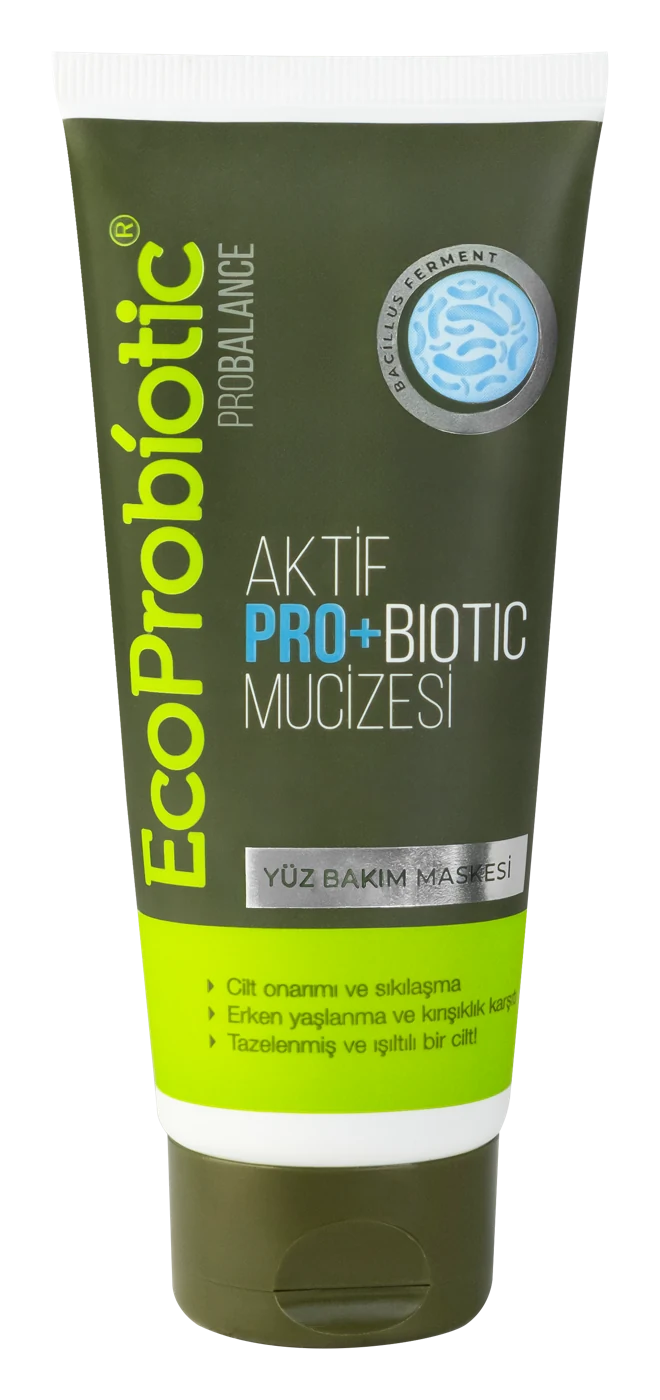 Weekly care01Prebiotic Volcanic Clay MaskOnce or twice a week, for ten minutes. Absorbs excess oil and leaves the skin matte and clean.View ↗
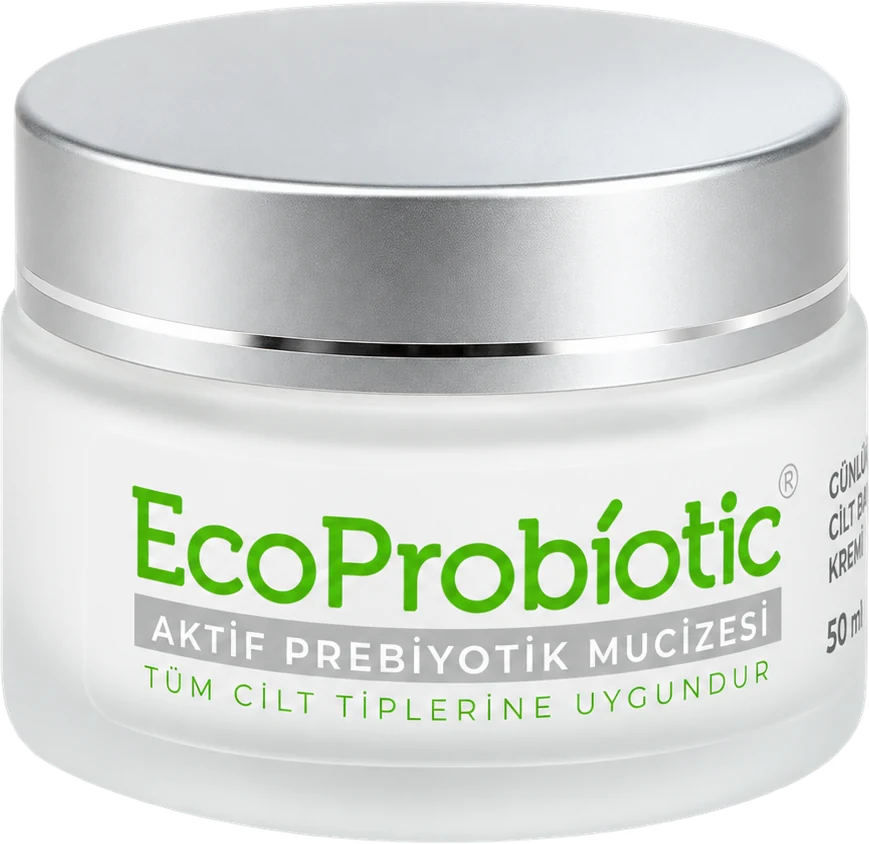 Moisturising02Prebiotic Face CreamA thin layer morning and evening; on shaving days, right after you shave. Moisturises the skin and supports its barrier.View ↗
Caution
What to avoid, and when to see a doctor?
Avoid these
- ✕Squeezing blackheads with your fingernails (risk of inflammation, scarring and enlarged pores)
- ✕Washing your face with harsh soap more than twice a day
- ✕Alcohol-based toners, cologne and aftershaves
- ✕Harsh gritty scrubs and rubbing your face with a towel
- ✕Using pore strips and peel-off masks often
- ✕Giving up moisturizer completely
- ✕Heavy, greasy creams and pore-clogging products
See a dermatologist
- →If inflamed breakouts and scarring come along with the oiliness
- →If your pore and blackhead problem hasn't improved within 3 months despite a consistent routine at home
- →If you've noticed persistent redness, thickening or bumpiness around your nose
- →If you have flaking and itching along with the oiliness
- →If you're considering procedures like lasers or chemical peels
Common misconceptions
Myth or fact?
✕Common belief
Blackheads are dirt; the more you wash, the fewer you'll have.
✓Fact
A blackhead's color doesn't come from dirt but from sebum and cell debris in the pore darkening when exposed to air. Overwashing damages the barrier and doesn't solve the problem; ingredients that work inside the pore are more effective.
✕Common belief
Ice or cold water permanently closes pores.
✓Fact
Cold can tighten the skin briefly, but it doesn't permanently change pore size. Pore appearance improves with sebum control, pore care and sun protection.
✕Common belief
Oily skin doesn't need moisturizer.
✓Fact
Oil and hydration are not the same thing. A light moisturizer supports the barrier and may help reduce reactive oiliness caused by irritation.
Popular searches
Most asked about Oily skin, blackheads and large pores
Your questions
Frequently asked questions
01Why are my pores so large?+
Research points to three main causes of large pores: high sebum, loss of elasticity around the pore and the size of the hair follicle. Being male has also been linked to pore size. That's why a routine that balances sebum and protects against the sun is the step that most affects their appearance.
02Are pore strips bad for you?+
Occasional use generally doesn't cause problems, but frequent use can irritate the skin, and strips don't clean inside the pore; they only remove the top of the plug at the surface. Ingredients that work inside the pore, like salicylic acid and retinoids, give longer-lasting results.
03How many times a day should I wash my face?+
Twice a day, morning and evening, is enough. You can add an extra wash after working out; however, washing more often and more harshly damages the barrier.
04What moisturizer is right for oily skin?+
Gel or light lotion formulas that are oil-free and non-comedogenic are best. Ingredients such as prebiotics, ceramides and niacinamide support the barrier, while heavy oils can clog pores.
05Can pores shrink permanently?+
It isn't possible to make pores disappear, but their appearance can be noticeably reduced. Regular use of a retinoid or acid, sebum control and sun protection can make a difference within a few months; dermatological procedures can also help.
06Does growing a beard make my skin oilier?+
A beard doesn't increase oil production, but sebum, sweat and dead cells that build up under the beard can lead to clogging and itching if they aren't washed regularly. It's important to clean the bearded area regularly too, with your face cleanser or beard shampoo.
Scientific basis
Sources
- 01Skin physiology in men and women: in vivo evaluation of 300 people including TEWL, SC hydration, sebum content and skin surface pH
Luebberding S, Krueger N, Kerscher M · International Journal of Cosmetic Science · 2013 · doi:10.1111/ics.12068
Showed that sebum production in men's skin is higher than in women's at every age and stays steady with age, and that skin pH is lower in men.
- 02Sebum output as a factor contributing to the size of facial pores
Roh M, Han M, Kim D, et al. · British Journal of Dermatology · 2006 · doi:10.1111/j.1365-2133.2006.07465.x
Found that pore size is linked to sebum output, age and male sex, and that the relationship between sebum and pore size is stronger in men.
- 03Sebum, acne, skin elasticity, and gender difference - which is the major influencing factor for facial pores?
Kim BY, Choi JW, Park KC, et al. · Skin Research and Technology · 2013 · doi:10.1111/j.1600-0846.2011.00605.x
Showed that male sex, increased sebum and reduced skin elasticity are the factors most strongly linked to visible facial pores.
- 04Facial Pores: Definition, Causes, and Treatment Options
Lee SJ, Seok J, Jeong SY, et al. · Dermatologic Surgery · 2016 · doi:10.1097/DSS.0000000000000657
Stated that the three main causes of large pores are high sebum, loss of elasticity around the pore and increased hair follicle volume, and that treatment should be tailored to the cause.
- 05Oily skin: an overview
Sakuma TH, Maibach HI · Skin Pharmacology and Physiology · 2012 · doi:10.1159/000338978
Reviewed how oily skin results from enlarged oil glands producing excess sebum, and how diet, age, sex and a hot, humid climate can affect oiliness.
- 06Oily Skin: A review of Treatment Options
Endly DC, Miller RA · Journal of Clinical and Aesthetic Dermatology · 2017
Examined retinoids, cosmeceutical ingredients, oral treatments and procedures such as lasers for oily skin, along with their mechanisms and level of evidence.
- 07The effect of 2% niacinamide on facial sebum production
Draelos ZD, Matsubara A, Smiles K · Journal of Cosmetic and Laser Therapy · 2006 · doi:10.1080/14764170600717704
In placebo-controlled studies, niacinamide applied to the skin was seen to reduce facial sebum production and surface oil.
- 08The human skin microbiome
Byrd AL, Belkaid Y, Segre JA · Nature Reviews Microbiology · 2018 · doi:10.1038/nrmicro.2017.157
Showed that oily, moist and dry skin sites host different microbial communities, with oil-loving microbes dominating the oily areas.
- 09The role of topical probiotics in skin conditions: A systematic review of animal and human studies and implications for future therapies
Knackstedt R, Knackstedt T, Gatherwright J · Experimental Dermatology · 2020 · doi:10.1111/exd.14032
Reported that probiotics applied to the skin showed promising results in conditions such as acne and eczema, but that larger, well-designed studies are needed.