Definition
What is Dark spots and hyperpigmentation?
Hyperpigmentation is darkening that happens when the pigment melanin is overproduced or builds up in an area of skin. Three types of dark spots are most common in men. The first is sun spots (solar lentigines): well-defined light or dark brown spots that appear on the forehead, cheeks, nose, backs of the hands and on a receding hairline after years of accumulated sun exposure. These spots increase with age and are a sign of photoaging.
The second is post-inflammatory hyperpigmentation: brown or dark marks left behind after anything that inflames the skin, such as a pimple, ingrown hair, razor cut, insect bite or burn. Inflammation stimulates pigment cells and leads to excess pigment production. In olive and darker skin tones, these marks are much more common and last longer. The red-purple marks left after acne, on the other hand, usually come not from pigment but from enlarged small blood vessels and are called post-inflammatory erythema. Pitted acne scars are a separate problem caused by a loss of skin tissue.
The third is specific to men: shaving-related marks. Frequent shaving against the grain causes curly or coarse beard hairs to grow back into the skin (ingrown hairs). This leaves bumps, inflammation and, over time, dark spots under the jaw and on the neck. The good news is that most post-inflammatory marks can fade with time and the right care, without permanent damage to the skin. Sun spots can be noticeably lightened with consistent protection and dermatological methods. The same rule applies to both types: without sun protection, no dark spot treatment gives lasting results.
Check yourself
How do you spot it?
- ✓Flat brown or dark marks left behind after a pimple heals
- ✓Flat red-purple marks after acne (post-inflammatory erythema)
- ✓Well-defined brown sun spots on the forehead, cheeks, nose and backs of the hands
- ✓Darkening and small dark dots under the jaw and on the neck after shaving
- ✓Dark rings around ingrown hairs
- ✓Spots that get more noticeable in summer and fade a little in winter
- ✓Overall uneven tone and a dull look on the face
- ✓Pigmentation on a receding forehead and on the scalp
Why it happens
Main causes
01
Sun exposure
Sun spots are strongly linked to both long-term and intermittent sun exposure, and especially to sunburns before age 20. The sun also darkens existing post-inflammatory marks and slows their fading.
02
Acne
Acne is common in men, especially with oily skin and olive to darker skin tones. Acne-related marks often last longer than the pimple itself, and for many people they're as bothersome as, or even more bothersome than, the acne.
03
Squeezing and picking
Squeezing pimples, picking off scabs and trying to dig out ingrown hairs with a needle deepens inflammation and makes the mark darker. Studies on acne marks emphasize that picking is a modifiable risk factor.
04
Shaving and ingrown hairs
The tips of curly and coarse beard hairs can grow back into the skin after shaving. This leads to a foreign-body reaction, itching, bumps and, over time, dark spots. Shaving against the grain, too close and too often increases this risk.
05
Skin tone
In olive and darker skin tones, where pigment cells are more active, post-inflammatory marks are more common, darker and longer-lasting. In lighter skin, red marks after acne are more noticeable.
06
Visible light
Not only UV but also visible light can cause pigmentation, especially in darker skin. Research has shown that pigmentation caused by visible light can be darker and longer-lasting.
In daily life
Triggers that cause flare-ups
Medical approach
Treatment options
01
Sun protection first
Dermatologists' first recommendation for every type of dark spot is a high-protection, broad-spectrum sunscreen used every day. For darker skin, tinted sunscreens with iron oxides provide extra protection against visible light. Dark spot treatments without protection don't give lasting results.
02
Getting acne under control
As long as active acne continues, new marks will form. Depending on how severe your acne is, your dermatologist may recommend topical retinoids, azelaic acid or, if needed, oral treatments. Topical retinoids can help both control acne and fade marks.
03
Brightening ingredients
Ingredients such as niacinamide, azelaic acid, vitamin C, kojic acid, tranexamic acid and AHAs can help fade dark spots. Clinical studies have shown that niacinamide helps fade spots by reducing the transfer of pigment to skin cells. Strong brightening agents are used only after a doctor's assessment and for set periods of time.
04
Chemical peels and lasers
Light chemical peels and selected laser treatments can be especially effective for sun spots. Because procedures done with the wrong settings can darken spots in darker skin, they should be planned by an experienced dermatologist.
05
Tackling razor marks at the root
For marks caused by ingrown hairs, the first step is changing your shaving habits: shaving with the grain, using a sharp single blade or a trimmer that doesn't shave the beard all the way down, or growing a beard for a while. If needed, your dermatologist may also recommend longer-lasting options such as laser hair removal.
06
Patience
Post-inflammatory marks usually fade over months, and deeper ones take longer. With dark spot treatment, results start to show in 8-12 weeks; switching products before then can slow your progress.
Did you know? · Dark spots and hyperpigmentation
58.2% · Among 324 people who saw a dermatologist for acne in seven Asian countries, 58.2% had post-acne marks (post-inflammatory hyperpigmentation); in most people the marks lasted at least a year.
Step by step
Care routine for Dark spots and hyperpigmentation
4 steps
- 01
Gentle cleansing
Wash your face with lukewarm water and a gel cleanser that doesn't leave your skin feeling tight. Don't scrub spot-prone areas; clean them gently with your fingertips.
- 02
Antioxidant or niacinamide serum
A serum with vitamin C or niacinamide helps fade spots and adds an extra layer of defense against the sun.
- 03
Light moisturizer
Use an oil-free, non-pore-clogging moisturizer with prebiotics. For oily skin, a gel texture is enough.
- 04
Broad-spectrum sunscreen
Apply a generous amount of high-protection sunscreen to your face, neck and ears. If you're outside, reapply every 2 hours. If you have darker skin, tinted formulas give an extra shield against visible light.
Care you can use in your routine
EcoProbiotic MenCare range ↗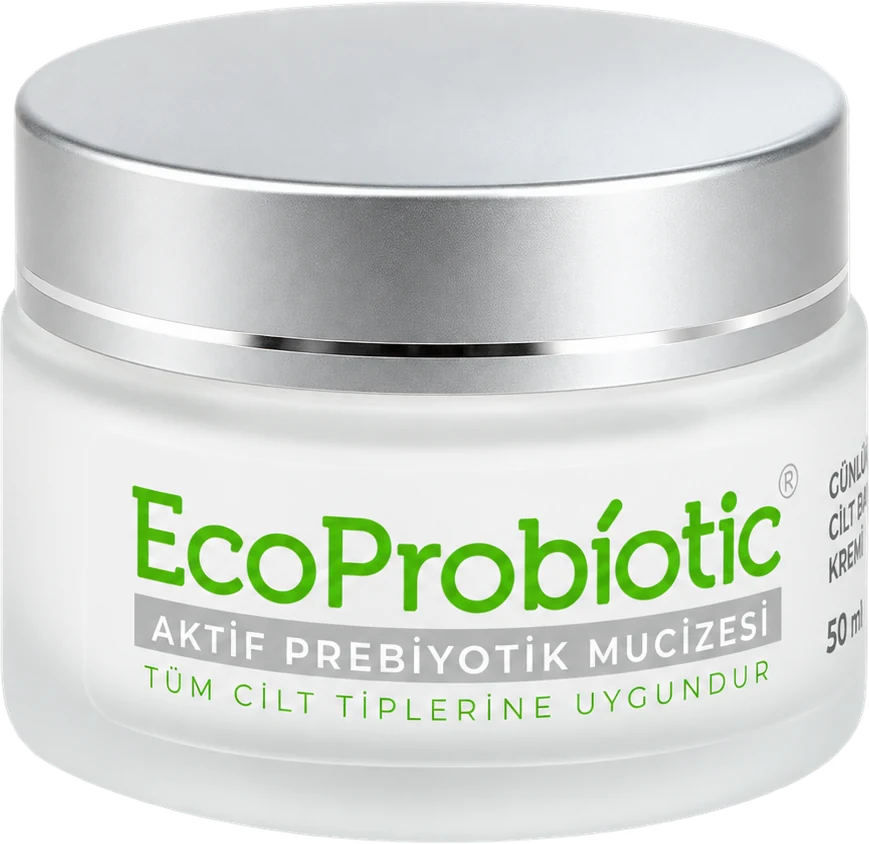 Moisturising01Prebiotic Face CreamA thin layer morning and evening; on shaving days, right after you shave. Moisturises the skin and supports its barrier.View ↗
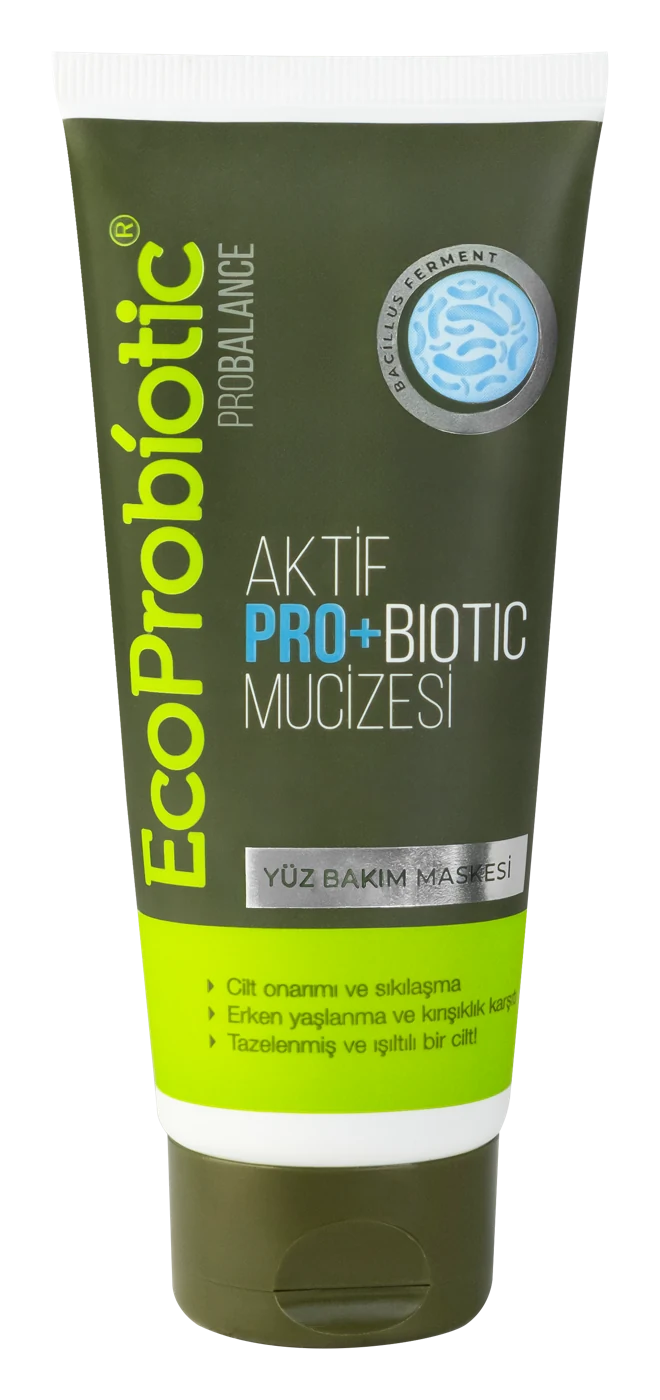 Weekly care02Prebiotic Volcanic Clay MaskOnce or twice a week, for ten minutes. Absorbs excess oil and leaves the skin matte and clean.View ↗
Caution
What to avoid, and when to see a doctor?
Avoid these
- ✕Squeezing pimples and picking off scabs
- ✕Picking at ingrown hairs with a needle or tweezers
- ✕Homemade brighteners like lemon, vinegar, baking soda or toothpaste
- ✕«Whitening» creams with unclear ingredients
- ✕Alcohol-based aftershaves
- ✕Frequent shaving against the grain with a dull razor
- ✕Using sunscreen only in summer
- ✕Using several strong acids and retinoids at the same time
See a dermatologist
- →If a spot doesn't fade or keeps growing despite several months of consistent sun protection
- →If a spot's color, border or texture is different; if it's raised, bleeds or changes quickly
- →If you've noticed a new spot with irregular borders or more than one color
- →If your acne is still active and new marks keep forming
- →If bumps, inflammation and marks after shaving keep coming back
- →If you've had burning, redness or unexpected darkening after using a product
Common misconceptions
Myth or fact?
✕Common belief
Lemon and baking soda fade dark spots.
✓Fact
Lemon and baking soda disrupt the skin's pH balance, irritate the barrier and, combined with sun, can cause burns and new spots. They're more likely to darken spots than fade them.
✕Common belief
Scraping a spot or scrubbing it with a harsh exfoliant fades it fast.
✓Fact
Harsh scrubbing and abrasive exfoliants create new inflammation in the skin. Inflammation can stimulate pigment cells again and make the spot darker. Gentle, consistent care gives faster results.
✕Common belief
Men don't need to do anything special for dark spots; they fade over time.
✓Fact
Some post-inflammatory marks can fade with time, but without sun protection this can take years, and sun spots don't go away on their own. A simple sunscreen and the right shaving habits make a noticeable difference.
Popular searches
Most asked about Dark spots and hyperpigmentation
Your questions
Frequently asked questions
01How long do acne dark spots take to fade?+
Superficial post-inflammatory marks usually fade within 3-12 months; deeper marks can take longer. With sun protection and the brightening products your dermatologist recommends, this time can be shortened noticeably. Picking at the mark makes the process longer.
02Are acne scars and acne marks the same thing?+
No. An acne mark is a flat, brown or red-purple color change and can fade over time. An acne scar is a pitted or raised change in skin texture and doesn't go away on its own. For scars, your dermatologist may recommend different methods such as lasers or microneedling.
03Why does my neck and the area under my jaw darken after shaving?+
This darkening is usually post-inflammatory marks caused by ingrown hairs and the repeated irritation of shaving. Shaving with the grain, with a sharp blade and less often, using an alcohol-free soothing balm afterward and not picking at ingrown hairs help reduce new marks.
04Does niacinamide work for dark spots?+
Niacinamide is an ingredient with proven effects in studies that can help fade spots by reducing the transfer of pigment to skin cells. Because it also supports the barrier and oil balance, it's a well-tolerated option that suits men's skin. Results take a few months of consistent use plus sun protection.
05Do sun spots go away on their own?+
Sun spots usually don't go away on their own, and they can multiply as sun exposure continues. Consistent sun protection slows the formation of new spots; for existing spots, your dermatologist may recommend brightening creams, peels or lasers.
06What kind of doctor should I see for dark spots?+
For dark spots you should see a dermatologist (skin specialist). Your dermatologist will identify the type of spot, check any spot with a suspicious shape or color for skin cancer and put together a treatment plan that suits you.
Scientific basis
Sources
- 01Frequency and characteristics of acne-related post-inflammatory hyperpigmentation
Abad-Casintahan F, Chow SK, Goh CL, Kubba R, Hayashi N, Noppakun N, See J, Suh DH, Xiang LH, Kang S · The Journal of Dermatology · 2016 · doi:10.1111/1346-8138.13263
Post-acne marks were found in 58.2% of 324 people who saw a dermatologist for acne; in most people the marks lasted at least a year, and picking emerged as a modifiable risk factor.
- 02Postinflammatory hyperpigmentation: a review of the epidemiology, clinical features, and treatment options in skin of color
Davis EC, Callender VD · The Journal of Clinical and Aesthetic Dermatology · 2010
Summarized that post-inflammatory hyperpigmentation is more common and longer-lasting in darker skin and that sun protection and brightening agents are the foundation of treatment.
- 03The Pathogenesis and Management of Acne-Induced Post-inflammatory Hyperpigmentation
Elbuluk N, Grimes P, Chien A, Hamzavi I, Alexis A, Taylor S, Gonzalez N, Weiss J, Desai SR, Kang S · American Journal of Clinical Dermatology · 2021 · doi:10.1007/s40257-021-00633-4
Highlighted that acne-related marks appear more often as pigment in darker skin and as redness in lighter skin, and are often more bothersome than active acne.
- 04Pigmentation Disorders: Diagnosis and Management
Plensdorf S, Livieratos M, Dada N · American Family Physician · 2017
Summarized diagnostic and treatment approaches for common pigment disorders such as sun spots, post-inflammatory marks and melasma.
- 05Pseudofolliculitis barbae; current treatment options
Ogunbiyi A · Clinical, Cosmetic and Investigational Dermatology · 2019 · doi:10.2147/CCID.S149250
Reported that shaving-related ingrown hairs lead to bumps, inflammation and post-inflammatory marks in the beard area, and that changing shaving habits is the core approach.
- 06Impact of long-wavelength UVA and visible light on melanocompetent skin
Mahmoud BH, Ruvolo E, Hexsel CL, Liu Y, Owen MR, Kollias N, Lim HW, Hamzavi IH · Journal of Investigative Dermatology · 2010 · doi:10.1038/jid.2010.95
Showed that visible light also causes pigmentation in darker skin and that this pigmentation can be darker and longer-lasting than that from long-wavelength UVA.
- 07The effect of niacinamide on reducing cutaneous pigmentation and suppression of melanosome transfer
Hakozaki T, Minwalla L, Zhuang J, Chhoa M, Matsubara A, Miyamoto K, Greatens A, Hillebrand GG, Bissett DL, Boissy RE · British Journal of Dermatology · 2002 · doi:10.1046/j.1365-2133.2002.04834.x
Showed that niacinamide helps reduce skin pigmentation by suppressing the transfer of pigment to skin cells.
- 08Solar lentigines are strongly related to sun exposure in contrast to ephelides
Bastiaens M, Hoefnagel J, Westendorp R, Vermeer BJ, Bouwes Bavinck JN · Pigment Cell Research · 2004 · doi:10.1111/j.1600-0749.2004.00131.x
Showed that sun spots increase with age and are strongly linked to both chronic and intermittent sun exposure, as well as to sunburns before age 20.
- 09Postinflammatory hyperpigmentation
DermNet · DermNet NZ · 2023
Explained that post-inflammatory hyperpigmentation can develop after anything that inflames the skin and that sun protection is essential while it fades.