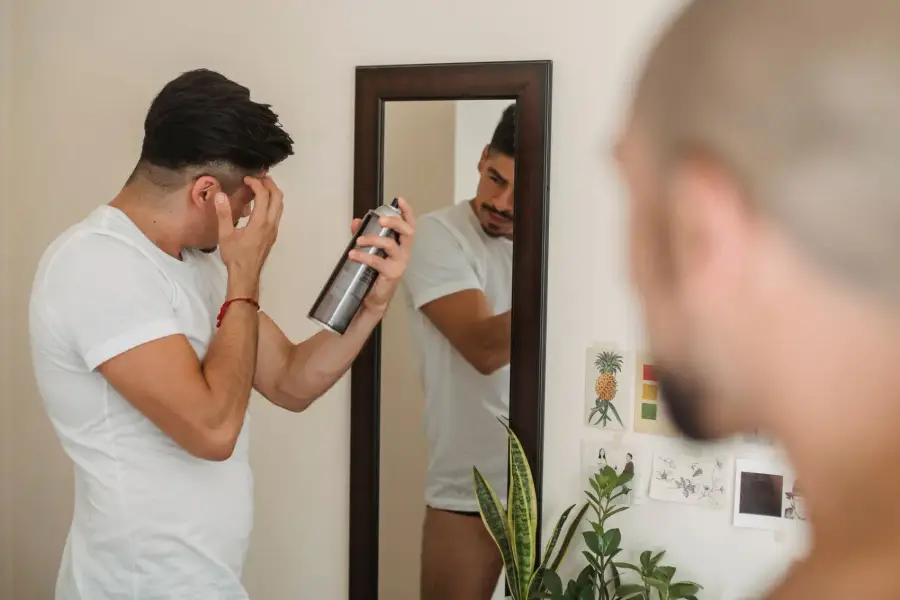
Self-test
Is this type yours?
- ◎When you use a new shampoo or styling product, your scalp burns, stings or tingles.
- ◎You feel pain at your hair roots when you touch your hair or change the direction it lies.
- ◎After a haircut with clippers or a razor, your scalp gets red and itchy.
- ◎Your scalp itches more during stressful periods, in hot weather or when you sweat.
- ◎There's no obvious rash on your scalp, but there's a constant feeling of discomfort.
- ◎Your face also gets red and burns with certain products.
In depth
What happens at the root?
A sensitive scalp is the scalp version of skin sensitivity. Subjective symptoms such as itching, burning, stinging, tingling or pain at the hair roots appear without any visible disease on the scalp; sometimes mild redness comes with them. Research shows that a substantial share of people describe these symptoms and that the perception of a sensitive scalp is common worldwide. The scalp is rich in nerve endings and blood vessels; when the protective layer weakens, these nerve endings are stimulated more easily, and things that normally cause no discomfort create a burning or itching sensation.
Triggers vary from person to person: harsh surfactants, heavy fragrance and essential oils, alcohol-based products, hair dyes, hot water, hot and humid weather, sweat, pollution, stress and lack of sleep are the most commonly reported. In men, very short cuts done with clippers or a razor can increase sensitivity by creating friction and small irritations on the scalp surface. The sun also directly affects a scalp with short hair. The first step in managing a sensitive scalp is to reduce triggers and switch to simple care that supports the scalp's protective layer. If noticeable redness, flaking or hair loss comes with it, another underlying condition needs to be looked into.
Priorities
What does it need?
01
Simple ingredients
The fewer the ingredients, the fewer the triggers. Fragrance-free or very lightly scented products with short ingredient lists are better suited for a sensitive scalp.
02
Gentle cleansing
Harsh sulfates and very foamy shampoos can strain the scalp. Shampoos with mild surfactants and a pH close to that of the scalp should be your choice.
03
Soothing
Ingredients that soothe and support the protective layer can help reduce burning and itching sensations.
04
Reducing mechanical irritation
Using sharp, clean clippers without pressing them into the scalp, and soothing care after the cut, reduce irritation.
05
Knowing your triggers
Noting when your symptoms get worse makes it easier to find your personal triggers.
Sensitive scalp
Simple ingredients
Step by step
Your care routine
4 steps
- 01
Lukewarm water
Hot water stimulates nerve endings and weakens the protective layer. Wash with lukewarm or cool water.
- 02
A small amount of gentle shampoo
Use a small amount of a fragrance-free or lightly scented gentle shampoo. Rub your scalp softly with your fingertips, not your nails.
- 03
Rinse thoroughly
Shampoo residue left on the scalp can increase sensitivity. Rinse until the foam is completely gone.
- 04
Wash right after sweating
Sweat and salt can increase stinging and itching on a sensitive scalp. After a workout, gently wash your scalp the same day.
What you can add to your routine
The line of defense and sensitivity
The scalp's protective layer and beneficial microorganisms together form a line of defense. When this line weakens, irritants get in more easily and nerve endings are stimulated more easily.
Simple care preserves balance
Using lots of products and harsh cleansing can disrupt the scalp's mildly acidic environment and microorganism balance. A routine built on a few simple products helps maintain balance.
Reading labels
Ingredient guide
✓What helps
- Gentle surfactants (glutamate, isethionate, glucoside derivatives): clean the scalp without straining it.
- Fragrance-free or very lightly scented formulas: reduce the number of triggers.
- Panthenol, allantoin and bisabolol: can bring relief with their soothing effects.
- Ceramides and glycerin: can help support the scalp's protective layer.
- Niacinamide (at low concentrations): can help support the protective layer.
- Prebiotic ingredients: can help support microbiome balance on a sensitive scalp.
!Be careful with
- Heavy fragrance and essential oils: among the most commonly reported triggers for a sensitive scalp.
- Strong sulfates: can weaken the protective layer.
- Alcohol-based tonics and sprays: can cause stinging and burning.
- Menthol and strong cooling ingredients: in some people they can create a burning sensation instead of a fresh feeling.
- Hair dyes and permanent treatments: can carry a risk of irritation and allergy on a sensitive scalp; a patch test before use is a must.
Caution
Common mistakes
- ✕Trying a different product every time you feel a burning sensation and straining your scalp even more.
- ✕Using products heavy in menthol and alcohol for a fresh feeling.
- ✕Pressing clippers into your scalp and using a dull blade.
- ✕Scratching your scalp with your nails.
- ✕Washing with very hot water.
- ✕Not seeing a dermatologist even though there is noticeable redness, flaking or hair loss.
Popular searches
Most asked about Sensitive scalp
Your questions
Frequently asked questions
01Is a sensitive scalp really a thing?+
Yes. Research shows that a substantial share of people describe symptoms such as burning, stinging, itching and pain on the scalp, and that this condition is common worldwide. Even without a visible disease, it's linked to the scalp's nerve endings being stimulated more easily.
02Why do my hair roots hurt?+
Pain at the hair roots is one of the common symptoms of a sensitive scalp and can get worse with stress, fatigue, tight headwear or keeping your hair in the same direction for a long time. If the pain comes with hair loss, redness or flaking, you should see a dermatologist.
03Why does my scalp get red after a haircut?+
Clippers and razors create friction and small irritations on the scalp surface. A dull blade, unclean clippers and pressing down while cutting make this worse. Applying a fragrance-free, soothing lotion after the cut, and talking to your barber about clipper hygiene if the redness keeps coming back, helps.
04Can gel or wax make your scalp itch?+
The fragrance, alcohol and preservatives in some styling products can cause itching on a sensitive scalp. Applying product to the strands rather than the scalp, washing it out well in the evening and choosing products with simple ingredients reduce this risk.
05Which shampoo should you choose for a sensitive scalp?+
A fragrance-free or very lightly scented shampoo with gentle surfactants, a short ingredient list and a pH close to that of the scalp is a good place to start. It's also important to try a new product on a small area first.
Scientific basis
Sources
- 01Sensitive scalp: does this condition exist? An epidemiological study
Misery L, Sibaud V, Ambronati M, et al. · Contact Dermatitis 58(4):234-238 · 2008 · doi:10.1111/j.1600-0536.2007.01288.x
An epidemiological study in France found that a substantial share of participants described sensitive scalp symptoms such as stinging, burning and itching.
- 02Perceived prevalence of a sensitive scalp: a worldwide study
Misery L, Halioua B, Skayem C, Baissac C, et al. · Journal of the European Academy of Dermatology and Venereology 38(2):e191-e192 · 2024 · doi:10.1111/jdv.19527
A study with participants from many countries reported that the perception of a sensitive scalp is common worldwide.
- 03Sensitive scalp and trichodynia: epidemiology, etiopathogenesis, diagnosis, and management
Souza EN, Anzai A, Fechine COC, Valente NYS, Romiti R · Skin Appendage Disorders 9(6):407-415 · 2023 · doi:10.1159/000533795
Reviews how a sensitive scalp shows up with subjective symptoms such as itching, burning, stinging and hair pain, has many internal and external triggers, and is approached first through scalp care.
- 04The itchy scalp - scratching for an explanation
Bin Saif GA, Ericson ME, Yosipovitch G · Experimental Dermatology 20(12):959-968 · 2011 · doi:10.1111/j.1600-0625.2011.01389.x
Reviews the nerve-, immune- and barrier-related mechanisms behind scalp itch and its most common causes.
- 05Shampoos: ingredients, efficacy and adverse effects
Trüeb RM · Journal der Deutschen Dermatologischen Gesellschaft 5(5):356-365 · 2007 · doi:10.1111/j.1610-0387.2007.06304.x
Examines, from a dermatological perspective, the effectiveness and possible side effects of the surfactants, conditioning agents and preservatives found in shampoos.
- 06Natural skin surface pH is on average below 5, which is beneficial for its resident flora
Lambers H, Piessens S, Bloem A, Pronk H, Finkel P · International Journal of Cosmetic Science 28(5):359-370 · 2006 · doi:10.1111/j.1467-2494.2006.00344.x
Showed that the natural pH of the skin surface is on average below 5 and that this mildly acidic environment suits the resident beneficial microorganisms.