Self-test
Is this type yours?
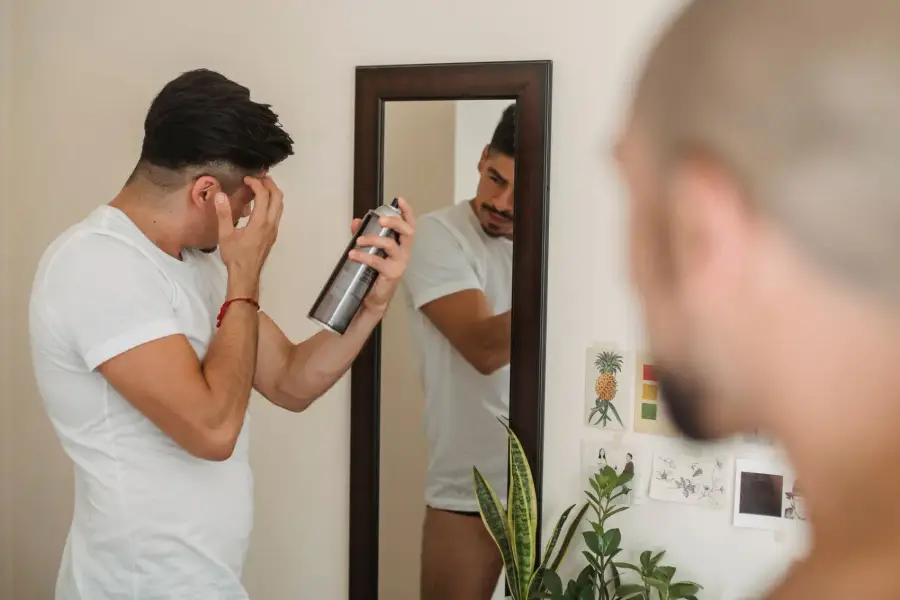
- ◎Your scalp feels tight and itches, especially after a shower.
- ◎Fine, white, dry flakes fall onto your shoulders and dark clothes.
- ◎The flakes aren't oily or sticky; they scatter easily like dust.
- ◎Your symptoms get worse in winter, in rooms with central heating or after a hot shower.
- ◎Besides your scalp, the skin on your hands, arms and legs is dry too.
- ◎Your hair also looks dry and dull and gets staticky quickly.
In depth
What happens at the root?
The scalp is part of your skin too, and its outermost layer is a protective one made of cells stacked like a brick wall, with fats filling the spaces between them. This layer limits water escaping and irritants getting in. Ceramides are like the mortar of this wall. When the protective layer weakens, the scalp loses water, feels tight, sheds fine flakes, and itching starts because nerve endings are stimulated more easily. Research shows that a dry, flaky scalp has lower protective function and ceramide levels, and that supporting it with ceramide-like ingredients can reduce dryness and itching.
The main triggers of a dry scalp are very hot water, harsh and frequently used shampoos, cold and dry winter air, centrally heated rooms and hard water. In men with short haircuts, the scalp is more exposed to sun and wind, so dryness and sensitivity can be felt sooner. Dry scalp and dandruff are often confused: dry scalp flakes are fine, white and powdery, while dandruff flakes are usually larger, yellowish and oily. Telling them apart correctly matters, because dandruff shampoos can make a dry scalp even drier. Conditions such as atopic dermatitis and psoriasis can also cause dryness and flaking on the scalp; symptoms that don't go away require a physician's evaluation.
Priorities
What does it need?
01
Support the protective layer
When the scalp barrier weakens, water loss and itching increase. Ingredients like ceramides, glycerin and panthenol can help support this layer.
02
Gentle cleansing
A dry scalp reacts to harsh surfactants. Choose a mild, lightly scented shampoo with a pH close to that of your scalp.
03
Water temperature
A hot shower gives temporary relief but strips away protective oils. Lukewarm water is the simplest and most effective change for a dry scalp.
04
Adjust for the season
Dryness increases in winter and in centrally heated rooms. During this period, you should reconsider how often you wash and which products you choose.
05
Telling them apart
Dryness and dandruff need different care. Choosing the right path by looking at the type of flakes and how oily your scalp is matters.
Dry scalp
Support the protective layer
Step by step
Your care routine
3 steps
- 01
Lukewarm water and a short shower
Wash your hair with lukewarm water and don't make your shower too long. Making the final rinse a bit cooler can reduce itching.
- 02
Gentle shampoo
Use a small amount of a lightly scented shampoo with mild surfactants and massage gently with your fingertips. Don't scratch with your nails.
- 03
Adjust the frequency
If there's no sweating or oiliness, washing every other day is usually enough. If you need to wash after a workout, use a small amount of gentle shampoo.
What you can add to your routine
The protective layer and the microbiome are a team
The scalp's protective layer and the beneficial microorganisms that live there form a line of defense that works together. A mildly acidic surface suits beneficial microorganisms; harsh cleansing can disrupt this environment and weaken the balance.
Dryness shifts the balance
When the protective layer weakens, the scalp's moisture and pH balance changes. This can affect the makeup of the microorganism community and increase itching and sensitivity.
Reading labels
Ingredient guide
✓What helps
- Ceramides and ceramide-like ingredients: can help support the scalp's protective layer.
- Glycerin, hyaluronic acid and panthenol: help hold moisture in the scalp.
- Gentle surfactants (glutamate, isethionate, betaine derivatives): clean the scalp without drying it out.
- Soothing ingredients such as allantoin and bisabolol: can help reduce feelings of itching and tightness.
- Light oils (jojoba oil, squalane): can limit moisture loss from the scalp.
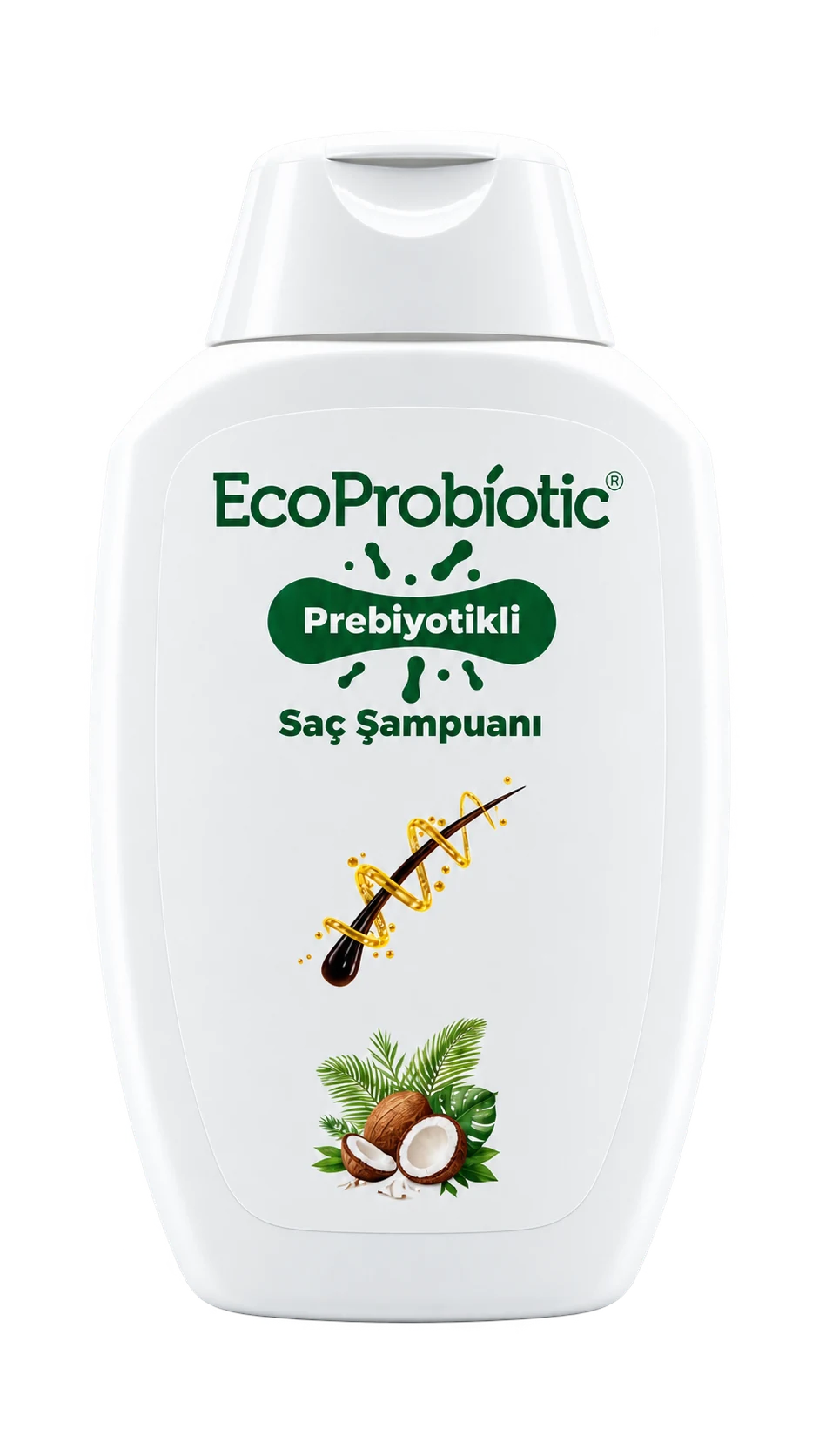
- Prebiotic ingredients: can help support scalp microbiome balance and the protective layer.
!Be careful with
- Strong sulfates: can strip away protective oils and increase dryness.
- Heavy fragrance and essential oils: can cause irritation on a dry, weakened scalp.
- Alcohol-based tonics and sprays: dry out the scalp.
- Unnecessary use of dandruff shampoo: using it often because you mistake dryness for dandruff can dry out the scalp even more.
- Hard water: minerals can increase the feeling of dryness on the scalp; if needed, a shower head filter can be considered.
Caution
Common mistakes
- ✕Mistaking a dry scalp for dandruff and using dandruff shampoo every day.
- ✕Taking long, very hot showers in winter.
- ✕Scratching your scalp with your nails.
- ✕Using heavily fragranced and alcohol-based products.
- ✕Leaving your scalp unprotected against sun and cold with a short haircut.
- ✕Ignoring redness and thick flaking that won't go away for months.
Popular searches
Most asked about Dry scalp
Your questions
Frequently asked questions
01How can you tell a dry scalp from dandruff?+
Dry scalp flakes are fine, white and powdery; the scalp feels tight, and you may have dryness elsewhere on your body. Dandruff flakes are usually larger, yellowish and oily, and the scalp looks oily. If you're not sure, seeing a dermatologist makes it easier to choose the right path.
02Why does my scalp itch more in winter?+
Cold, dry air, centrally heated rooms and hot showers reduce the scalp's protective oils and increase water loss. This causes tightness and itching. Lukewarm water, a gentle shampoo and moisturizing scalp care make a difference during this period.
03Is it bad to wash my hair every day if I have a dry scalp?+
If you use a small amount of gentle shampoo and choose lukewarm water, it's usually fine. But if there's no sweating or oiliness, washing every other day may be more comfortable for a dry scalp.
04Does putting oil on your scalp help?+
With a dry scalp, a gentle massage with a light oil before washing can help reduce dryness. However, if you're prone to dandruff, putting oil on your scalp can feed scalp yeast and make things worse.
05When should I see a dermatologist?+
You should see a dermatologist if itching keeps you up at night, if you have redness or thick, silvery flakes, if sores or oozing develop on your scalp, or if there's no improvement after a few weeks of proper care. Conditions such as atopic dermatitis and psoriasis can cause similar symptoms.
Scientific basis
Sources
- 01Stratum corneum dysfunction in dandruff
Turner GA, Hoptroff M, Harding CR · International Journal of Cosmetic Science 34(4):298-306 · 2012 · doi:10.1111/j.1468-2494.2012.00723.x
Showed that on a dandruff-prone scalp the outermost protective layer (the barrier) is disrupted, water loss increases and the lipid structure changes.
- 02The efficacy of a pseudo-ceramide and eucalyptus extract containing lotion on dry scalp skin
Takagi Y, Ning X, Takahashi A, Ishizaki C, et al. · Clinical, Cosmetic and Investigational Dermatology 11:141-148 · 2018 · doi:10.2147/CCID.S158428
Showed that a dry, flaky scalp has lower barrier function and ceramide levels, and that a lotion containing a ceramide-like ingredient significantly reduced dryness, flaking and itching within four weeks.
- 03The itchy scalp - scratching for an explanation
Bin Saif GA, Ericson ME, Yosipovitch G · Experimental Dermatology 20(12):959-968 · 2011 · doi:10.1111/j.1600-0625.2011.01389.x
Reviews the nerve-, immune- and barrier-related mechanisms behind scalp itch and its most common causes.
- 04Natural skin surface pH is on average below 5, which is beneficial for its resident flora
Lambers H, Piessens S, Bloem A, Pronk H, Finkel P · International Journal of Cosmetic Science 28(5):359-370 · 2006 · doi:10.1111/j.1467-2494.2006.00344.x
Showed that the natural pH of the skin surface is on average below 5 and that this mildly acidic environment suits the resident beneficial microorganisms.
- 05Effects of hard water on hair
Srinivasan G, Srinivas CR, Mathew AC, Duraiswami D · International Journal of Trichology 5(3):137-139 · 2013 · doi:10.4103/0974-7753.125609
Reported a slight decrease in the tensile strength of hair washed with hard water, although the difference was not statistically significant.
- 06To evaluate and compare changes in baseline strength of hairs after treating them with deionized water and hard water and its role in hair breakage
Luqman MW, Ramzan MH, Javaid U, Ali R, Shoaib M, Luqman MA · International Journal of Trichology 10(3):113-117 · 2018 · doi:10.4103/ijt.ijt_115_16
Measured, in hair samples from young men, that strands treated with hard water lost significantly more tensile strength than those treated with deionized water.
- 07How to treat dandruff
American Academy of Dermatology · AAD Public Education · 2024
Recommends using dandruff shampoos as directed on the label and seeing a dermatologist if there is no improvement.