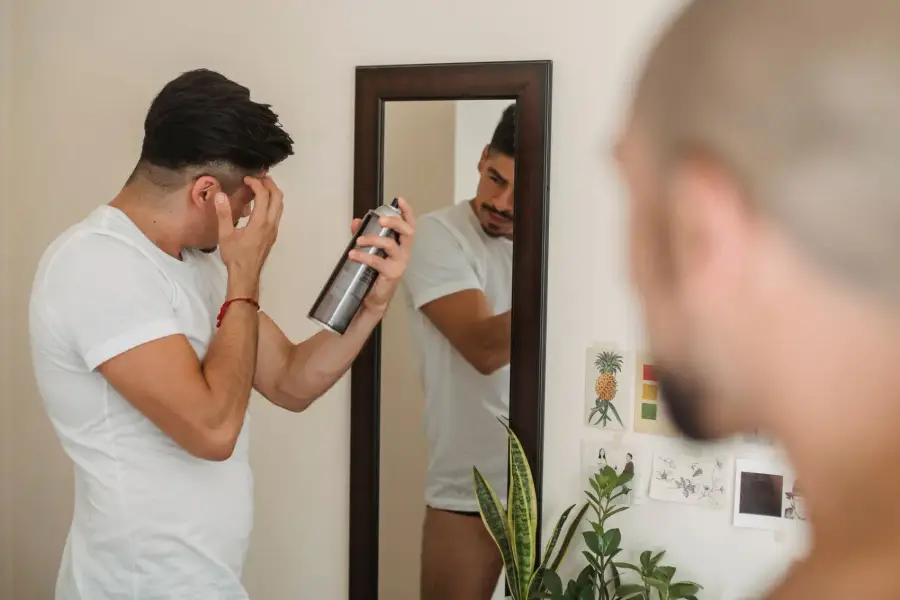
Self-test
Is this type yours?
- ◎You grow your beard for anywhere from a few days to a few weeks and keep it short and even with a trimmer.
- ◎You feel intense itching in the first weeks as your beard starts to grow.
- ◎When you line up your neck and cheek lines with a razor, redness and bumps appear in that area.
- ◎The skin under your beard is dry, flaky or red in places.
- ◎Some hairs curl back into the skin instead of growing out, forming small bumps.
- ◎Even though your beard is short, it feels prickly and coarse to the touch.
In depth
What happens at the root?
Starting at puberty, under the influence of androgen hormones, facial hairs turn from fine vellus hairs into thick, pigmented hairs. Beard hair is generally thicker, coarser and curlier than the hair on your head. When it's cut with a razor or trimmer, the tip of the hair becomes blunt and sharp-edged. The itching in the first weeks of stubble comes largely from these sharp tips rubbing against the skin as they grow and from the skin under the beard drying out; as the hairs get longer and softer, the itching usually fades.
With a short beard, the most common problems come up when lining it up. Research shows that the most common shaving problems in men are irritation and dryness, razor burn, nicks and ingrown hairs, and that these problems are largely linked to shaving technique and not preparing the skin for shaving. When the forces a razor applies to the skin aren't well managed, a small inflammatory response occurs in the skin. Curled hairs, when cut very close, can turn back and grow into the skin; this is called razor bumps or ingrown hairs, and it's more common in men with curly hair. Inflammation of the hair follicles from irritation and friction (folliculitis) is also common on the neck. The goal of short beard care is to keep the hair an even length while keeping the skin underneath moisturized and calm, and not to strain the skin when lining it up.
Priorities
What does it need?
01
Even length
The secret to stubble that looks groomed is an even length. Touching it up every few days with an adjustable beard trimmer keeps the look tidy.
02
Clean lines
When the cheek and neck lines are set in the right place, a short beard looks like a deliberate choice. The neckline usually sits slightly above the Adam's apple.
03
Care for the skin under the beard
A short beard doesn't fully cover the skin, but it does affect its moisture. Cleaning and moisturizing the skin under your beard reduces itching and flaking.
04
Lining up without irritation
When lining up, wetting the skin, using shaving gel and moving in the direction of hair growth can help reduce irritation and ingrown hairs.
05
Clean equipment
Your beard trimmer and razor blade should be clean and sharp. A dull blade takes more force and irritates the skin more.
Short beard / stubble
Even length
Step by step
Your care routine
3 steps
- 01
Clean your face and beard once or twice a day
You can wash a short beard along with your face using a gentle facial cleanser. After workouts and wearing a helmet, clean the sweaty beard area the same day.
- 02
Lukewarm water
Hot water dries out the skin under your beard. Wash with lukewarm water and pat dry with a towel.
- 03
A gentle cleanser instead of soap
Harsh bar soaps can dry out the skin under your beard. A gentle facial cleanser with a pH close to that of your skin is a better fit.
What you can add to your routine
The skin under your beard is an ecosystem too
Like other areas of your face, the skin in your beard area carries its own community of beneficial microorganisms. Together with the skin's protective layer, this community forms a line of defense.
Shaving strains the balance
Lining up with a razor also removes some cells from the outermost layer of the skin and creates small irritations. This can temporarily change the skin's moisture and microorganism balance. Moisturizing after shaving helps the balance recover.
Care you can use in your routine
EcoProbiotic MenCare range ↗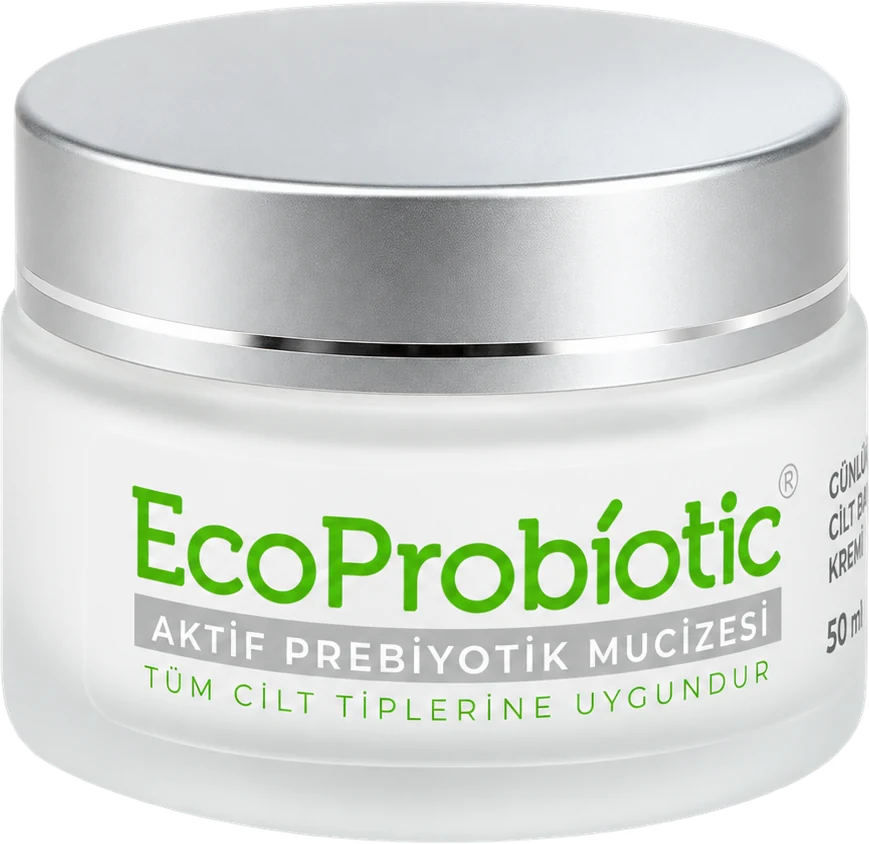
Reading labels
Ingredient guide
✓What helps
- Gentle facial cleansers: clean the skin under your beard without drying it out.
- Light humectants (glycerin, hyaluronic acid, panthenol): hold moisture in the skin and can help reduce itching.
- Lubricating shaving gels: reduce the friction of the razor on the skin.
- Alcohol-free, soothing aftershave lotions (allantoin, panthenol, bisabolol): can help reduce redness and burning.
- Light beard oils (jojoba oil, squalane): soften the sharp tips.
- Moisturizers with prebiotics: can help support the microbiome balance of the skin under your beard.
!Be careful with
- Alcohol-based aftershave lotions: give an instant cooling feeling but can dry out the skin and increase burning.
- Harsh bar soaps: can dry out the skin under your beard.
- Heavily fragranced products: can cause irritation on freshly shaved skin.
- Dull razors and dirty trimmers: increase the risk of irritation, nicks and hair follicle inflammation.
- Acidic or exfoliating products right after shaving: can cause burning and redness.
Caution
Common mistakes
- ✕Giving up on your beard or shaving it off in the first week because the itching started.
- ✕Setting the neckline right under the jaw or too high up.
- ✕Running a razor over dry skin without foam.
- ✕Going over the same area with a razor again and again.
- ✕Trying to force out ingrown hairs with tweezers or your fingernails.
- ✕Burning your skin with alcohol-based aftershave.
Popular searches
Most asked about Short beard / stubble
Your questions
Frequently asked questions
01Why does my beard itch while it grows?+
The tip of a shaved hair is sharp and coarse; as it grows, it rubs against your skin. The skin under your beard can also dry out. This itching usually fades within a few weeks. Keeping the skin under your beard clean and moisturized and using a few drops of light beard oil make this phase easier.
02What trimmer guard number should I use for stubble?+
That depends on your face shape, how dense your beard is and the look you want. Generally, settings of a few millimeters give a stubble look. What matters is finding the right setting once, always keeping the same length and lining it up regularly.
03Where should my beard neckline be?+
As a general rule, the neckline is set slightly above the Adam's apple, in a gentle curve running from behind one ear to behind the other. Setting it right under the jaw makes your beard look small and unnatural.
04Why do I get redness and bumps after shaving?+
Shaving dry skin, a dull blade, shaving against the grain and going over the same area again and again can lead to irritation and small inflammations. With curled hairs, the hair growing back into the skin also causes bumps. Wetting your skin and using shaving gel, shaving in the direction of hair growth and using a sharp blade can help reduce the risk.
05How do you get rid of ingrown hairs?+
Most of the time, not shaving that area with a razor for a while and letting the hair grow out is enough. Digging out an ingrown hair with tweezers or your nails increases the risk of inflammation and scarring. For ingrown hairs that keep coming back, get inflamed and leave marks, it's a good idea to see a dermatologist.
Scientific basis
Sources
- 01Insights into shaving and its impact on skin
Cowley K, Vanoosthuyze K · British Journal of Dermatology 166(s1):6-12 · 2012 · doi:10.1111/j.1365-2133.2011.10783.x
Explains that skin problems caused by poor shaving technique are common and often overlooked, and how issues such as nicks and ingrown hairs relate to shaving technique.
- 02The biomechanics of blade shaving
Cowley K, Vanoosthuyze K · International Journal of Cosmetic Science 38(s1):17-23 · 2016 · doi:10.1111/ics.12330
Measured the forces acting on skin and hair during shaving and showed that when these forces are poorly managed, an inflammatory response with irritation and redness can develop.
- 03Facial hair shaving behavior and skin problems of shaved areas of males
Sukakul T, Bunyaratavej S, Chaweekulrat P, et al. · Journal of Dermatology 48(9):1409-1413 · 2021 · doi:10.1111/1346-8138.16034
Reported in 340 men that the most common shaving problems were irritation and dryness, razor burn, nicks and ingrown hairs; only a minority prepared their skin before shaving, and the problems were linked to shaving technique.
- 04Pseudofolliculitis barbae; current treatment options
Ogunbiyi A · Clinical, Cosmetic and Investigational Dermatology 12:241-247 · 2019 · doi:10.2147/CCID.S149250
Explains that razor bumps, caused by the curled tip of a hair growing back into the skin after shaving or plucking, are more common with curly hair follicles and usually subside when shaving is paused.
- 05Folliculitis
DermNet · DermNet NZ · 2023
Explains the signs of hair follicle inflammation (folliculitis) and that shaving, friction and sweating are among the factors that can trigger it.
- 06How to shave
American Academy of Dermatology · AAD Public Education · 2024
Recommends wetting skin and hair before shaving, using shaving cream, shaving in the direction the hair grows and using a sharp blade as the key steps to reduce irritation.