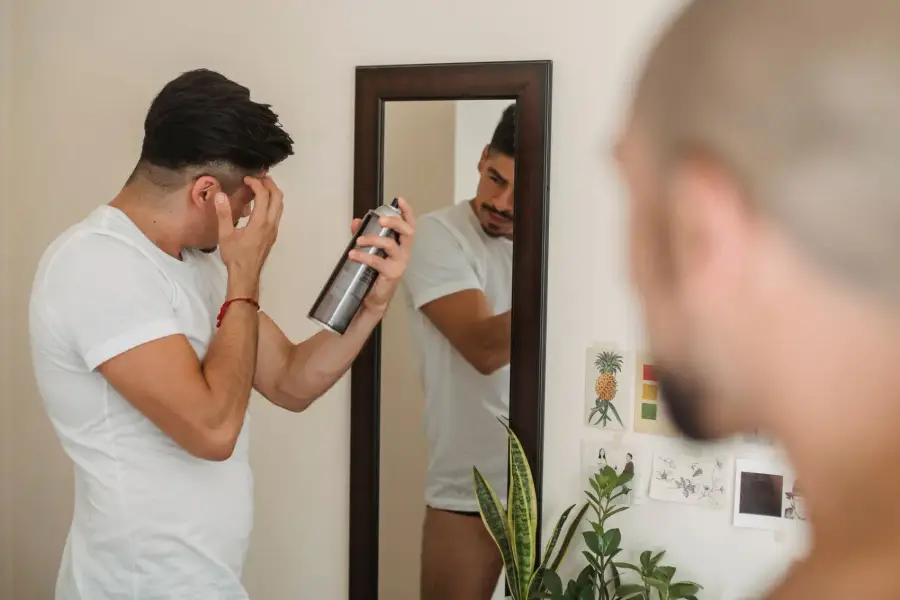
Self-test
Is this type yours?
- ◎Your beard is full on the chin and mustache but thin or missing on the cheeks.
- ◎There are gaps where your mustache and chin beard don't connect.
- ◎Your beard is thick and dark in some areas and fine and light in others.
- ◎When you grow your beard out, the gaps look more noticeable.
- ◎Someone on your father's side, such as your father or grandfather, has a similar beard pattern.
- ◎There's a round, completely hairless spot with clear edges that suddenly appeared in your beard; this needs a different evaluation.
In depth
What happens at the root?
Starting at puberty, under the influence of androgen hormones, facial hairs turn from fine vellus hairs into thick, pigmented hairs. But how strong this transformation is depends not only on hormone levels but on how sensitive the hair follicles are to those hormones, and this sensitivity is largely inherited. That's why, of two men with normal hormone levels, one can have a full beard and the other a thin one. Even on the same face, the follicles' response varies from area to area; the chin and mustache are usually the first and densest areas to fill in, while the cheeks fill in later and more sparsely. Hair density, thickness and growth rate vary markedly between populations and between individuals.
A beard takes time to fill in. The process that starts at puberty can continue throughout your twenties, and in some men into their thirties; a beard that's thin at eighteen can fill in noticeably within a few years. Round, clearly edged, completely hairless spots that suddenly appear in the beard, however, may point to a different condition, patchy hair loss in which the immune system targets the hair follicles; in this case you should see a dermatologist. Cosmetic products don't change an inherited beard pattern; but keeping the skin under your beard healthy, reducing irritation and hair follicle inflammation, and choosing the right style help your beard look its best.
Priorities
What does it need?
01
Patience
A beard can keep filling in throughout your twenties. Instead of judging your beard at a young age and giving up, it makes sense to track it for a few years.
02
The right length
A thin beard often looks fuller when kept short and even. Growing it too long can make the gaps more noticeable.
03
The right style
Styles that highlight the densest parts of your beard, such as chin- and mustache-focused styles, help balance out thin cheeks.
04
Healthy skin under the beard
Irritation, dryness and hair follicle inflammation hurt the look of your beard. Keeping the skin under your beard clean and moisturized matters.
05
An expert opinion when needed
If you have round hairless spots, sudden hair loss or other hormonal signs, you should see a dermatologist or doctor.
Patchy and thin beard
Patience
Step by step
Your care routine
3 steps
- 01
Gentle cleansing
Wash your beard area once or twice a day with a gentle facial cleanser. Harsh soaps dry out and irritate the skin.
- 02
Wash after sweating
After workouts and wearing a helmet, clean the sweaty beard area the same day; sweat and friction can trigger hair follicle inflammation.
- 03
Lukewarm water and patting dry
Wash with lukewarm water and pat dry with a towel without rubbing.
What you can add to your routine
Healthy skin, healthy hair follicles
The skin under your beard and the beneficial microorganisms that live there form the line of defense around the hair follicles. When this balance is upset, hair follicle inflammation and irritation develop more easily.
Friction and sweat
Helmet straps, collars and sweat create friction and moisture in the beard area. This environment can make hair follicle inflammation easier; cleaning and moisturizing the same day preserve balance.
Care you can use in your routine
EcoProbiotic MenCare range ↗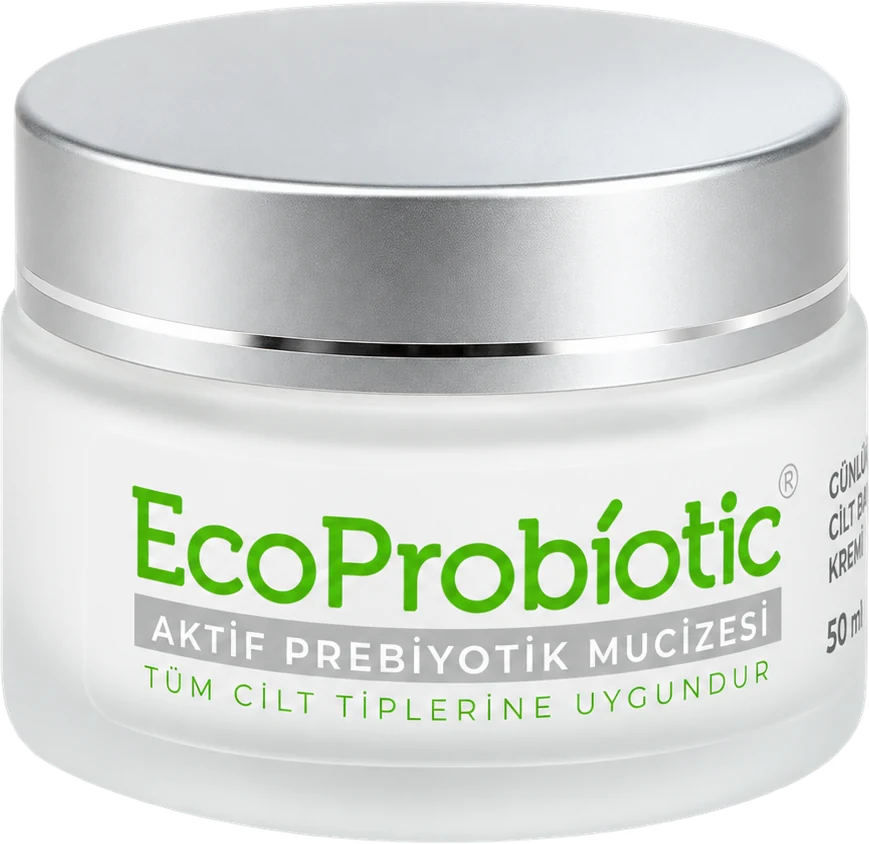

Reading labels
Ingredient guide
✓What helps
- Gentle facial cleansers: clean the skin under your beard without drying it out.
- Light humectants (glycerin, panthenol, hyaluronic acid): preserve the skin's moisture.
- Light beard oils (jojoba oil, squalane): soften the hairs and help them lie neatly.
- Products with caffeine and niacinamide: can help support the comfort of the skin under your beard.
- Alcohol-free aftershave lotions: can help reduce irritation in the areas you line up.
- Moisturizers with prebiotics: can help support the microbiome balance of the skin under your beard.
!Be careful with
- Miracle products that promise to grow a beard: there's no strong evidence that they change an inherited beard pattern.
- Hormones and medications used without a doctor's advice: carry a risk of serious side effects.
- Alcohol-based aftershave lotions: dry out and irritate the skin.
- Harsh scrubs and brushes: can irritate the skin and increase hair follicle inflammation.
- Applying lots of heavy oils under the beard: can make things worse if you're prone to hair follicle inflammation and seborrheic dermatitis.
Caution
Common mistakes
- ✕Giving up hope in your early twenties before your beard has fully filled in.
- ✕Growing out a thin beard and making the gaps more noticeable.
- ✕Believing that shaving often with a razor will make your beard thicker.
- ✕Turning to products that promise miracles and medications without a doctor's advice.
- ✕Setting your beard line at the very top of your thin cheeks.
- ✕Ignoring round hairless spots that suddenly appear in your beard.
Popular searches
Most asked about Patchy and thin beard
Your questions
Frequently asked questions
01Does shaving often make your beard thicker?+
No. Shaving doesn't affect the hair follicle; it only cuts the hair at the surface. Hair growing back after a shave looks thicker because its tip has been cut bluntly. The number and thickness of hairs don't change.
02At what age does a beard fully grow in?+
It varies from person to person. A beard starts at puberty and can keep filling in throughout your twenties, and in some men into their thirties. A beard that's thin at eighteen can fill in noticeably within a few years.
03Is a thin beard a sign of low testosterone?+
Usually not. Beard density is largely determined by the inherited sensitivity of hair follicles to hormones; many men with normal hormone levels have thin beards. However, if a thin beard comes with other signs such as fatigue, low drive or a noticeable decrease in body hair, you should see a doctor.
04A coin-sized bald spot appeared in my beard. What should I do?+
Round, clearly edged, completely hairless spots that appear suddenly may point to patchy hair loss. This condition is related to the immune system and requires a dermatologist's evaluation. Noticing such spots early and seeing a specialist is the right path.
05What's the best style for a thin beard?+
Generally, stubble kept short and even is the look that makes thin cheeks least noticeable. If your chin and mustache are dense, chin-focused styles also work well. Setting the cheek line a little lower makes your beard look sharper and fuller.
Scientific basis
Sources
- 01Androgens and hair growth
Randall VA · Dermatologic Therapy 21(5):314-328 · 2008 · doi:10.1111/j.1529-8019.2008.00214.x
Explains how, starting at puberty, androgens turn fine facial hairs into thick, pigmented beard hairs, and that this response varies by body area and by the hair follicle itself.
- 02Diversity of hair growth profiles
Loussouarn G, El Rawadi C, Genain G · International Journal of Dermatology 44(s1):6-9 · 2005 · doi:10.1111/j.1365-4632.2005.02800.x
Showed through measurements that hair density, growth rate and strand diameter vary markedly across different populations.
- 03Pseudofolliculitis barbae; current treatment options
Ogunbiyi A · Clinical, Cosmetic and Investigational Dermatology 12:241-247 · 2019 · doi:10.2147/CCID.S149250
Explains that razor bumps, caused by the curled tip of a hair growing back into the skin after shaving or plucking, are more common with curly hair follicles and usually subside when shaving is paused.
- 04Facial hair shaving behavior and skin problems of shaved areas of males
Sukakul T, Bunyaratavej S, Chaweekulrat P, et al. · Journal of Dermatology 48(9):1409-1413 · 2021 · doi:10.1111/1346-8138.16034
Reported in 340 men that the most common shaving problems were irritation and dryness, razor burn, nicks and ingrown hairs; only a minority prepared their skin before shaving, and the problems were linked to shaving technique.
- 05Insights into shaving and its impact on skin
Cowley K, Vanoosthuyze K · British Journal of Dermatology 166(s1):6-12 · 2012 · doi:10.1111/j.1365-2133.2011.10783.x
Explains that skin problems caused by poor shaving technique are common and often overlooked, and how issues such as nicks and ingrown hairs relate to shaving technique.
- 06Folliculitis
DermNet · DermNet NZ · 2023
Explains the signs of hair follicle inflammation (folliculitis) and that shaving, friction and sweating are among the factors that can trigger it.
- 07Hair loss
NHS · NHS Health A to Z · 2024
States that male pattern hair loss is common and inherited, and that you should see a doctor if hair loss is sudden, comes in patchy bald spots, or is accompanied by itching and burning.