Self-test
Is this type yours?
- ◎Your beard is longer than a few centimeters (about an inch or more) and full from your cheeks down to your chin.
- ◎When you comb or scratch your beard, fine white flakes fall onto your shoulders and chest.
- ◎Your beard is dry, coarse and frizzy; the ends spread out.
- ◎The skin under your beard itches and is red and flaky in places.
- ◎An odor lingers in your beard after eating, smoking or working out.
- ◎Your beard grows in different directions under your chin and in your mustache.
In depth
What happens at the root?
Under the influence of androgen hormones, beard hairs turn into thick, pigmented, coarse hairs; how strong this response is depends on the follicle itself and on genetics. Beard hair is thicker and curlier than the hair on your head, so as it grows it frizzes and turns in different directions. The sebum produced by the oil glands on your face can't reach the ends of a long beard; that's why the hairs stay dry and coarse while the skin underneath can be oily. A long beard also covers the skin and traps moisture and heat, and food particles, sweat and dead cells build up easily.
Beard dandruff usually comes from one of two causes. The first is dryness: when the skin under the beard isn't moisturized enough, fine white flakes form. The second is seborrheic dermatitis: the same condition that causes dandruff on the scalp can also appear in the oil-gland-rich beard area, showing up as redness, itching and oily, yellowish flakes. It's common in adult men and tends to flare periodically. As for the common worry that beards harbor germs, a study of bearded and clean-shaven healthcare workers found that the bacterial load on the face was generally similar, and some species were even found more often in the clean-shaven men. In other words, a beard isn't dirty in itself; what matters is regular cleaning and care.
Priorities
What does it need?
01
Cleansing that reaches under the beard
With a long beard, the wash needs to clean not just the hairs but the skin underneath. It's important to reach all the way down to the base of the beard with your fingertips.
02
Moisture for the hair
Sebum can't reach the ends of a long beard. Beard oil and balm soften the hairs and reduce breakage and frizz.
03
Moisture for the skin
Beard oil nourishes the skin underneath as well as the hair. If there's dryness and fine flaking, you need moisturizing care that reaches the skin.
04
Regular combing
Combing detangles the beard, spreads the oil, removes dead cells and flakes, and trains the hairs in the direction you want.
05
Shape and trimming
A full beard needs trimming too. Regularly tidying your cheek and neck lines and your mustache keeps a long beard looking groomed.
Long and full beard
Cleansing that reaches under the beard
Step by step
Your care routine
4 steps
- 01
Beard wash two or three times a week
Wash a long beard two or three times a week with a gentle beard wash or facial cleanser. You can add an extra wash after workouts, wearing a helmet and heavy sweating.
- 02
Rinse with water on other days
On days you don't use a wash, rinse your beard with lukewarm water and clear out any food particles.
- 03
Massage under the beard
Work the wash down to the skin at the base of your beard with your fingertips and massage gently. This reduces the buildup of flakes and dead cells.
- 04
Conditioner or beard conditioner
If your beard hairs are coarse, apply hair conditioner or beard conditioner to your beard for a few minutes after washing, then rinse.
What you can add to your routine
The skin under your beard has its own ecosystem
The beard area is rich in oil glands, and the bacteria and yeast that live there are part of the skin's line of defense. A long beard can affect the makeup of this community by increasing moisture and heat in the area.
Beards aren't dirty; neglect upsets the balance
Research shows that the bacterial load on the face is generally similar in bearded and clean-shaven men. However, food particles, sweat and flake buildup can upset the balance of the skin under the beard; regular washing and combing preserve this balance.
Care you can use in your routine
EcoProbiotic MenCare range ↗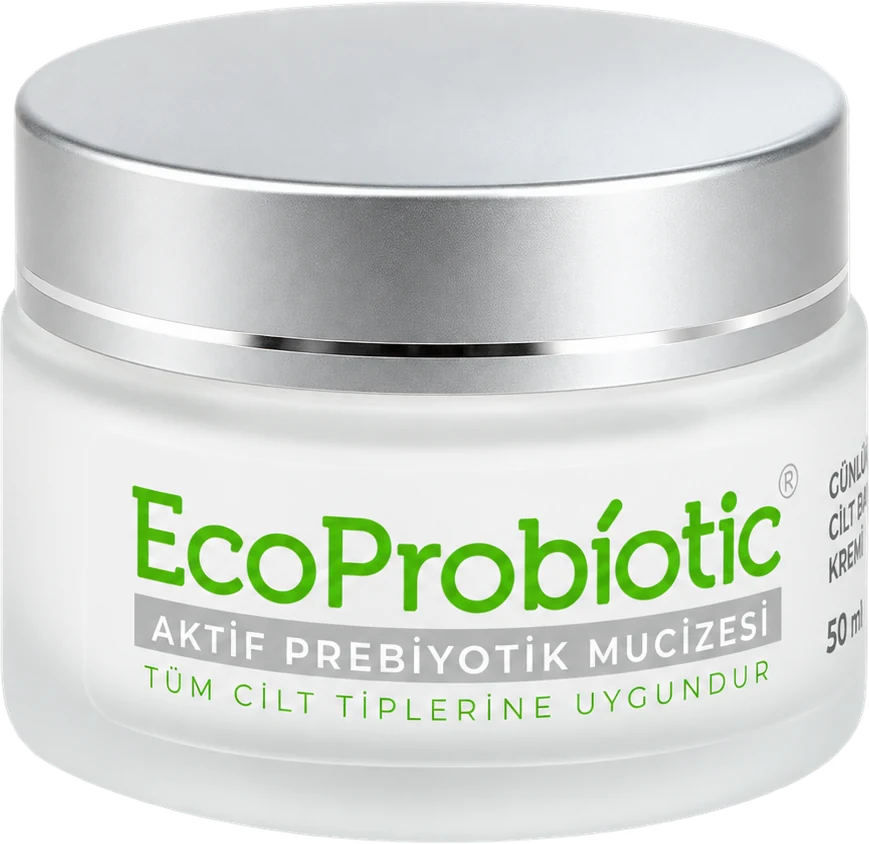
Reading labels
Ingredient guide
✓What helps
- Beard washes with gentle surfactants: clean the hair and skin without drying them out.
- Light beard oils (jojoba oil, argan oil, squalane): soften the hairs and nourish the skin under the beard.
- Beard balms (natural waxes and butters): tame the ends and soften the hairs.
- Glycerin and panthenol: hold moisture in both the hair and the skin.
- Anti-dandruff face and beard cleansers your doctor may recommend if you're prone to dandruff: can help reduce flaking in the beard area.
- Moisturizers with prebiotics: can help support the microbiome balance of the skin under your beard.
!Be careful with
- Using hair shampoo on your beard every day: can dry out the skin under your beard.
- Applying lots of thick, heavy oils under the beard: can make things worse if you're prone to seborrheic dermatitis.
- Heavily fragranced beard products: can irritate the skin on your face.
- Hard, fine-toothed plastic combs: can break the hairs and cause static.
- Alcohol-based beard sprays: dry out the hair and skin.
Caution
Common mistakes
- ✕Washing your beard with water only and never using a wash, or washing it every day with a harsh hair shampoo.
- ✕Applying beard oil only to the hairs and forgetting the skin underneath.
- ✕Treating beard dandruff with the same oil without figuring out whether it's dryness or seborrheic dermatitis.
- ✕Never combing your beard, or combing it roughly while it's dry.
- ✕Giving up on trims and letting your beard get unruly.
- ✕Ignoring redness and oily flaking for months.
Popular searches
Most asked about Long and full beard
Your questions
Frequently asked questions
01What causes beard dandruff?+
Beard dandruff usually comes from the skin under the beard drying out or from seborrheic dermatitis. Dryness causes fine, white flakes; seborrheic dermatitis shows up as redness, itching and oily, yellowish flakes. Regular washing, moisture that reaches under the beard and combing usually help; for flaking that won't go away and comes with redness, you should see a dermatologist.
02Beard oil or balm?+
Beard oil mainly moisturizes the hairs and the skin underneath; for a short or medium beard it may be enough on its own. Balm holds the shape in addition to moisturizing; it's more useful for long, frizzy beards. Many men use oil first and a small amount of balm on top.
03How often should you wash your beard?+
For a long beard, washing two or three times a week with a gentle wash and rinsing with lukewarm water on other days is usually enough. On days you sweat a lot or notice a strong odor, you can add an extra wash.
04Do beards harbor germs?+
A beard isn't dirty in itself. A study of bearded and clean-shaven healthcare workers found that the bacterial load on the face was generally similar. A beard that's regularly washed and combed is as clean as a clean-shaven face.
05How do you soften a coarse beard?+
Applying hair conditioner or beard conditioner to your beard for a few minutes after washing, then using beard oil and balm if needed, softens the hairs. Regular combing also helps spread the oil through the hairs.
Scientific basis
Sources
- 01Bacterial ecology of hospital workers' facial hair: a cross-sectional study
Wakeam E, Hernandez RA, Rivera Morales D, Finlayson SRG, et al. · Journal of Hospital Infection 87(1):63-67 · 2014 · doi:10.1016/j.jhin.2014.02.010
Showed in 408 bearded and clean-shaven male healthcare workers that the bacterial load on the face was generally similar, while some species were found more often in the clean-shaven group.
- 02Androgens and hair growth
Randall VA · Dermatologic Therapy 21(5):314-328 · 2008 · doi:10.1111/j.1529-8019.2008.00214.x
Explains how, starting at puberty, androgens turn fine facial hairs into thick, pigmented beard hairs, and that this response varies by body area and by the hair follicle itself.
- 03An overview of the diagnosis and management of seborrheic dermatitis
Dall'Oglio F, Nasca MR, Gerbino C, Micali G · Clinical, Cosmetic and Investigational Dermatology 15:1537-1548 · 2022 · doi:10.2147/CCID.S284671
Reviews how seborrheic dermatitis appears in oil-gland-rich areas such as the scalp, eyebrows, sides of the nose and beard area, and the principles of diagnosis and management.
- 04Seborrhoeic dermatitis
DermNet · DermNet NZ · 2023
Explains that seborrheic dermatitis shows up as flaking and redness on the scalp, face and beard area, is common in adult men and tends to flare periodically.
- 05Natural skin surface pH is on average below 5, which is beneficial for its resident flora
Lambers H, Piessens S, Bloem A, Pronk H, Finkel P · International Journal of Cosmetic Science 28(5):359-370 · 2006 · doi:10.1111/j.1467-2494.2006.00344.x
Showed that the natural pH of the skin surface is on average below 5 and that this mildly acidic environment suits the resident beneficial microorganisms.
- 06Hair cosmetics: an overview
Gavazzoni Dias MF · International Journal of Trichology 7(1):2-15 · 2015 · doi:10.4103/0974-7753.153450
A comprehensive review that summarizes, from a dermatological perspective, the ingredients of hair cosmetics such as shampoos, conditioners and styling products and their effects on the hair shaft.