Ever used your sister's or your partner's cream from the bathroom cabinet? Most of the time nothing happens. But you may have noticed the same cream feels heavier and shinier on your face. That's not because the product is bad; it's because men's skin genuinely works differently.
A 2018 review written for dermatologists and cosmetic scientists groups the differences between male and female skin under hormones, structure and function. The short version: men's skin is thicker, oilier and runs on a different hormonal setup. That affects every step, from cleansing to shaving.
A thicker suit of armor
The dermis, the deeper layer of the skin, is on average thicker in men than in women and holds denser collagen. Collagen is the support network that gives skin its elasticity and firmness. This dense support network is cited as one of the reasons fine lines often show up later in men. But sun, smoking and lack of sleep can quickly wear that advantage down.
Why are oil glands more active?
Oil glands are sensitive to testosterone and its more potent derivative. A review on the role of androgens in the skin explains that these hormones directly affect oil gland activity, hair growth and the tendency toward acne. As a result, a man's face gets shiny faster during the day and pores can look more visible.
A systematic measurement study of 300 people supports this picture: oil production was higher in men in every age group and did not decline with age. The same study measured men's skin surface pH below 5 in all areas, and found that men's skin hydration steadily declined after age forty.
Oily doesn't mean hydrated. After your forties, men's skin can be shiny and dehydrated at the same time.
A face that meets a razor every morning
Perhaps the most everyday difference between male and female skin is shaving. Every time you shave, the blade cuts the hair and also scrapes off a thin film from the top layer of skin. That means your barrier is doing a small repair job every single day. It's why stinging, redness and itching after shaving are so common.
How do these differences change your routine?
- Cleanser: A gentle-lather gel that removes oil without leaving skin tight is usually a good start.
- Moisturizer: Oily skin needs moisture too; light gel or fluid textures tend to feel more comfortable on men's skin.
- Shaving: Knowing your barrier is stressed every day, choose a soothing balm over alcohol-heavy aftershaves.
- Sunscreen: Thick skin is no shield against the sun; daily protection is a basic step for men too.
- Age: Because moisture loss increases after your forties, you may need a slightly richer moisturizer texture.
Is it a problem to use women's skin care?
Gender-split formulas in skin care are often a marketing choice. What really matters is not the color of the packaging but the product's texture and ingredients. If a light, low-fragrance, barrier-supporting product suits your oily, shave-stressed skin, it doesn't matter whose shelf it came from.
Keep in mind
Men's skin is like a thicker suit of armor, but that armor needs care too. Excess oil, daily shaving and the moisture loss that comes with age can be balanced with a simple but consistent routine. In the next post, we show you how to fit that routine into five minutes.
Helpful as you build this routine
EcoProbiotic MenCare range ↗ Moisturising01Prebiotic Face CreamA thin layer morning and evening; on shaving days, right after you shave. Moisturises the skin and supports its barrier.View ↗
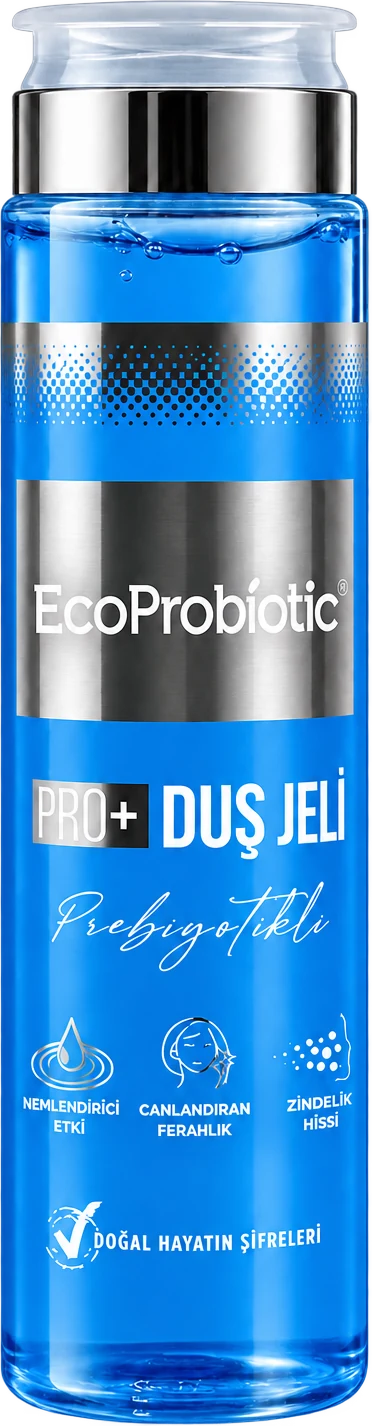 Body02Prebiotic Shower GelThoroughly cleanses the areas that hold sweat; moisturises the skin and supports its barrier. Morning or evening, every day.View ↗
Sources
- 01Male versus female skin: What dermatologists and cosmeticians should know
Rahrovan S, Fanian F, Mehryan P, Humbert P, Firooz A · International Journal of Women's Dermatology · 2018 · doi:10.1016/j.ijwd.2018.03.002
Reviewed differences in hormones, thickness, collagen and oil production between male and female skin.
- 02Gender-linked differences in human skin
Giacomoni PU, Mammone T, Teri M · Journal of Dermatological Science · 2009 · doi:10.1016/j.jdermsci.2009.06.001
Reviewed how sex-linked skin differences affect structure, function and aging.
- 03Skin physiology in men and women: in vivo evaluation of 300 people including TEWL, SC hydration, sebum content and skin surface pH
Luebberding S, Krueger N, Kerscher M · International Journal of Cosmetic Science · 2013 · doi:10.1111/ics.12068
Showed that oil production stays higher in men at every age, that their pH is below 5 and that hydration declines after age forty.
- 04The role of androgen and androgen receptor in skin-related disorders
Lai JJ, Chang P, Lai KP, Chen L, Chang C · Archives of Dermatological Research · 2012 · doi:10.1007/s00403-012-1265-x
Reviewed the role of androgen hormones and their receptors in oil gland activity, acne, hair growth and wound healing.