When you hear "germs," the first things that come to mind are probably illness and antibacterial soap. Yet on the surface of your skin lives a crowded team that wakes up with you every day, most of it harmless and even useful to you. Scientists call this team the skin microbiome.
What exactly is the microbiome?
A microbiome is the full set of microorganisms living in a given environment, together with their genetic material. A comprehensive review of the skin microbiome explains that this community lives not only on the skin's surface but also in hair follicles and gland openings, and is in constant communication with the immune system. This detail matters for men: the dense hair follicles in the beard area are one of this team's key headquarters.
Every area has its own team
A study published in Nature showed that different communities dominate in oily areas such as the forehead and the sides of the nose, moist areas such as the armpits and groin, and dry areas such as the forearm. The same study also found that a person's own microbiome is fairly stable over time. In other words, the team on your skin behaves like a signature unique to you.
Are men's and women's microbiomes different?
Some studies show that sex can also influence the skin microbiome. In a study of bacterial diversity on the hands, women's hands carried a more diverse community than men's; the researchers linked this difference to factors such as skin pH, oil and sweat production and cosmetic use. Another study of people of different ages and living environments also showed that the community's makeup is associated with age, sex and skin characteristics.
Because men's skin is oilier and more acidic, a man's face hosts more oil-loving microorganisms. That isn't a problem in itself; but when oil production rises or the barrier is under stress, a shift in balance can go hand in hand with complaints like breakouts and dandruff.
The microorganisms on your skin aren't invaders; they're part of your line of defense. Rather than wiping them out, you need to keep them in balance.
What does this team do for you?
- Holds the ground: The resident community can make it harder for unwanted microorganisms to settle in.
- Joins the defense: Some resident bacteria have been observed to produce natural substances that suppress competing microbes.
- Trains immunity: The skin's immune cells are in constant communication with resident microbes.
- Supports an acidic surface: Microbial metabolism helps maintain the skin's slightly acidic environment.
Why does the balance get disrupted?
An update written for dermatologists emphasizes the importance of gentle cleansing and barrier-supporting care in maintaining a healthy skin microbiome. Meanwhile, the everyday habits that can strain this balance will sound very familiar to men: washing your face with body soap or antibacterial soap, using alcohol-based aftershave, staying sweaty after a workout, not washing your beard and applying antibiotic creams without a doctor's recommendation.
Simple care that supports the microbiome
- Wash your face twice a day with a slightly acidic, gentle-lather cleanser.
- Don't use antibacterial soaps on your face as part of your routine.
- Choose an alcohol-free, soothing product after shaving.
- A moisturizer with prebiotic ingredients is an option that may help support the balance of your skin's resident team.
- Wash and moisturize your beard and the skin beneath it regularly.
- Don't hang around in sweaty clothes for long after working out.
What do probiotic and prebiotic mean?
Probiotics are live microorganisms that provide a benefit when used in adequate amounts. Prebiotics are substances that the skin's resident microorganisms selectively use and that help support balance. Research in this area is promising but still developing. That's why it's best to think of probiotic and prebiotic care as support added alongside the basic steps of gentle cleansing, moisturizing and sun protection, not as a replacement for them.
Helpful as you build this routine
EcoProbiotic MenCare range ↗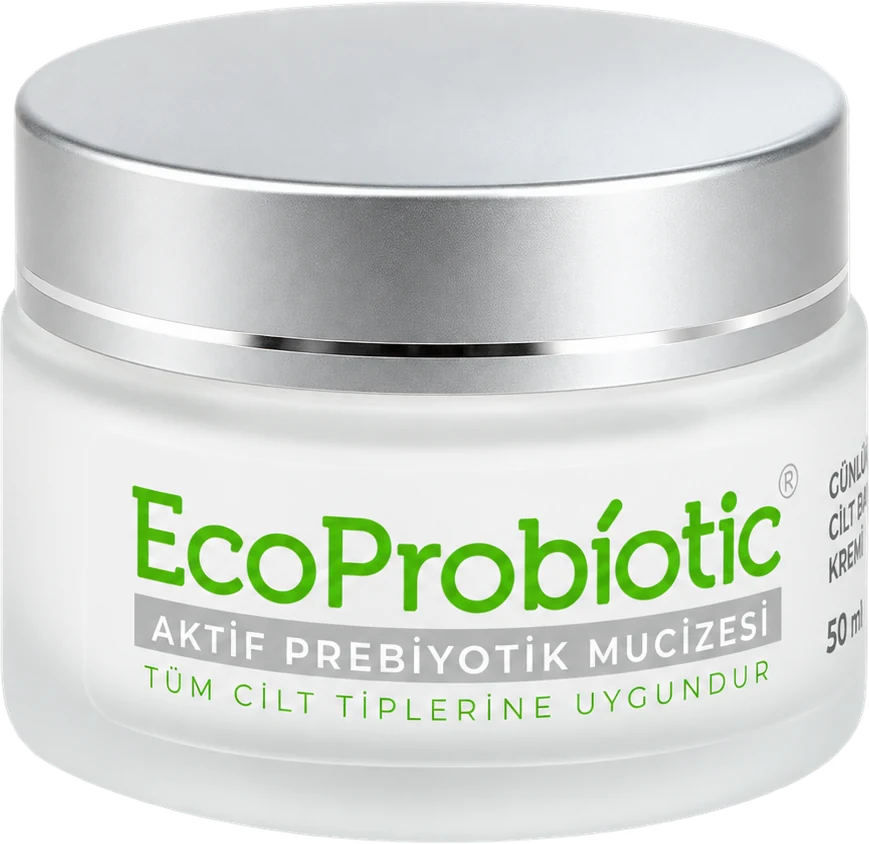 Moisturising01Prebiotic Face CreamA thin layer morning and evening; on shaving days, right after you shave. Moisturises the skin and supports its barrier.View ↗
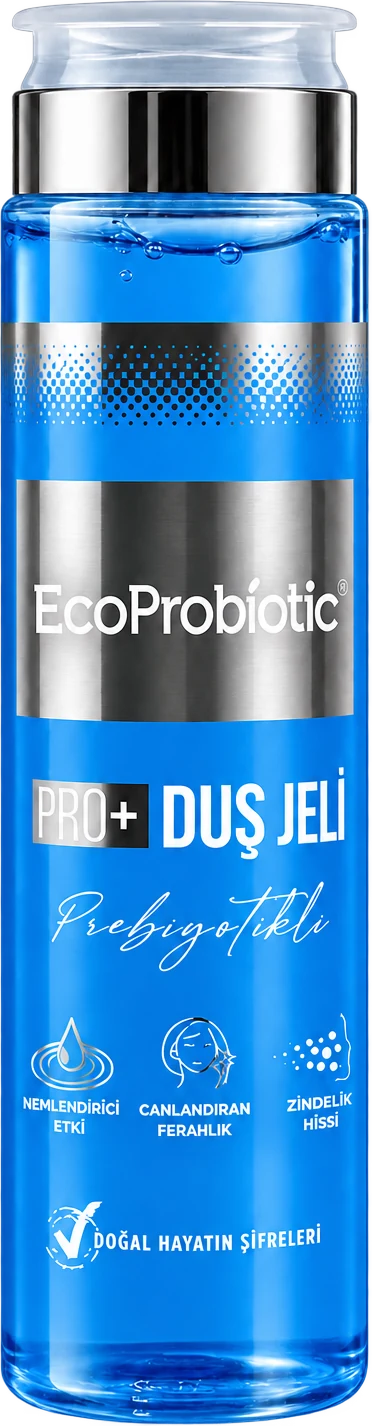 Body02Prebiotic Shower GelThoroughly cleanses the areas that hold sweat; moisturises the skin and supports its barrier. Morning or evening, every day.View ↗
Sources
- 01The human skin microbiome
Byrd AL, Belkaid Y, Segre JA · Nature Reviews Microbiology · 2018 · doi:10.1038/nrmicro.2017.157
Comprehensively reviewed the structure of the skin microbiome, its habitats including hair follicles and its relationship with the immune system.
- 02Biogeography and individuality shape function in the human skin metagenome
Oh J, Byrd AL, Deming C, Conlan S, Kong HH, Segre JA · Nature · 2014 · doi:10.1038/nature13786
Showed that oily, moist and dry areas host different communities and that an individual's microbiome is stable over time.
- 03The influence of sex, handedness, and washing on the diversity of hand surface bacteria
Fierer N, Hamady M, Lauber CL, Knight R · Proceedings of the National Academy of Sciences · 2008 · doi:10.1073/pnas.0807920105
Showed that women's hands carry a more diverse bacterial community than men's and that washing affects the community.
- 04The Influence of Age and Gender on Skin-Associated Microbial Communities in Urban and Rural Human Populations
Ying S, Zeng DN, Chi L, Tan Y, Galzote C, Cardona C et al. · PLOS ONE · 2015 · doi:10.1371/journal.pone.0141842
Showed that the makeup of skin bacterial communities is associated with age, sex, skin characteristics and living environment.
- 05Microbiome in healthy skin, update for dermatologists
Dréno B, Araviiskaia E, Berardesca E, Gontijo G, Sanchez Viera M, Xiang LF et al. · Journal of the European Academy of Dermatology and Venereology · 2016 · doi:10.1111/jdv.13965
Emphasized the importance of gentle cleansing and barrier-focused care in maintaining a healthy skin microbiome.
- 06The skin microbiome
Grice EA, Segre JA · Nature Reviews Microbiology · 2011 · doi:10.1038/nrmicro2537
Showed that resident microbes can be harmless or problematic depending on conditions and that community balance is decisive.