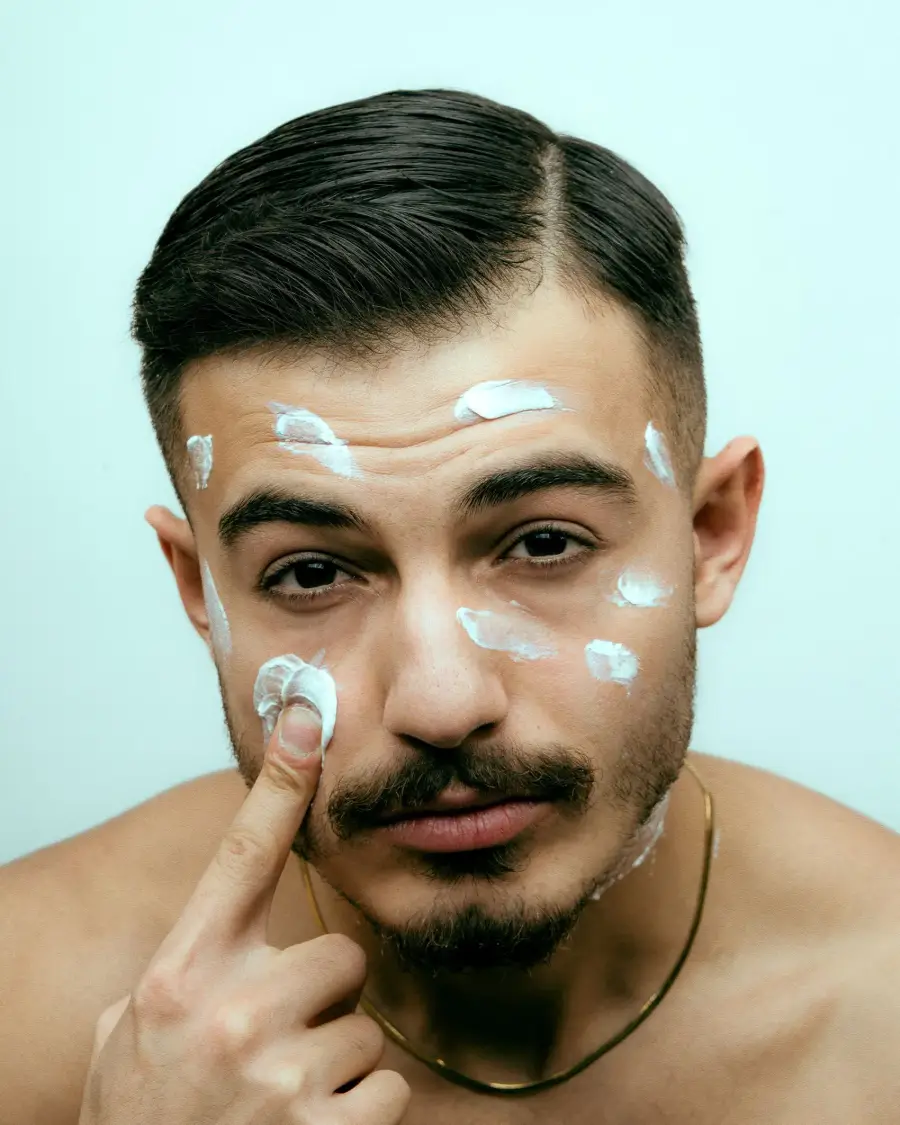
Self-test
Is this type you?
- ◎Blotting paper test: Wash your face, pat it dry and don't apply anything for 1 hour. If all the tissues you press onto your forehead, nose, cheeks and chin show a clear oil mark, your skin tends to be oily.
- ◎The face you washed in the morning is shiny by midday, not only on your forehead and nose but also on your cheeks.
- ◎The pores on your nose, the sides of your nose and inner cheeks are easy to spot in the mirror; blackheads are common.
- ◎Pimples show up regularly, not just during stressful periods; you also get bumps in the shaving area.
- ◎Wherever you wear a helmet, beanie or mask, oiliness and breakouts increase by the end of the day.
- ◎When you apply moisturizer, your face feels heavy, almost sticky.
- ◎Your skin looks thick and sturdy; fine lines show up later than they do for men your age.
In depth
The science of your skin
In oily skin, the oil glands send more sebum to the surface than average. Sebum isn't actually the enemy: it lubricates the skin, becomes part of the barrier and reduces water loss. The problem is the amount and composition. Oil glands are highly sensitive to androgen hormones, testosterone above all; inside the gland, testosterone is converted into a more potent derivative, and this signal enlarges the gland and increases production. This is the main reason men are more prone to oily skin: measurements in 300 people showed that men's sebum production is higher than women's at every age and does not decline with age the way it does in women. So a 50-year-old man may still be living with oily skin.
When there's excess sebum, it can mix with dead cells and form a plug at the opening of the pore; these plugs set the stage for blackheads and whiteheads, pores that look larger and the start of acne. It is increasingly accepted that in acne the decisive factor is not a single bacterium but a loss of balance in the skin microbiome. In men, shaving adds to this: the micro-scratches opened by the blade and irritation of the hair follicles can make post-shave bumps and pimples more likely on oily skin. Helmets, beanies, sweat during sports and hot environments also increase clogging. The most common mistake is trying to dry out the oil: harsh cleansers and alcohol-based lotions reduce oil for a few hours but disrupt the barrier, adding irritation, redness and dehydration to the picture. The goal isn't to wipe the oil away but to balance it: gentle and regular cleansing, a light moisturizer, ingredients that keep pores clear and an oil-free sunscreen every morning.
Priorities
What does it need?
01
Cleanse without drying out
Morning and evening, use a face-specific gel cleanser with a pH close to your skin's. Washing until your skin squeaks disrupts the barrier and adds irritation.
02
Light but regular moisture
Oily skin loses water too. A gel or fluid, non-comedogenic moisturizer supports the barrier without adding shine.
03
Keep pores clear
Salicylic acid dissolves in oil and can reach all the way inside the pore; using it a few evenings a week may help reduce the look of blackheads. Niacinamide helps balance the look of sebum.
04
Reduce irritation when shaving
On oily, acne-prone skin, running a blade over pimples can spread inflammation. Choose a sharp blade, shave with the grain, make few passes, or switch to an electric shaver if needed.
05
Cleanse after sweat and helmets
Washing your face soon after a workout, a game or a ride with a helmet limits how long sweat-mixed oil sits in your pores.
Oily skin
Cleanse without drying out
Step by step
Oily skin routine
5 steps
- 01
Gel cleanser
Wash for 30–60 seconds with a face-specific, sulfate-free gel cleanser with a pH close to your skin's, and rinse with lukewarm water.
- 02
Pre-shave prep
Shave after your shower. Choose an oil-free, gel shaving product; oily pre-shave products can burden the pores on oily skin.
- 03
Shave
Shave with a sharp blade, with the grain, without pressing. Try not to pass over active, inflamed pimples; trimming that area with a clipper may be safer.
- 04
Post-shave and moisture
Rinse with cool water. Apply an alcohol-free, lightweight post-shave gel or fluid moisturizer with niacinamide or panthenol.
- 05
Oil-free sunscreen
Choose a broad-spectrum sunscreen with SPF 30 or higher in a gel or fluid texture with a matte finish. Non-pore-clogging formulas don't raise the risk of breakouts.
What you can add to your routine
Acne is a balance problem
Research shows that in acne the decisive factor is not a single bacterium but a loss of diversity and balance in the skin microbiome. The goal isn't to wipe out bacteria but to restore balance.
Stay away from antibacterial soaps
Harsh products that kill everything take the beneficial team off the field along with the harmful ones. Gentle cleansing keeps the beneficial bacteria's line of defense standing.
Care you can use in your routine
EcoProbiotic MenCare range ↗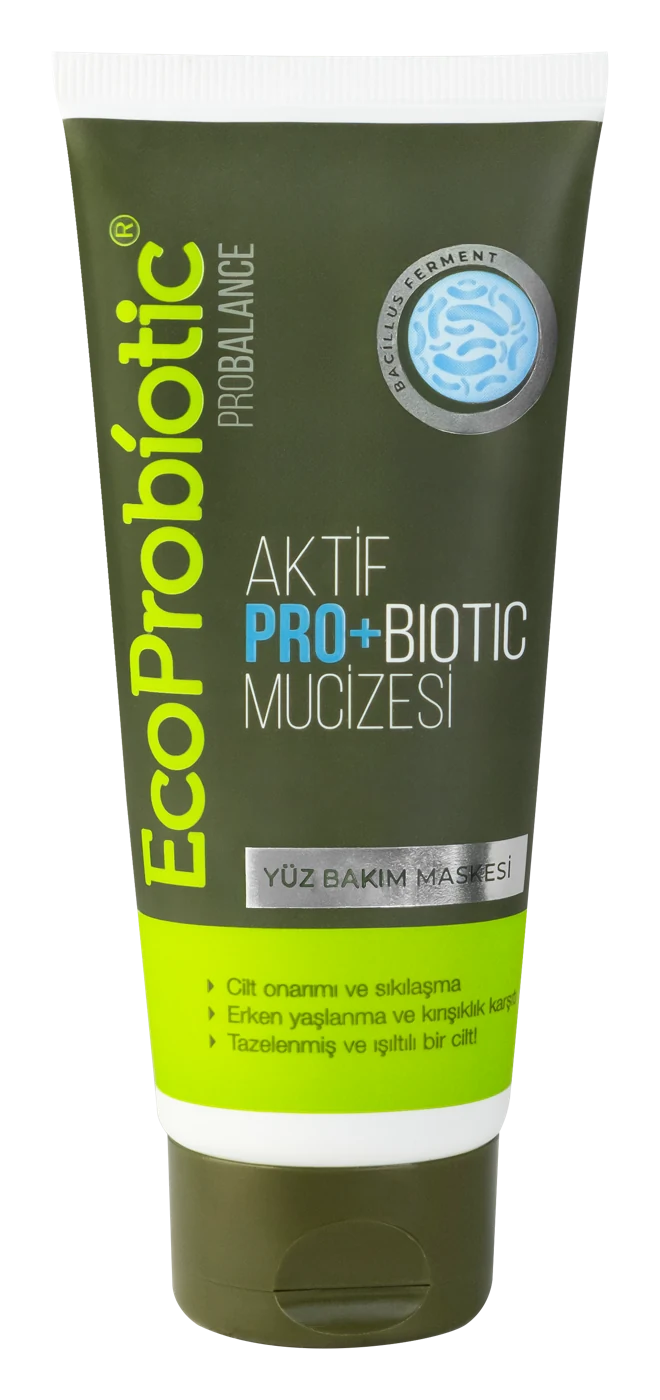 Weekly care01Prebiotic Volcanic Clay MaskOnce or twice a week, for ten minutes. Absorbs excess oil and leaves the skin matte and clean.View ↗
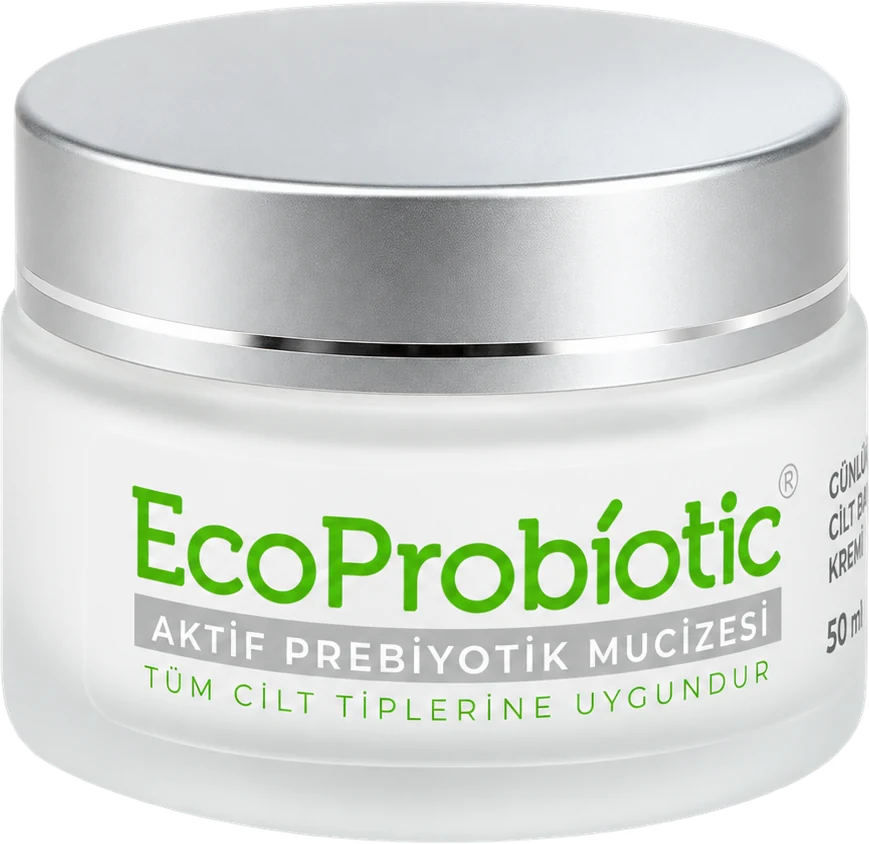 Moisturising02Prebiotic Face CreamA thin layer morning and evening; on shaving days, right after you shave. Moisturises the skin and supports its barrier.View ↗
Reading labels
Ingredient guide
✓What helps
- Salicylic acid: dissolves in oil and helps clear out the inside of the pore.
- Niacinamide: observed in research to reduce facial sebum excretion; also supports the barrier.
- Retinol and other retinoids: in the evening, for the look of pores and texture.
- Zinc-containing products: may help balance the look of oil.
- Hyaluronic acid and glycerin: hydrate without adding oil.
- Clay (kaolin, bentonite): absorbs excess oil in weekly masks.
- Moisturizers and sunscreens labeled non-comedogenic.
- Lightweight moisturizers with prebiotic ingredients: may help support bacterial balance.
!Be careful with
- High-alcohol toners and aftershave lotions: give an instant matte look but disrupt the barrier.
- Creams with heavy oils and lots of beeswax: can clog pores.
- Harsh, gritty scrubs and scrubbing with brushes: irritate pimples and can spread inflammation.
- Washing your face more than twice a day: stresses the skin and adds irritation.
- Using more than one strong active on the same evening (like retinol and acid): can cause redness and flaking.
- Oily hair styling products getting onto your forehead and temples: can increase breakouts in that area.
All year round
By season
Summer
Heat and humidity increase sebum and sweat. Switch your moisturizer to a gel, choose a matte-finish sunscreen and blot excess oil with blotting papers during the day; do this instead of washing your face over and over.
Winter
Oily skin also loses moisture in winter; your nose and forehead may shine while your cheeks flake. Make your moisturizer slightly richer and use salicylic acid less often.
Seasonal transition
During transitions, skin can get both oily and dry. Cut back on strong actives for a few days, return to the basic trio (cleanse, moisturize, sun protection) and add them back once your skin finds its balance.
Caution
Common mistakes
- ✕Using alcohol-based lotions or harsh soap to dry out oil.
- ✕Ditching moisturizer entirely because you think oily skin doesn't need it.
- ✕Squeezing pimples or running a blade over them.
- ✕Never using sunscreen because you think it will cause breakouts.
- ✕Sitting for hours with a sweaty face after a workout or a ride with a helmet.
- ✕Neglecting to clean your phone screen, pillowcase and helmet liner.
Popular searches
Most asked about Oily skin
Your questions
Frequently asked questions
01Why do men have oilier skin?+
Oil glands are highly sensitive to androgen hormones like testosterone, and men have high levels of these hormones. Measurements show that men's sebum production is higher than women's at every age and doesn't decline noticeably with age. That's why oily skin is both more common and longer-lasting in men.
02Should oily skin use a moisturizer?+
Yes. Oil and water are different things; oily skin loses water too, and shaving puts extra stress on the barrier. A gel or fluid, non-pore-clogging moisturizer supports the barrier without adding shine and reduces irritation.
03Why do I break out after shaving?+
The blade opens micro-scratches in the skin and irritates hair follicles; on oily skin this can turn into inflamed bumps. A dull blade, shaving against the grain and alcohol-based lotion increase the risk. A sharp blade, few passes with the grain, clean tools and an alcohol-free post-shave product usually make a difference. If hairs curling back into the skin are the problem, you can consult a dermatologist about ingrown hairs and beard-area inflammation.
04Can I shrink my pores?+
The true size of a pore is largely genetic, but when kept clean it looks smaller. Salicylic acid, niacinamide, retinol and regular sun protection may help reduce the look of pores. Squeezing nose pores or using harsh exfoliation, on the other hand, raises the risk of permanent marks and enlargement.
05What kind of sunscreen is best for oily skin?+
Choose a broad-spectrum product with SPF 30 or higher in a gel or fluid texture, with a matte finish, that won't clog pores. Skipping sun protection on oily skin raises the risk of dark spots and of post-acne marks lasting longer.
06When does oily skin call for a dermatologist?+
See a dermatologist if breakouts are widespread, if painful, deep swellings form, if they leave scars, or if they don't improve after a few months of consistent care. After a doctor's evaluation, topical or systemic treatment options can be planned.
Scientific basis
Sources
- 01Skin physiology in men and women: in vivo evaluation of 300 people including TEWL, SC hydration, sebum content and skin surface pH.
Luebberding S, Krueger N, Kerscher M · International Journal of Cosmetic Science · 2013 · doi:10.1111/ics.12068
Measurements in 300 people showed that men's sebum production is higher than women's at every age and does not decline with age, that skin surface pH in men stays below 5, and that the hydration level of men's skin gradually drops after age 40.
- 02Regulation of human sebaceous glands.
Thiboutot D · Journal of Investigative Dermatology · 2004 · doi:10.1111/j.1523-1747.2004.t01-2-.x
Explained how oil glands are regulated by hormones, above all by androgens such as testosterone and its derivatives.
- 03Oily skin: an overview.
Sakuma TH, Maibach HI · Skin Pharmacology and Physiology · 2012 · doi:10.1159/000338978
Summarized how sebum production is influenced by hormones, genetics, age and climate, and how oily skin is associated with enlarged pores and a tendency toward acne.
- 04Oily Skin: A review of Treatment Options.
Endly DC, Miller RA · Journal of Clinical and Aesthetic Dermatology · 2017
Reviewed the evidence for topical retinoids, niacinamide and other options aimed at balancing sebum in oily skin.
- 05The effect of 2% niacinamide on facial sebum production.
Draelos ZD, Matsubara A, Smiles K · Journal of Cosmetic and Laser Therapy · 2006 · doi:10.1080/14764170600717704
Observed that four weeks of using a moisturizer containing niacinamide reduced the facial sebum excretion rate.
- 06Gender-linked differences in human skin.
Giacomoni PU, Mammone T, Teri M · Journal of Dermatological Science · 2009 · doi:10.1016/j.jdermsci.2009.06.001
Reviewed how men's and women's skin differ in hormone metabolism, hair growth, sweat rate, sebum production and surface pH.
- 07Potential Role of the Microbiome in Acne: A Comprehensive Review.
Lee YB, Byun EJ, Kim HS · Journal of Clinical Medicine · 2019 · doi:10.3390/jcm8070987
Reviewed evidence that in acne the decisive factor is not a single bacterium but a loss of diversity and balance in the skin microbiome.
- 08The role of topical probiotics in skin conditions: A systematic review of animal and human studies and implications for future therapies.
Knackstedt R, Knackstedt T, Gatherwright J · Experimental Dermatology · 2020 · doi:10.1111/exd.14032
Screening animal and human studies on probiotics applied to the skin, found promising but still limited evidence.