Self-test
Is this type you?
- ◎Blotting paper test: Wash your face with a gentle cleanser, pat it dry and wait 1 hour without applying anything. Press a separate clean tissue onto your forehead, nose, cheeks and chin. If the tissues show no marks at all, or only a light oil mark from the nose area, your skin is most likely normal.
- ◎Your face doesn't feel noticeably tight or taut after washing.
- ◎By the end of the day your forehead and nose shine slightly, but your cheeks are neither oily nor flaky.
- ◎Apart from brief, mild redness after shaving, you rarely get burning, stinging or bumps.
- ◎Your pores are visible up close but don't stand out anywhere except the nose and forehead.
- ◎Pimples pop up only occasionally and usually for a clear reason: a week of poor sleep, heavy stress or a helmet staying on your face for hours.
- ◎When the seasons change your skin may get a bit dry or a bit oily, but it finds its balance again within a few days.
In depth
The science of your skin
Normal skin is skin in which the balance between the sebum produced by the oil glands and the water-holding capacity of the stratum corneum, the skin's top layer, works well. In this layer, dead cells are the bricks and the ceramides, cholesterol and fatty acids between them are the mortar; when the mortar is solid, transepidermal water loss (TEWL), the water the skin loses by evaporation from the inside out, stays low. Men's skin starts from a different point than women's in this respect: the dermis and epidermis are thicker, sebum production is higher at every age thanks to androgen hormones, and a measurement study of 300 people found that men's skin surface pH stays below 5 and that their water loss is lower than women's up to age 50. This slightly acidic surface works like an invisible shield that helps barrier enzymes do their job and helps beneficial bacteria settle in.
Still, this balance isn't permanent, and the factors that disrupt it in men are well known. Every shave removes a thin sliver of the top cell layer along with the hair; a dull blade, pressing hard and going over the same spot again and again magnify this micro-trauma. Washing your face with shower gel or harsh soap, spending long summer hours unprotected in the sun, smoking and lack of sleep can also gradually push skin toward dry, oily or sensitive. Research shows that the share of men who regularly put sunscreen on their face is less than half that of women; this is usually the biggest gap for men with normal skin. So with normal skin, the goal isn't to fix a problem but to protect your line of defense: gentle cleansing, a proper shave, a light moisturizer and sunscreen every morning.
Priorities
What does it need?
01
Protect the barrier, don't disrupt it
Your skin is already balanced. A face-specific cleanser with light lather and a pH close to the skin's, plus a light moisturizer, is usually enough; don't use body soap or shower gel on your face.
02
Make shaving part of your skincare
Every shave puts stress on the skin's top layer. A sharp blade, wet and softened hair, few passes with the grain and moisturizing afterward are the most practical way to keep normal skin normal.
03
Sun protection every morning
Even with normal skin, most signs of aging are linked to the sun. Research shows that using broad-spectrum sunscreen every day slows the progression of signs of aging.
04
A simple, consistent routine
Balanced skin doesn't like frequent product changes. Stick to three basic steps; if you want to try a new product, add them one at a time, a few weeks apart.
05
Antioxidant support
Men's skin has lower antioxidant capacity. A morning serum with vitamin C or niacinamide can work like an extra layer of armor alongside your sunscreen.
Normal skin
Protect the barrier, don't disrupt it
Step by step
Normal skin routine
5 steps
- 01
Gentle cleanse with lukewarm water
If you cleansed well the night before, lukewarm water or a sulfate-free gel cleanser made for the face is enough in the morning. Skip hot water; it needlessly throws off your oil balance.
- 02
Pre-shave prep (shaving days)
Shave after a shower or after wetting your face with lukewarm water for 2–3 minutes; softened hair cuts with less force. Apply shaving gel or foam and wait a minute.
- 03
Shave the right way
Shave with a sharp blade, with the grain, without pressing, and with as few passes as possible over each area. Rinse the blade after every stroke.
- 04
Post-shave and moisturize
Rinse your face with cool water and pat it dry with a towel. Apply an alcohol-free post-shave balm or a light moisturizer containing glycerin.
- 05
Sunscreen
Apply a broad-spectrum product with SPF 30 or higher that also protects against UVA to your face, ears and the back of your neck. If you're outdoors for long, reapply every 2 hours.
What you can add to your routine
Diversity means a strong defense
On balanced skin, many different bacteria live together and work like a team that leaves no room for harmful microbes. Unnecessary antibacterial soaps and washing your face several times a day can reduce this diversity.
Protect the acid mantle and the team gets stronger
The natural pH of men's skin is slightly acidic. Cleansers with a pH close to the skin's protect this environment and make the beneficial bacteria's job easier.
Care you can use in your routine
EcoProbiotic MenCare range ↗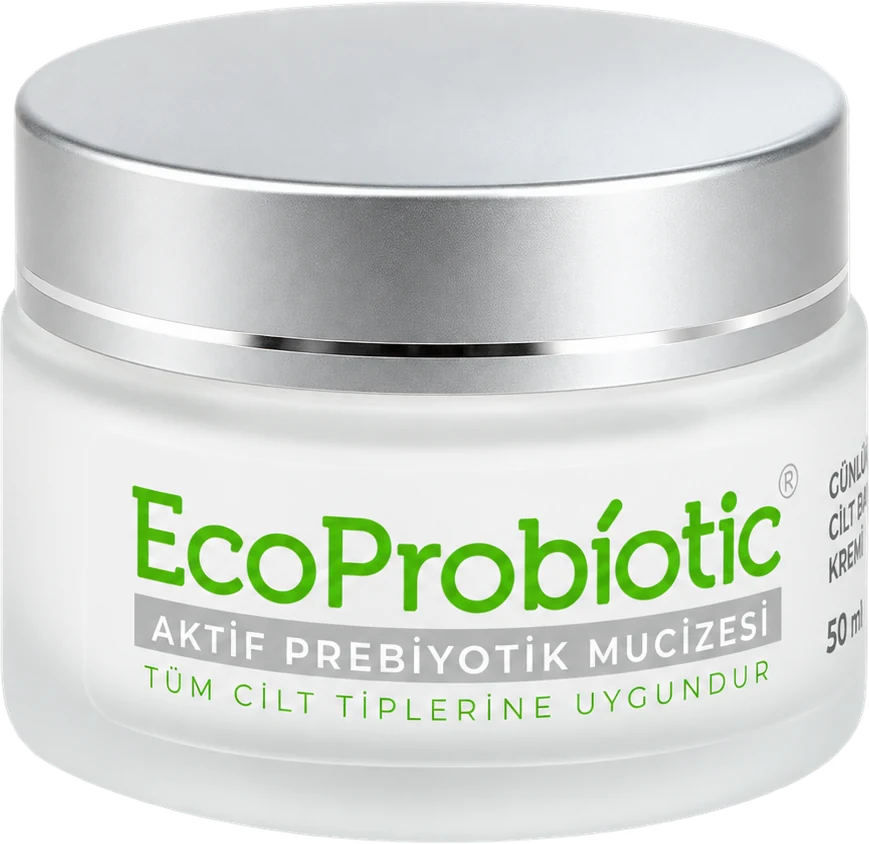 Moisturising01Prebiotic Face CreamA thin layer morning and evening; on shaving days, right after you shave. Moisturises the skin and supports its barrier.View ↗
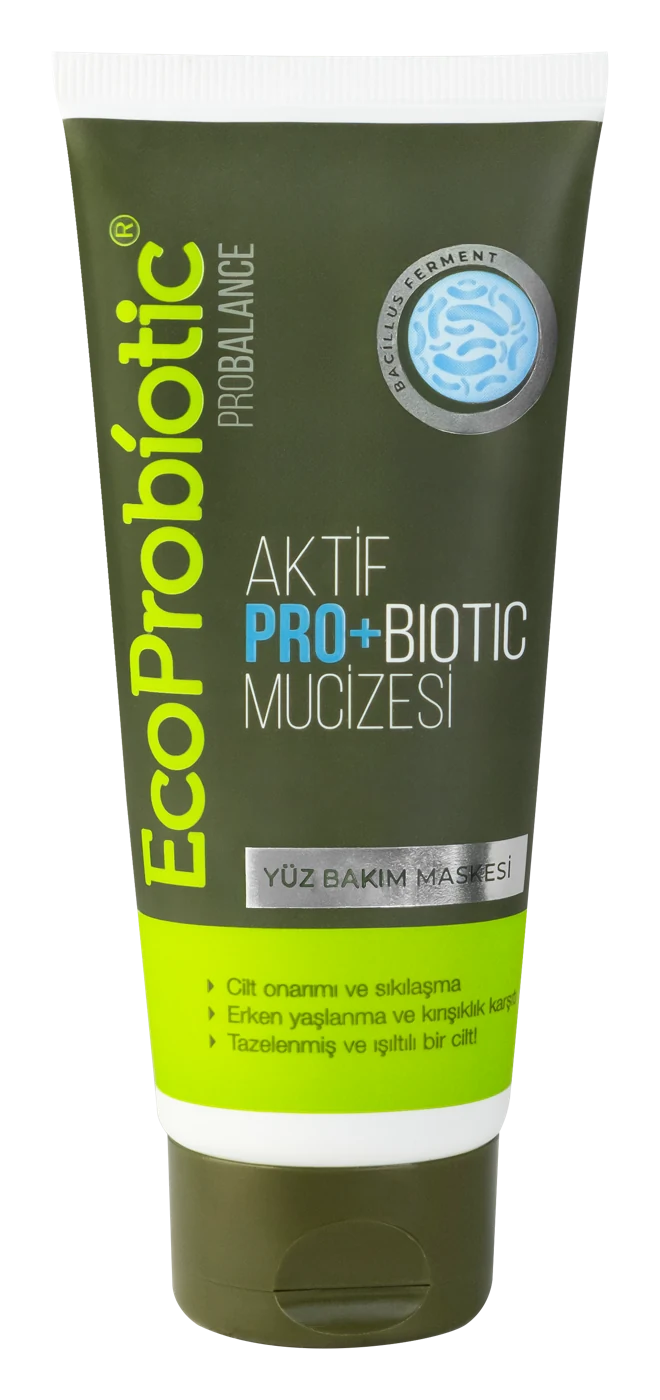 Weekly care02Prebiotic Volcanic Clay MaskOnce or twice a week, for ten minutes. Absorbs excess oil and leaves the skin matte and clean.View ↗
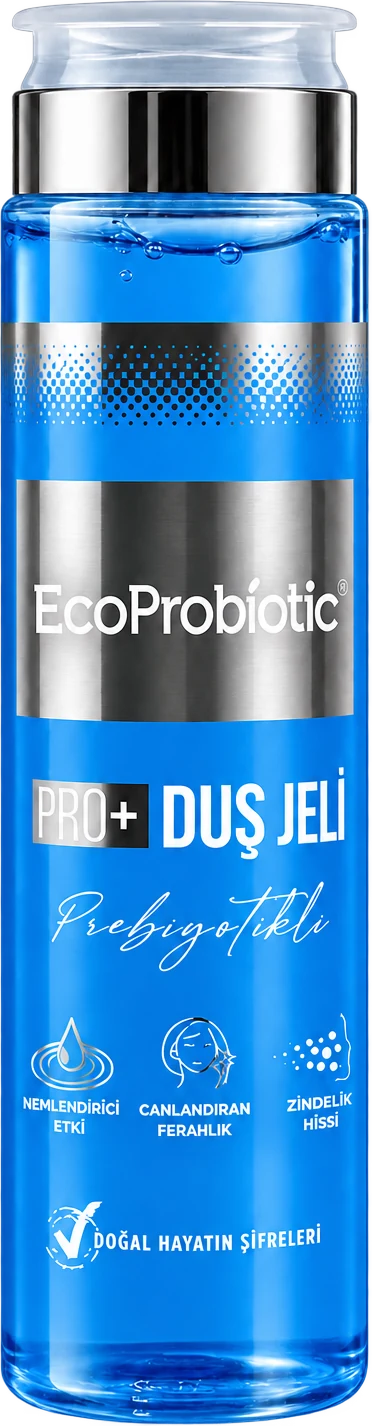 Body03Prebiotic Shower GelThoroughly cleanses the areas that hold sweat; moisturises the skin and supports its barrier. Morning or evening, every day.View ↗
Reading labels
Ingredient guide
✓What helps
- Glycerin: a well-proven, lightweight humectant that draws water into skin after shaving.
- Niacinamide: supports the barrier, even tone and the look of pores.
- Vitamin C: for antioxidant support in the morning.
- Hyaluronic acid: a lightweight humectant that doesn't leave a greasy feel.
- Ceramides: complete the barrier's mortar.
- Panthenol: soothes skin after shaving and holds in moisture.
- Low-dose retinol: in the evening, for preventive anti-aging care.
- Moisturizers with prebiotic ingredients: may help support your skin's own balance of beneficial bacteria.
- Broad-spectrum sunscreen filters: every morning.
!Be careful with
- Body soap and shower gel: can be too harsh for the thin barrier on your face.
- High-alcohol aftershave lotions: give an instant cooling feeling but dry out the skin and increase stinging.
- Heavily fragranced colognes and lotions: can irritate the micro-scratches left by shaving.
- Harsh, gritty scrubs: add micro-scratches to skin already stressed by shaving.
- Using retinol and a strong acid on the same evening: raises the risk of irritation.
All year round
By season
Summer
Sweat and sebum increase; switch to a gel moisturizer and reapply sunscreen more often. After a workout, a game or a long motorcycle ride, wash your face with lukewarm water; dried sweat can cause irritation.
Winter
Cold, wind and the dry air from central heating radiators lower humidity. Step your moisturizer up a notch and avoid hot showers. If you head out into the cold right after shaving, don't skip moisturizer.
Seasonal transition
Even normal skin can get thrown off during transitions. If you get a few days of dryness or shine, simplify your routine instead of changing it; add new products one at a time.
Caution
Common mistakes
- ✕Washing your face in the shower with body soap or shower gel.
- ✕Using sunscreen only on vacation or at the beach.
- ✕Shaving quickly against the grain on dry skin and hair with a dull blade.
- ✕Using an alcohol-based aftershave lotion in place of a moisturizer.
- ✕Leaving your ears, the back of your neck and your neck out of your sunscreen routine.
- ✕Skipping your evening face wash because your skin is trouble-free; sweat and helmet residue then stay on your skin all night.
Popular searches
Most asked about Normal skin
Your questions
Frequently asked questions
01Is men's skin really different from women's?+
Yes. On average, men's skin is thicker, produces more sebum because of androgen hormones and has a slightly more acidic surface pH. Add to that the load of regular shaving and weaker sun protection habits. So while the basic principles are the same, a man's routine should center on shaving steps and sun protection.
02I have normal skin. Do I need a moisturizer?+
Yes, especially on the days you shave. Shaving also removes a thin layer from the top of your skin; a light moisturizer supports the barrier's recovery. Normal skin doesn't need a heavy cream; a light lotion with glycerin or hyaluronic acid is enough.
03Should men wear sunscreen?+
Absolutely. Men lag well behind women when it comes to regularly putting sunscreen on their face, and men's skin has lower antioxidant capacity. Applying a broad-spectrum SPF 30 or higher product to your face, ears and the back of your neck every morning can help slow the progression of signs of aging.
04What should I put on after shaving?+
First rinse your face with cool water and pat it dry with a towel. Then apply an alcohol-free post-shave balm or a light moisturizer with glycerin and panthenol. In the morning, sunscreen goes on top.
05Can my skin type change over time?+
Yes. Age, climate, work environment, smoking and the products you use all affect your skin type. In men, sebum doesn't drop much with age, but skin hydration starts to decline after 40; repeating the blotting paper test once a year is a good idea.
06Does the occasional pimple mean I don't have normal skin?+
No. A few stray pimples from stress, lack of sleep or a helmet or mask staying on your face for hours also happen with normal skin. If breakouts are constant and widespread, it's a good idea to see a dermatologist.
Scientific basis
Sources
- 01Skin physiology in men and women: in vivo evaluation of 300 people including TEWL, SC hydration, sebum content and skin surface pH.
Luebberding S, Krueger N, Kerscher M · International Journal of Cosmetic Science · 2013 · doi:10.1111/ics.12068
Measurements in 300 people showed that men's sebum production is higher than women's at every age and does not decline with age, that skin surface pH in men stays below 5, and that the hydration level of men's skin gradually drops after age 40.
- 02Male versus female skin: What dermatologists and cosmeticians should know.
Rahrovan S, Fanian F, Mehryan P, Humbert P, Firooz A · International Journal of Women's Dermatology · 2018 · doi:10.1016/j.ijwd.2018.03.002
Reviewing 57 studies, found that hydration, water loss, sebum, microcirculation, pigmentation and thickness values are generally higher in men, while skin pH is higher in women.
- 03Natural skin surface pH is on average below 5, which is beneficial for its resident flora.
Lambers H, Piessens S, Bloem A, Pronk H, Finkel P · International Journal of Cosmetic Science · 2006 · doi:10.1111/j.1467-2494.2006.00344.x
Showed that natural skin surface pH averages below 5 and that this slightly acidic environment supports the beneficial microflora living on the skin.
- 04The skin: an indispensable barrier.
Proksch E, Brandner JM, Jensen JM · Experimental Dermatology · 2008 · doi:10.1111/j.1600-0625.2008.00786.x
Described the skin barrier as a multifaceted defense system made up of physical, chemical, microbial and immune layers.
- 05Patterns of sunscreen use on the face and other exposed skin among US adults.
Holman DM, Berkowitz Z, Guy GP Jr, Hawkins NA, Saraiya M, Watson M · Journal of the American Academy of Dermatology · 2015 · doi:10.1016/j.jaad.2015.02.1112
A survey of 4,033 US adults showed that the share of men who regularly apply sunscreen to their face is less than half that of women.
- 06Insights into shaving and its impact on skin.
Cowley K, Vanoosthuyze K · British Journal of Dermatology · 2012 · doi:10.1111/j.1365-2133.2011.10783.x
Described how skin problems caused by poor shaving habits are common but often overlooked, and how issues such as nicks and ingrown hairs relate to shaving technique and tools.
- 07The human skin microbiome.
Byrd AL, Belkaid Y, Segre JA · Nature Reviews Microbiology · 2018 · doi:10.1038/nrmicro.2017.157
Summarized how the skin microbiome differs markedly between oily, moist and dry sites and interacts constantly with the barrier and the immune system.