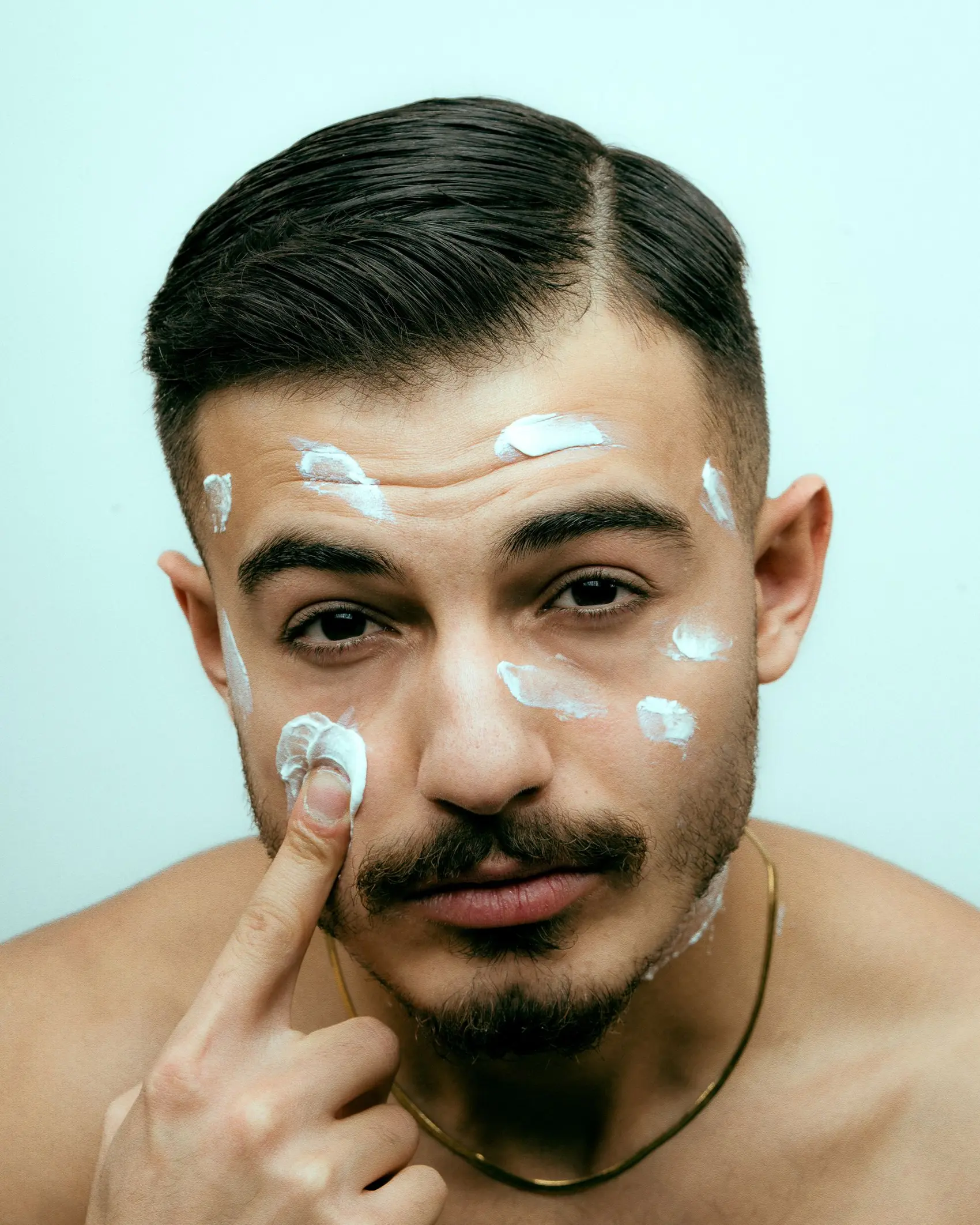
Self-test
Is this type you?
- ◎Blotting paper test: Wash your face, pat it dry and don't apply anything for 1 hour. If the tissues from your forehead, nose and chin show a clear oil mark while the cheek tissues show little or none, you have combination skin.
- ◎The pores on your nose and forehead are visible and blackheads are common, while the pores on your cheeks are barely noticeable.
- ◎After shaving, your cheeks and neck feel tight or burn, yet your forehead shines during the day.
- ◎When you use a single moisturizer, either your nose feels heavy or your cheeks don't get enough.
- ◎Pimples mostly show up on your forehead, the sides of your nose and your chin.
- ◎In summer your oily side takes over; in winter your dry side does.
In depth
The science of your skin
Combination skin is really a more pronounced version of the face's natural map. Oil glands aren't evenly distributed across the face: they're far more concentrated on the forehead, nose and chin, the so-called T-zone. Measurements show that sebum drops markedly from the forehead toward the cheeks and changes with the seasons; when this difference passes a certain threshold, the skin is defined as combination. Because sebum is generally high in men thanks to androgens, oiliness in the T-zone can be more pronounced. The skin microbiome follows the same map: oily and dry areas host different bacterial communities, which means your face has several small defense units that work differently from one another.
What makes combination skin even more complicated in men is shaving. The shaving area, meaning the lower cheeks, under the chin and the neck, loses part of its top layer with regular blade contact; this area can drift toward dry and sensitive on its own. In men with beards, the skin between the hairs is hard for moisturizer to reach, so it either dries out or, on the contrary, becomes a damp, airless zone of sweat and oil. As a result, trying to manage the whole face with one product often pleases one zone while stressing another. That's why the approach that works best for combination skin is zone-based care: a gentle base for the whole face, pore care for the oily zone, and more moisture for the dry and shaved zones.
Priorities
What does it need?
01
Keep the shared base gentle
For the whole face, choose a gel cleanser with a pH close to the skin's and a moderate lather. If you pick a harsh cleanser to suit the oily zone, your cheeks and shaving area pay the price.
02
Care by zone
Apply oil balancers like salicylic acid and clay masks only to the T-zone, and a richer moisturizer to your cheeks and shaving area.
03
Treat the shaving area separately
In combination skin, the shaving area usually falls on the dry side. After shaving, apply an alcohol-free balm and a little more moisturizer to this area.
04
Light but sufficient moisture
A gel-cream or lotion texture is a middle-ground choice that nourishes the dry zone without weighing down the oily zone.
05
Adjust with the seasons
Combination skin shifts with the seasons; focus on the T-zone in summer and on your cheeks in winter.
Combination skin
Keep the shared base gentle
Step by step
Combination skin routine
5 steps
- 01
Gentle gel cleanser
Wash with a face-specific gel cleanser with a pH close to your skin's. If your cheeks feel very tight, in the morning you can use cleanser only on the T-zone and simply rinse your cheeks with lukewarm water.
- 02
Pre-shave prep
Shave after your shower. Soften the hair by leaving a light gel or cream shaving product on for a minute.
- 03
Shave and post-shave
Shave with the grain, without pressing and with few passes. Rinse with cool water and apply an alcohol-free balm with glycerin to the shaving area.
- 04
Zone-based moisturizing
Apply a light lotion to your whole face; add a second thin layer to your cheeks and shaving area. One layer is enough on the T-zone.
- 05
Sunscreen
A broad-spectrum product with SPF 30 or higher, in a fluid texture with a semi-matte finish, keeps both zones of combination skin happy. Don't forget your ears and the back of your neck.
What you can add to your routine
One face, different units
Oily and dry zones host different bacterial communities. Applying an equally harsh product to the whole face can upset this balance on one side.
Protect the acidic environment
Cleansers with a pH close to the skin's protect the slightly acidic surface where beneficial bacteria thrive, both in the T-zone and on the cheeks.
Care you can use in your routine
EcoProbiotic MenCare range ↗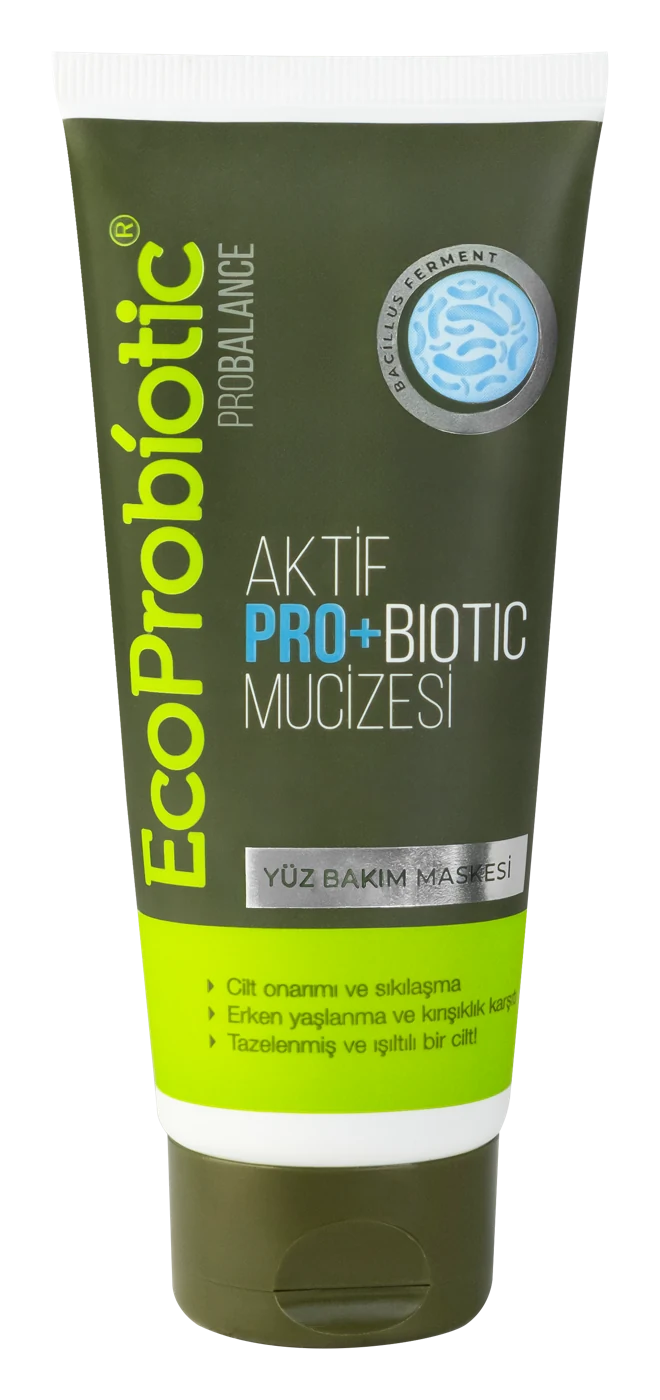 Weekly care01Prebiotic Volcanic Clay MaskOnce or twice a week, for ten minutes. Absorbs excess oil and leaves the skin matte and clean.View ↗
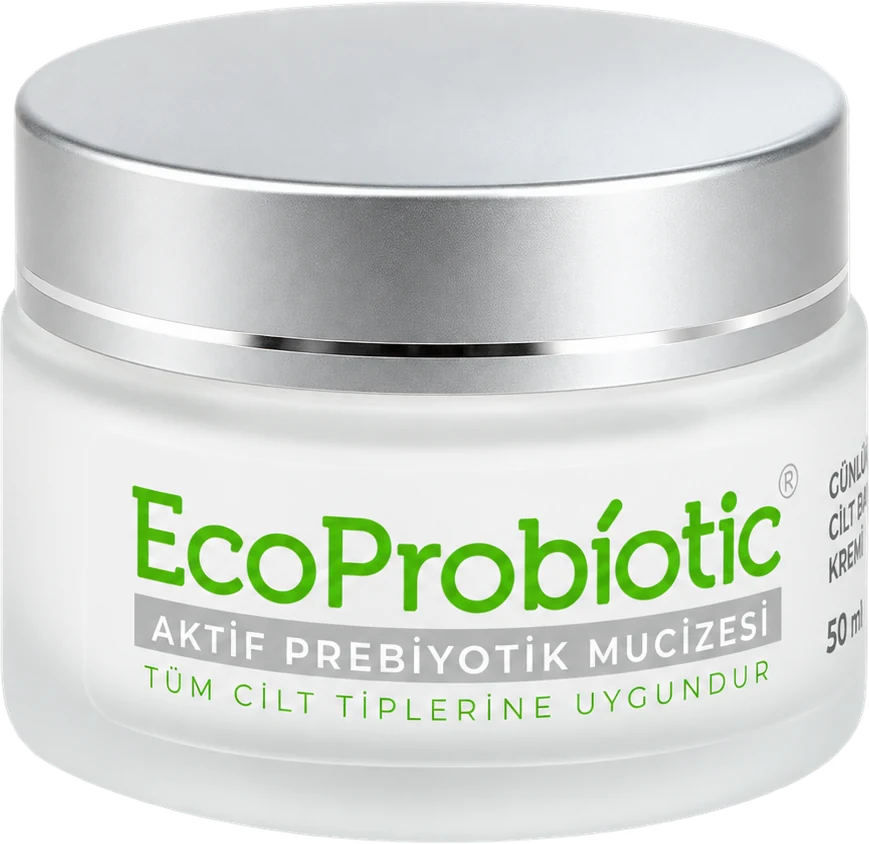 Moisturising02Prebiotic Face CreamA thin layer morning and evening; on shaving days, right after you shave. Moisturises the skin and supports its barrier.View ↗
Reading labels
Ingredient guide
✓What helps
- Niacinamide: shared support that suits both oily and dry zones.
- Salicylic acid: for pore care in the T-zone only.
- Hyaluronic acid and glycerin: hydrate without adding oil.
- Ceramides: barrier support for the cheeks and shaving area.
- Panthenol: soothing after shaving.
- Clay: for a weekly T-zone mask.
- Lactic acid or PHA: gentle, moisture-friendly renewal.
- Non-pore-clogging moisturizers in gel-cream and lotion textures.
!Be careful with
- Strong oil balancers applied to the whole face: dry out the cheeks and shaving area.
- Heavy creams chosen only for the dry zone: can clog pores in the T-zone.
- Alcohol-based aftershave lotions: increase dryness in the shaving area.
- Harsh, gritty scrubs: irritate both pimples and the shaving area.
- Changing products often: makes it harder to understand how combination skin reacts to each product.
All year round
By season
Summer
The T-zone takes the lead. Lighten your moisturizer, and you can use salicylic acid more often. Wash your face soon after sports or a ride with a helmet.
Winter
The cheeks and shaving area take the lead. Add a richer cream to these areas and cut back on strong actives in the T-zone. Don't forget to moisturize under your chin, where scarves and collars rub.
Seasonal transition
During transitions, watch for a few days to see which side of your skin takes over; adjust the amounts by zone instead of changing products.
Caution
Common mistakes
- ✕Washing your whole face with a cleanser harsh enough for the oily zone.
- ✕Applying one heavy cream to your whole face and clogging the T-zone.
- ✕Not noticing that your shaving area is drying out and sticking with an alcohol-based lotion.
- ✕Putting the clay mask on your cheeks too.
- ✕Applying sunscreen only to your cheeks because you think it makes you greasy.
- ✕Trying a new product every week and never being able to read your skin's reaction.
Popular searches
Most asked about Combination skin
Your questions
Frequently asked questions
01Do I need two different moisturizers for combination skin?+
Not necessarily. A single non-pore-clogging moisturizer in a lotion or gel-cream texture is usually enough; adding a second thin layer to your cheeks and shaving area closes the gap. If your cheeks get very dry in winter, it makes sense to add a richer cream just for those areas.
02How can I tell if I have combination skin?+
The most practical way is the blotting paper test. Wash your face, wait 1 hour without applying anything, and press separate tissues onto your forehead, nose, chin and cheeks. If there's clear oil on your forehead, nose and chin but little or none on your cheeks, you have combination skin.
03Why is my shaving area drier than the rest of my face?+
Along with the hair, regular shaving takes a piece of the skin's top protective layer. That's why the shaving area can drift toward dry and sensitive even if your T-zone is oily. Applying an alcohol-free balm and a little more moisturizer to this area after shaving helps restore balance.
04Should I put salicylic acid on my whole face if I have combination skin?+
Usually not. Applying salicylic acid only to oily, pore-prone areas such as the forehead, nose and chin keeps your cheeks and shaving area from drying out unnecessarily.
05What kind of sunscreen should I choose for combination skin?+
A broad-spectrum product with SPF 30 or higher, in a fluid or gel-cream texture with a semi-matte finish, that won't clog pores suits both zones. In the morning, apply enough to your whole face, ears and the back of your neck.
Scientific basis
Sources
- 01Regional and seasonal variations in facial sebum secretions: a proposal for the definition of combination skin type.
Youn SW, Na JI, Choi SY, Huh CH, Park KC · Skin Research and Technology · 2005 · doi:10.1111/j.1600-0846.2005.00119.x
Showed that facial sebum drops markedly from the forehead toward the cheeks and changes with the seasons, and proposed a measurable definition of combination skin.
- 02Skin physiology in men and women: in vivo evaluation of 300 people including TEWL, SC hydration, sebum content and skin surface pH.
Luebberding S, Krueger N, Kerscher M · International Journal of Cosmetic Science · 2013 · doi:10.1111/ics.12068
Measurements in 300 people showed that men's sebum production is higher than women's at every age and does not decline with age, that skin surface pH in men stays below 5, and that the hydration level of men's skin gradually drops after age 40.
- 03Male versus female skin: What dermatologists and cosmeticians should know.
Rahrovan S, Fanian F, Mehryan P, Humbert P, Firooz A · International Journal of Women's Dermatology · 2018 · doi:10.1016/j.ijwd.2018.03.002
Reviewing 57 studies, found that hydration, water loss, sebum, microcirculation, pigmentation and thickness values are generally higher in men, while skin pH is higher in women.
- 04Oily skin: an overview.
Sakuma TH, Maibach HI · Skin Pharmacology and Physiology · 2012 · doi:10.1159/000338978
Summarized how sebum production is influenced by hormones, genetics, age and climate, and how oily skin is associated with enlarged pores and a tendency toward acne.
- 05The male beard hair and facial skin - challenges for shaving.
Maurer M, Rietzler M, Burghardt R, Siebenhaar F · International Journal of Cosmetic Science · 2016 · doi:10.1111/ics.12328
Described beard hair as dense, thick and coarse, and the skin around the follicles as rich in nerves, blood vessels and immune cells and able to react strongly to shaving; it also noted that men's facial skin tends to recover more slowly and to develop post-inflammatory dark spots.
- 06Male skin and ingredients relevant to male skin care.
Draelos ZD · British Journal of Dermatology · 2012 · doi:10.1111/j.1365-2133.2011.10784.x
Showed that men's skincare is shaped by the need for regular shaving, that post-shave moisturizers containing glycerin and emollients support barrier function, and that niacinamide can enhance this support.
- 07The human skin microbiome.
Byrd AL, Belkaid Y, Segre JA · Nature Reviews Microbiology · 2018 · doi:10.1038/nrmicro.2017.157
Summarized how the skin microbiome differs markedly between oily, moist and dry sites and interacts constantly with the barrier and the immune system.
- 08The Influence of Age and Gender on Skin-Associated Microbial Communities in Urban and Rural Human Populations.
Ying S, Zeng DN, Chi L, Tan Y, Galzote C, Cardona C et al. · PLoS One · 2015 · doi:10.1371/journal.pone.0141842
Showed that the skin's bacterial community varies most by body site, and is also associated with age, gender, skin characteristics and living in an urban or rural area.