Self-test
Is this type you?
- ◎Blotting paper test: Wash your face, pat it dry and don't apply anything for 1 hour. If none of the tissues you press onto your forehead, nose, cheeks and chin show any oil, and your face felt tight during that time, your skin tends to be dry.
- ◎A few minutes after washing your face you feel a noticeable pulling sensation, especially on your cheeks.
- ◎Your skin burns or stings after shaving, and the feeling gets worse when you apply aftershave lotion.
- ◎Fine white flakes build up under your beard or between your eyebrows, and your skin itches in places.
- ◎Your face barely shines during the day; it looks matte and dull.
- ◎When you lightly scratch your skin with a fingernail, it leaves a white line.
- ◎In winter or in an air-conditioned office you get redness on your cheeks and cracks at the corners of your mouth.
In depth
The science of your skin
In dry skin, two problems usually show up together: the oil glands produce less sebum, and the ceramides, cholesterol and fatty acids that form the mortar of the stratum corneum run low. The natural moisturizing factor (NMF) that holds water inside the cells also declines. When the mortar thins, transepidermal water loss rises, dead cells can't shed properly and pile up on the surface, and flaking, dullness and tightness appear. Because men have higher sebum on average, dry skin in men gets talked about less; but measurements show that the hydration level of men's skin gradually drops after age 40. In other words, dry skin is real in men too, and it becomes more common with age.
The biggest factor making dryness worse in men is often shaving. Along with the hair, the blade takes a piece of the skin's top protective layer; shaving dry skin, without lather or with a dull blade, deepens this micro-trauma. The alcohol-based aftershave that follows strips away the little oil and water the skin has left. The skin under a beard is a story of its own: because the hair is dense, moisturizer has trouble reaching it, dead cells collect between the hairs and the white flakes we call beard dandruff form. The rest of the answer to what causes dry skin is familiar: cold, windy weather, central heating radiators and air conditioning, frequent hot showers, and shower gel or soap used on the face. These factors can also raise the slightly acidic pH of the skin's surface; when pH goes up, the enzymes involved in repair slow down. So the core of the solution comes down to three steps: gentler cleansing, a more protective shave, and drawing moisture into the skin and locking it in. If itching keeps you up at night, or you have red, cracked patches, see a dermatologist to check for eczema.
Priorities
What does it need?
01
Replace the lipids
Creams that contain ceramides, cholesterol and fatty acids together help complete the barrier's mortar; they put back the missing pieces of dry skin's armor.
02
Draw water in and lock it in
First, humectants such as glycerin, hyaluronic acid or urea draw in water; then emollients like squalane and occlusives like petroleum jelly keep it inside.
03
Make shaving gentler
A creamy, rich-lather shaving product, a sharp blade and few passes with the grain make a difference on dry skin. An electric shaver causes less dryness for some men; try it and decide.
04
Don't forget the skin under your beard
If you have a beard, work your moisturizer or beard oil through the hairs down to the skin with your fingertips. Once a week, a soft beard brush gently removes flakes.
05
Change your shower habits
Short, lukewarm showers, patting your face dry instead of rubbing it, and applying moisturizer within 3 minutes noticeably reduce dryness.
Dry skin
Replace the lipids
Step by step
Dry skin routine
5 steps
- 01
Lukewarm water or a cream cleanser
With dry skin, lukewarm water is often enough in the morning. If you use a cleanser, choose a non-foaming, milky one.
- 02
Pre-shave prep
Shave after your shower or wet your face with lukewarm water for a few minutes. Apply a few drops of pre-shave oil first, or go straight to a creamy shaving product; never shave dry skin.
- 03
A gentle shave
Shave with a sharp blade, with the grain, without pressing. If you need a third pass over the same area, reapply your product; never pass over dry skin.
- 04
Post-shave repair
Rinse with cool water and pat dry with a towel. Apply an alcohol-free balm with glycerin and panthenol; it reduces stinging.
- 05
Rich moisturizer and sunscreen
Over a creamy moisturizer with ceramides, apply a broad-spectrum sunscreen with SPF 30 or higher and a creamy texture. Matte-finish, high-alcohol formulas can dry out dry skin even more.
What you can add to your routine
The acid mantle is the microbiome's home base
In dry skin, pH rises easily. Slightly acidic products with a pH close to the skin's help protect the environment in which beneficial bacteria thrive.
Prebiotics
Prebiotics, the food of beneficial bacteria, may help support a balanced community on the skin's surface; this can contribute to a more resilient barrier.
Care you can use in your routine
EcoProbiotic MenCare range ↗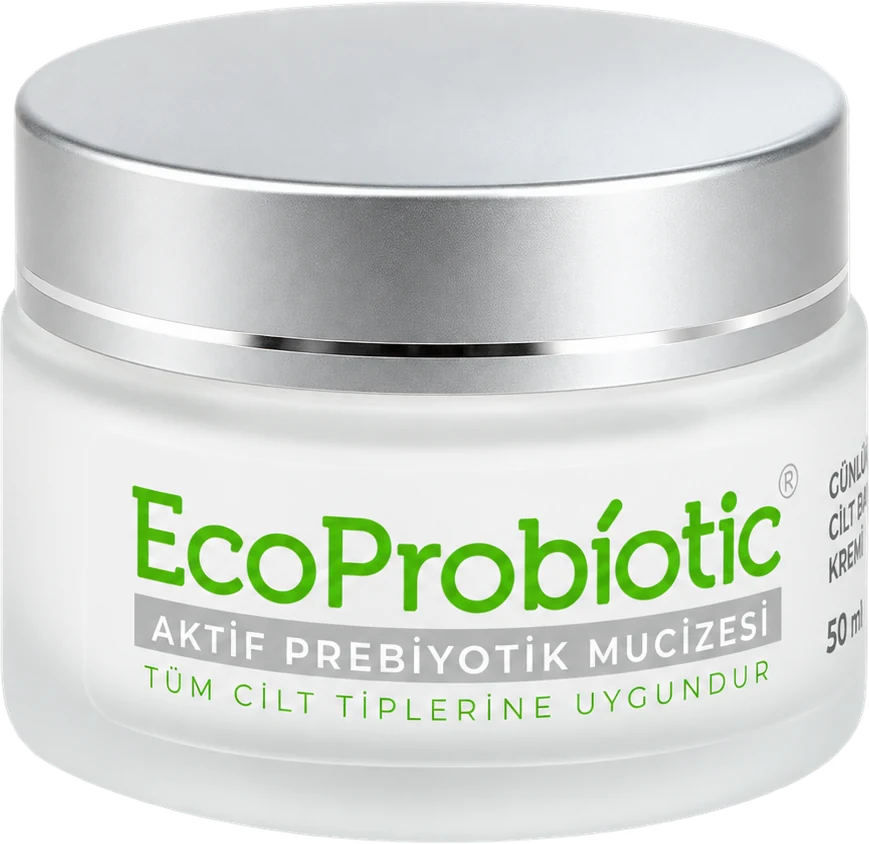 Moisturising01Prebiotic Face CreamA thin layer morning and evening; on shaving days, right after you shave. Moisturises the skin and supports its barrier.View ↗
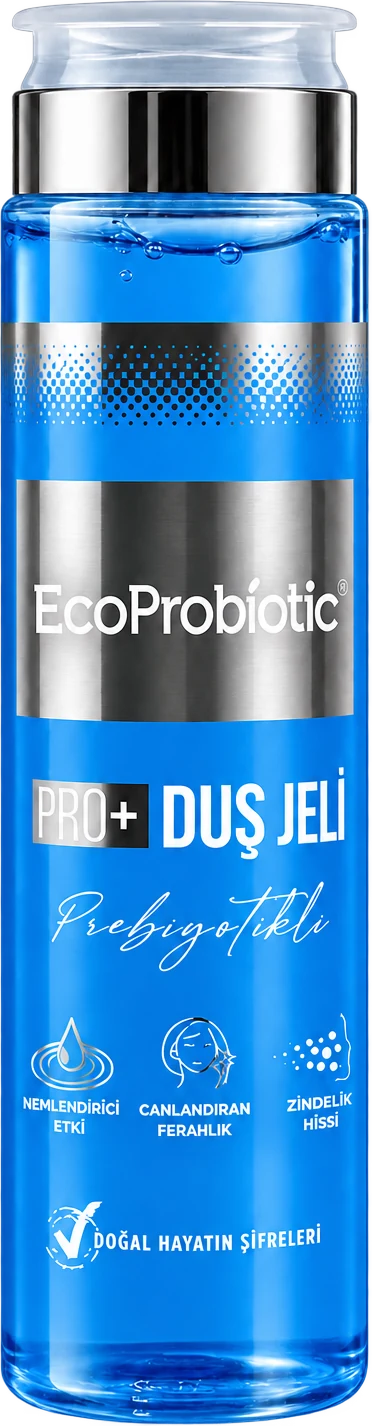 Body02Prebiotic Shower GelThoroughly cleanses the areas that hold sweat; moisturises the skin and supports its barrier. Morning or evening, every day.View ↗
Reading labels
Ingredient guide
✓What helps
- Ceramides: the main building block of the barrier's mortar.
- Glycerin: a well-proven humectant; stands out for post-shave barrier support.
- Hyaluronic acid: a lightweight humectant that binds water.
- Urea: both holds moisture and softens flakes.
- Squalane: a light emollient similar to the skin's own oil; also suitable under the beard.
- Panthenol: soothes after shaving and supports barrier repair.
- Niacinamide: supports the production of barrier lipids.
- Occlusives like petroleum jelly: keep water in overnight on very dry areas.
!Be careful with
- Alcohol-based aftershave lotions and colognes: among dry skin's worst enemies.
- Soap-based, high-lather cleansers and shower gels used on the face.
- Menthol and heavy fragrance: give a cooling feeling but can irritate a weak barrier.
- Strong glycolic and salicylic acid peels: increase dryness with frequent use.
- Clay masks: because they absorb oil, limit them to the nose and forehead on dry skin.
- Jumping straight into high-dose retinoids: can cause flaking and redness.
All year round
By season
Winter
The toughest season for dry skin. Cold, wind and central heating radiators increase water loss. Use a thicker night cream, and apply a protective balm to your cheeks and lips before going out. If your scarf and beanie rub against your face, apply extra moisturizer to those areas.
Summer
Skin feels better as humidity rises, but air conditioning, sun and seawater dry it out. A lighter cream may be enough; don't skip sunscreen, and after the beach or pool rinse your face with fresh water and moisturize.
Seasonal transition
In the fall, gradually make your moisturizer richer. If flaking starts, step up moisturizing, not exfoliation; you can also shave less often for a while.
Caution
Common mistakes
- ✕Shaving dry skin, without lather or with water alone.
- ✕Applying an alcohol-based lotion after shaving and taking the burn as a sign of a good shave.
- ✕Washing your face with hot water for a long time and lathering it with shower gel.
- ✕Scraping the flakes under your beard with your nails or a stiff brush.
- ✕Applying moisturizer to skin that has already dried, long after washing.
- ✕Dropping sunscreen in winter.
- ✕Blaming dryness only on not drinking enough water and neglecting topical moisture.
Popular searches
Most asked about Dry skin
Your questions
Frequently asked questions
01Men are supposed to have oily skin, so why is mine dry?+
Although men have higher sebum on average, genetics, age, climate and habits make a big difference from person to person. Measurements show that the hydration level of men's skin drops after 40; add harsh cleansers, hot showers, alcohol-based aftershave and central heating, and dry skin becomes common in men too.
02Why does my face burn and feel tight after shaving?+
Along with the hair, shaving takes a piece of the skin's top protective layer; in dry skin this layer is already thin. Shaving dry skin, without lather or with a dull blade, followed by an alcohol-based lotion, makes the burning worse. A creamy shaving product, a sharp blade, a single pass with the grain and an alcohol-free balm with glycerin usually bring noticeable relief.
03I have white flakes in my beard. Is that dandruff?+
When the skin under your beard dries out, dead cells collect between the hairs and form white flakes. Regular gentle cleansing, soft brushing once a week and moisturizing with beard oil are usually enough. If there's redness, greasy yellow crusts and itching under the flakes, it may be seborrheic dermatitis; in that case, see a dermatologist.
04Electric shaver or razor for dry skin?+
It depends on the person. An electric shaver doesn't cut as close as a blade, but because it has less contact with the skin, it causes less dryness and irritation for some men. If you use a razor, stick to the rules: sharp blade, creamy shaving product and few passes. Try both methods for a few weeks and decide based on how your skin reacts.
05Will drinking lots of water fix my dry skin?+
Getting enough fluids matters for your overall health, but on its own it won't fix dry skin. The real cause of dryness is a shortage of barrier lipids and humectants; you need topical moisturizing support.
06When does dryness call for a doctor?+
If itching keeps you up at night, if redness and cracks bleed, or if it doesn't improve within a few weeks despite regular moisturizing, it could be a condition such as eczema or seborrheic dermatitis; we recommend seeing a dermatologist.
Scientific basis
Sources
- 01Skin physiology in men and women: in vivo evaluation of 300 people including TEWL, SC hydration, sebum content and skin surface pH.
Luebberding S, Krueger N, Kerscher M · International Journal of Cosmetic Science · 2013 · doi:10.1111/ics.12068
Measurements in 300 people showed that men's sebum production is higher than women's at every age and does not decline with age, that skin surface pH in men stays below 5, and that the hydration level of men's skin gradually drops after age 40.
- 02Moisturization and skin barrier function.
Rawlings AV, Harding CR · Dermatologic Therapy · 2004 · doi:10.1111/j.1396-0296.2004.04s1005.x
Explained that natural moisturizing factor and barrier lipids are reduced in dry skin, and that moisturizers can help break this vicious cycle.
- 03Role of topical emollients and moisturizers in the treatment of dry skin barrier disorders.
Lodén M · American Journal of Clinical Dermatology · 2003 · doi:10.2165/00128071-200304110-00005
Reviewed how humectant, emollient and occlusive ingredients help reduce water loss in dry skin with a weakened barrier.
- 04The effect of environmental humidity and temperature on skin barrier function and dermatitis.
Engebretsen KA, Johansen JD, Kezic S, Linneberg A, Thyssen JP · Journal of the European Academy of Dermatology and Venereology · 2016 · doi:10.1111/jdv.13301
Reviewed evidence that low humidity and cold weather weaken the skin barrier and that dryness and eczema flare-ups increase in the winter months.
- 05Male skin and ingredients relevant to male skin care.
Draelos ZD · British Journal of Dermatology · 2012 · doi:10.1111/j.1365-2133.2011.10784.x
Showed that men's skincare is shaped by the need for regular shaving, that post-shave moisturizers containing glycerin and emollients support barrier function, and that niacinamide can enhance this support.
- 06Cleansing without compromise: the impact of cleansers on the skin barrier and the technology of mild cleansing.
Ananthapadmanabhan KP, Moore DJ, Subramanyan K, Misra M, Meyer F · Dermatologic Therapy · 2004 · doi:10.1111/j.1396-0296.2004.04s1002.x
Showed that harsh surfactants can damage barrier proteins and lipids, and that mild cleansing technologies reduce this effect.
- 07The male beard hair and facial skin - challenges for shaving.
Maurer M, Rietzler M, Burghardt R, Siebenhaar F · International Journal of Cosmetic Science · 2016 · doi:10.1111/ics.12328
Described beard hair as dense, thick and coarse, and the skin around the follicles as rich in nerves, blood vessels and immune cells and able to react strongly to shaving; it also noted that men's facial skin tends to recover more slowly and to develop post-inflammatory dark spots.