On the first cold days of winter or during a busy work week, your scalp may start to itch and flakes may start landing on your shoulders. Most men immediately call it dandruff and grab the first dandruff shampoo they see. But there can be two different stories behind the flakes, and following the wrong one can drag the problem out.
What is dandruff?
Dandruff is a very common itchy, flaky scalp condition seen after puberty. A study on the scalp's barrier function explains that the cause of dandruff is multifactorial, with a yeast that naturally lives on the scalp, oil production and individual susceptibility all playing a role. Because this yeast is also found on healthy scalps, it isn't enough of a cause on its own.
The same study shows that in a scalp with dandruff, the structure of the skin's top layer is disrupted and its lipids are reduced and disorganized. In other words, dandruff isn't just a yeast issue; it's also a scalp barrier problem.
The scalp microbiome and dandruff
In a study comparing the microbial communities of healthy scalps and scalps with dandruff, the balance of yeast and bacteria was different on scalps with dandruff. The researchers noted that the scalp's resident beneficial bacteria may play a role in maintaining a healthy scalp. This finding shows why, when dealing with dandruff, it's important to think not only about reducing microbes but about the scalp's overall balance.
What is dry scalp?
Like other dry areas of your body, a dry scalp is the result of moisture loss. Indoor air dried out by central heating radiators, cold outdoor air, washing with very hot water and shampoos that over-dry the scalp are the main causes. A dry scalp isn't oily; on the contrary, it feels tight, itchy and rough.
How can you tell the difference?
- Flakes: Larger, yellowish and oily with dandruff; small, white and powder-like with dry scalp.
- Scalp: Oily and sometimes red with dandruff; tight and dull with dry scalp.
- Hair: With dandruff, hair gets greasy quickly; with dry scalp, hair may also be dry and frizzy.
- Season: Dandruff can last all year and get worse with stress; dry scalp is more noticeable in winter.
- Other areas: Dandruff can also cause flaking between the eyebrows, at the sides of the nose or in the beard; with dry scalp, your hands and legs may be dry too.
Oily, yellowish flakes usually point to dandruff; small, powdery flakes point to dryness. The right step starts with telling them apart correctly.
Care for dandruff
With dandruff, washing your scalp more often usually helps, because built-up oil and flakes are cleared away regularly. Shampoos with antifungal ingredients, available at pharmacies, that help balance scalp yeast are a common option. Massage the shampoo into your scalp and leave it on for a few minutes before rinsing. Once symptoms ease, using it a few times a week is usually enough.
Care for dry scalp
- Wash your hair with lukewarm, not very hot, water.
- Use a gentle shampoo with humectants that doesn't dry out your scalp.
- Don't use dandruff shampoo on a dry scalp for longer than necessary; it can dry it out even more.
- In winter, try not to let indoor air get too dry.
- Don't scratch your scalp with your nails; it causes further damage to the barrier.
When should you see a dermatologist?
If flaking doesn't ease after a few weeks of regular care, or you see thick silvery plaques, red well-defined patches, oozing or bald patches along with hair loss on your scalp, see a dermatologist. Psoriasis, seborrheic dermatitis and fungal infections of the scalp can resemble dandruff and require a doctor's evaluation.
Helpful as you build this routine
EcoProbiotic MenCare range ↗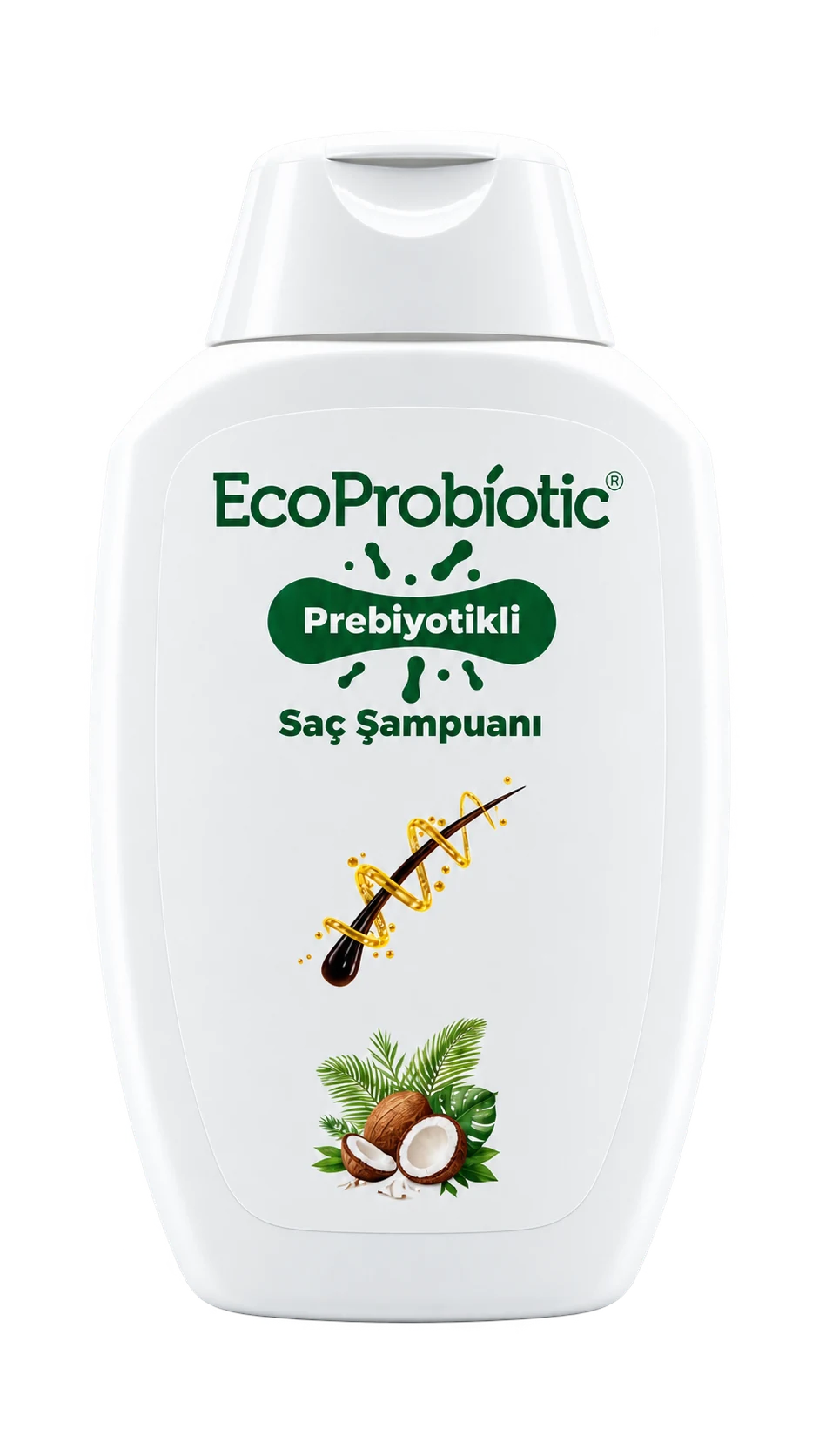
Sources
- 01Stratum corneum dysfunction in dandruff
Turner GA, Hoptroff M, Harding CR · International Journal of Cosmetic Science · 2012 · doi:10.1111/j.1468-2494.2012.00723.x
Explained that dandruff arises from a combination of yeast, oil production and individual susceptibility, and that barrier lipids are reduced and disorganized in scalps with dandruff.
- 02Comparison of Healthy and Dandruff Scalp Microbiome Reveals the Role of Commensals in Scalp Health
Saxena R, Mittal P, Clavaud C, Dhakan DB, Hegde P, Veeranagaiah MM et al. · Frontiers in Cellular and Infection Microbiology · 2018 · doi:10.3389/fcimb.2018.00346
Showed that the balance of yeast and bacteria differs on scalps with dandruff and that resident beneficial bacteria may play a role in scalp health.
- 03Seborrheic Dermatitis and Dandruff: A Comprehensive Review
Borda LJ, Wikramanayake TC · Journal of Clinical and Investigative Dermatology · 2015 · doi:10.13188/2373-1044.1000019
Comprehensively reviewed the causes, clinical appearance and medical approaches for dandruff and seborrheic dermatitis.
- 04Malassezia, dandruff and seborrhoeic dermatitis: an overview
Hay RJ · British Journal of Dermatology · 2011 · doi:10.1111/j.1365-2133.2011.10570.x
Summarized the role of scalp yeast in dandruff and seborrheic dermatitis and the place of antifungal approaches.
- 05Dandruff
NHS · NHS · 2024
Explained that dandruff is a common, non-contagious condition that can usually be kept under control with regular washing and dandruff shampoos.