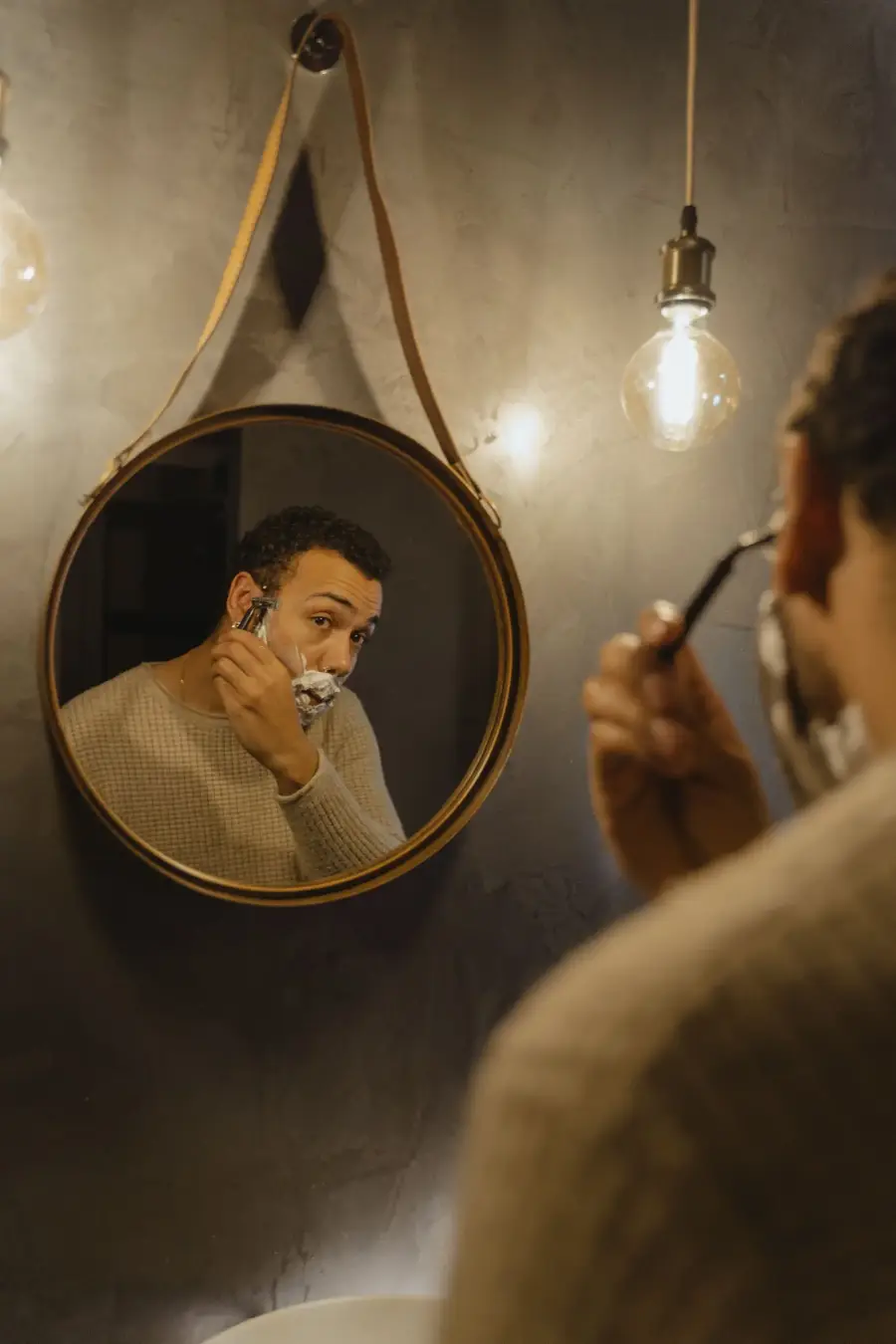
Hair loss is one of the topics men talk about most but get the least accurate information on. Advice heard in the barber's chair, at the gym or around the family dinner table is passed down from generation to generation. Some of it is harmless, but some pushes men into unnecessary worry or wasted money. Let's look at the most common myths one by one.
First, the basics: how does male pattern hair loss happen?
A review on male pattern hair loss explains that it develops in genetically predisposed people whose hair follicles are sensitive to the potent derivative of testosterone formed in the skin. Under this hormone's influence, follicles shrink over time, the hair's growth phase shortens and the strands gradually get thinner. The process usually shows up as a receding hairline and thinning at the crown.
Myth 1: Hats make your hair fall out
This may be the most common myth of all. The logic is understandable: a hat squeezes the scalp, cuts off air and pulls on the hair. But the mechanism of male pattern hair loss is hormonal and genetic; there's no strong evidence that a normal hat starts this process. In fact, a study of identical male twins found less hair loss at the temples in those who wore a hat every day. The researchers considered this a finding that could be linked to sun protection. There's one exception: headwear, tight buns and braids that constantly and tightly pull on the hair can wear out hair follicles over time. But an ordinary cap or beanie doesn't fall into that category. Cleaning your hat after you've sweated in it is still a good habit for the comfort of your scalp.
Myth 2: Washing every day makes your hair fall out
The strands left in your palm in the shower are this myth's biggest supporters. But those hairs fall out not because of washing, but because they were already in the shedding phase. Washing just shows them to you all at once. In a study on hair washing frequency that included both objective measurements and participant ratings, washing every day gave better results for hair and scalp condition than washing once a week, and no objective damage to the hair was seen at that frequency. For men with an oily scalp who sweat a lot, frequent washing can also help reduce itching and dandruff. What matters is choosing a gentle shampoo that doesn't dry out your scalp.
The hairs you see in the shower aren't victims of washing; they're strands that were already packed and ready to leave.
Myth 3: Cutting your hair often makes it grow thicker
Once a hair strand leaves the follicle, it's a non-living structure. Cutting the tip doesn't change the growth rate at the root or how dense your hair is. Short hair looks fuller because the cut ends are blunter and thicker and short hair stands up more.
Myth 4: Gel and wax make you bald
There's no evidence that styling products cause male pattern hair loss. However, letting product build up all day without cleaning your scalp regularly can lead to itching and flaking. Combing roughly and constantly pulling your hair back can also break strands. Washing the product out with shampoo in the evening is enough of a precaution.
Factors that have actually been linked
The same twin study showed that some lifestyle factors may also be linked to hair loss. Longer smoking duration and the presence of dandruff were associated with more hair loss at the front, while long-term stress was associated with hair loss at the crown. These findings suggest that even in a process dominated by genetics, lifestyle may play a small but noteworthy role.
- If you smoke, quitting is one of the most valuable steps for your overall skin health, hair included.
- Don't neglect dandruff and itching; keeping your scalp healthy matters.
- Prioritize sleep and regular movement to manage long-term stress.
- Sudden, rapid shedding can occur after crash diets or a serious illness; this kind of shedding is mostly temporary.
When should you see a dermatologist?
With male pattern hair loss, an early evaluation increases your options for keeping the hair you have. If you notice clear thinning at your hairline or crown, round bald patches are forming or the shedding is sudden and heavy, see a dermatologist. After an evaluation, topical and systemic medical options may be considered; rather than wasting time on products bought online, finding out the real cause is the shortest route.
Helpful as you build this routine
EcoProbiotic MenCare range ↗

Sources
- 01Androgenetic alopecia: a review
Lolli F, Pallotti F, Rossi A, Fortuna MC, Caro G, Lenzi A, Sansone A, Lombardo F · Endocrine · 2017 · doi:10.1007/s12020-017-1280-y
Reviewed how male pattern hair loss develops through genetic predisposition and follicle sensitivity to androgens, with follicles shrinking over time.
- 02The Contribution of Endogenous and Exogenous Factors to Male Alopecia: A Study of Identical Twins
Gatherwright J, Liu MT, Amirlak B, Gliniak C, Totonchi A, Guyuron B · Plastic and Reconstructive Surgery · 2013 · doi:10.1097/PRS.0b013e3182865ca9
Showed in identical male twins that wearing a hat daily was linked to less hair loss at the temples, smoking duration and dandruff to more hair loss at the front, and long-term stress to hair loss at the crown.
- 03The Impact of Shampoo Wash Frequency on Scalp and Hair Conditions
Punyani S, Tosti A, Hordinsky M, Yeomans D, Schwartz J · Skin Appendage Disorders · 2021 · doi:10.1159/000512786
Reported that daily washing gave better hair and scalp condition than weekly washing, with no objective damage to the hair.