After a good workout, a soaked T-shirt feels like proof of your effort. But driving home in that shirt, waiting around in the car or putting off your shower until evening isn't such a great idea for your skin. Breakouts on your back, itching in the groin and redness between your toes often start with these small slips.
What exactly is sweat?
A comprehensive review on sweat gland function explains that sweat is mostly water, with minerals such as sodium, chloride and potassium plus small amounts of other substances. Sweat's main job is to lower body temperature as it evaporates. So sweat itself isn't a dirty fluid; on the contrary, it's a very well-functioning cooling mechanism.
Sweat also plays a role in the skin's immune defense and contributes to its moisture balance. But when sweat stays on the skin and dries, the salts in it build up on the surface. A review on the role of sweat in atopic dermatitis stresses that sweat can be both protective and, depending on conditions, a trigger for itching. Men with sensitive and dry skin in particular may experience itching the longer sweat stays on them.
When sweat, friction and humidity combine
Sweat alone doesn't cause problems; the problem is when sweat combines with friction from tight clothing, heat and humidity. The back, chest, shoulders and groin are where this trio meets most often. In this environment, hair follicles can get clogged and irritated by friction, leading to the breakouts or follicle inflammation that are common in athletes.
A review on skin infections in athletes notes that bacterial and fungal skin infections are more common in contact sports and shared facilities, and that hygiene habits are important for reducing this risk.
Sweat isn't your enemy; it's your cooling system. What matters is how long you leave it on your skin once it's done its job.
The right post-workout shower
- Shower as soon as possible after your workout; if you have to wait, at least take off your sweaty clothes.
- Keep the water lukewarm; very hot water strips more of the skin's oils than needed and increases redness.
- Keep your shower under five to ten minutes.
- Focus soap or body wash on your armpits, groin, back and feet; there's no need to scrub your whole body with a harsh loofah.
- Dry skin folds thoroughly, including between your toes.
- If you have dry skin, apply a light body lotion after showering.
Don't forget your face
Wiping your face with a towel during a workout can spread dirt and oil across your skin along with the sweat. If possible, set aside a clean towel just for your face and pat rather than wipe. After your workout, washing your face with your usual gentle cleanser and applying a light moisturizer is enough. If you train outdoors, don't skip applying sunscreen before your workout.
Gym hygiene
- Wear flip-flops in shared showers and locker rooms.
- Don't share your towel, razor or personal care products with anyone.
- Wash your workout clothes after every use; don't leave them damp in your bag.
- Lay your own towel over equipment and use disinfectant wipes if available.
- Choose breathable fabrics that don't trap sweat.
If you have breakouts on your back or chest that don't go away for weeks, spreading red rings, or peeling and itching between your toes, see a dermatologist. Some of these conditions may require antifungal or antibacterial approaches after a doctor's evaluation.
Helpful as you build this routine
EcoProbiotic MenCare range ↗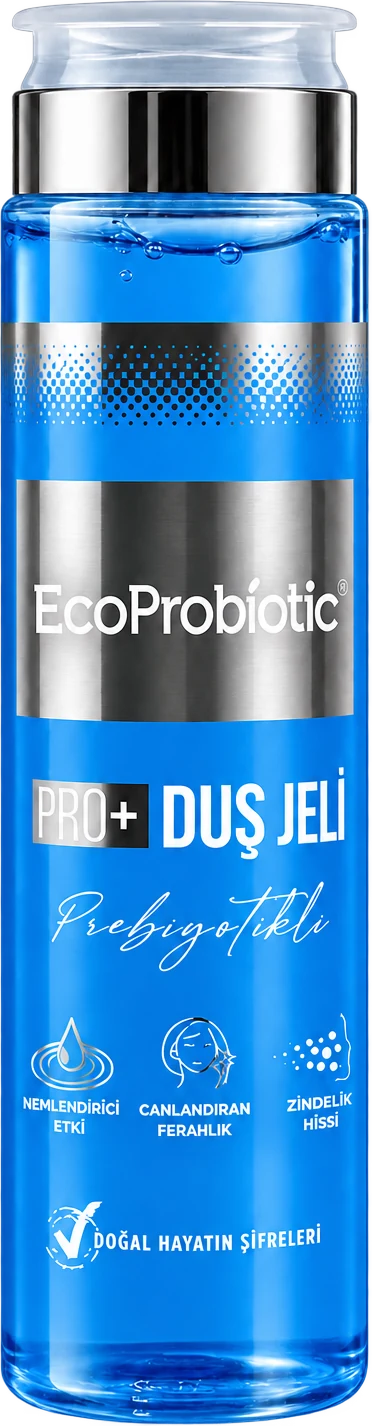 Body01Prebiotic Shower GelThoroughly cleanses the areas that hold sweat; moisturises the skin and supports its barrier. Morning or evening, every day.View ↗
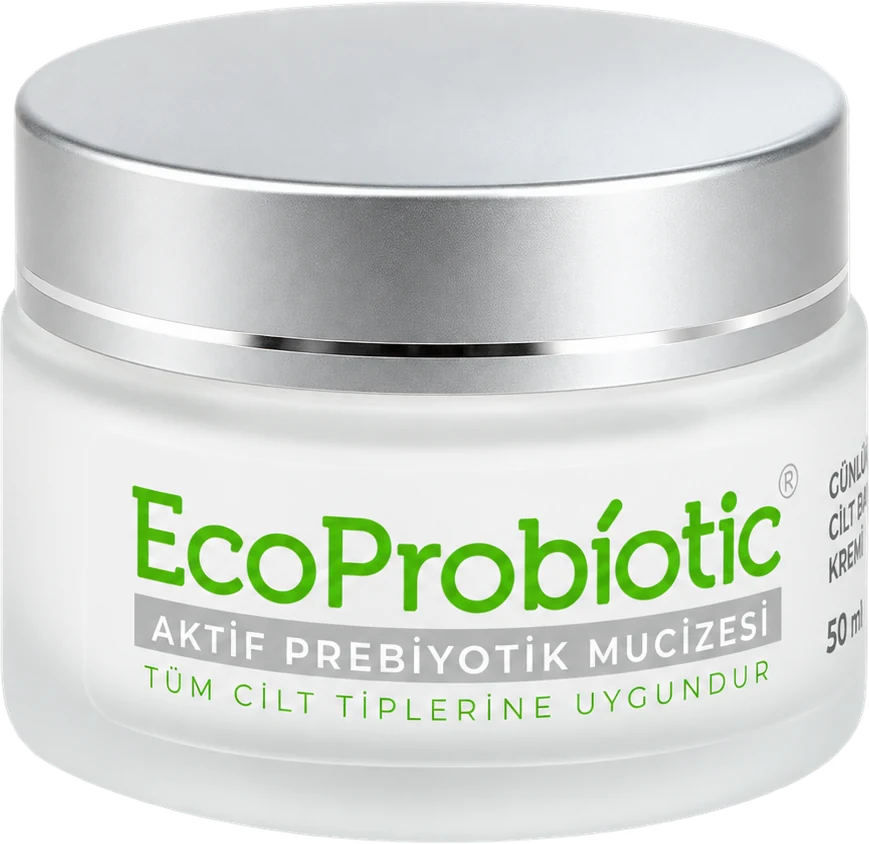 Moisturising02Prebiotic Face CreamA thin layer morning and evening; on shaving days, right after you shave. Moisturises the skin and supports its barrier.View ↗
Sources
- 01Physiology of sweat gland function: The roles of sweating and sweat composition in human health
Baker LB · Temperature · 2019 · doi:10.1080/23328940.2019.1632145
Reviewed how sweat consists largely of water and electrolytes, that its main job is temperature regulation and that it also contributes to skin defense.
- 02Sweat in the pathogenesis of atopic dermatitis
Murota H, Yamaga K, Ono E, Katayama I · Allergology International · 2018 · doi:10.1016/j.alit.2018.06.003
Explained that sweat can contribute to skin hydration and defense, but depending on conditions can also trigger itching and irritation.
- 03Skin infections in athletes
Adams BB · Expert Review of Dermatology · 2010 · doi:10.1586/edm.10.50
Reviewed bacterial, viral and fungal skin infections in athletes and hygiene measures to reduce the risk of transmission.
- 04The science behind skin care: Cleansers
Draelos ZD · Journal of Cosmetic Dermatology · 2018 · doi:10.1111/jocd.12469
Evaluated the effects of cleansers on the skin barrier and the importance of gentle cleansing.