At this stage
What happens to your skin?
01
Same oil, less moisture
Measurements in 150 men aged 20–70 showed that sebum production changed little with age, whereas skin hydration on the face and neck dropped markedly. The biggest drop was measured on the forehead. So in your 40s, your skin can feel both oily and dry.
02
The acid balance shifts
The same study found that facial skin pH rose with age. A less acidic surface can make it harder for barrier lipids to mature and for beneficial bacteria to stay in balance; harsh, high-pH soaps deepen this shift.
03
Lines become permanent
Lines on the forehead, between the brows and at the corners of the eyes are now visible even when you're not making expressions. Collagen loss and sun damage built up over the years are also the main causes of nasolabial folds and a loosening jawline.
04
Redness and broken capillaries
Small blood vessels becoming visible on the nose and cheeks, and facial flushing that increases with heat, alcohol and spicy food, can be signs of rosacea. In men, rosacea is noticed later and can progress to thickening of the nose.
05
Acne decreases but may not go away
About 12% of men aged 40–49 report still having acne. At this age, pimple-like redness that is new or changing can be confused with rosacea or another condition; a doctor's evaluation is important.
From within
The effect of hormones
In a study that followed men aged 40–70 over a long period, total testosterone fell by about 1.6% a year and the testosterone the body can actually use fell by 2–3% a year. The same study showed that DHT rises with age, while chronic illness, obesity and heavy drinking lower androgen levels. That's why hair loss can continue even as testosterone declines; belly fat and inactivity speed up the hormonal decline.
Lower testosterone can show up in the skin as a thinner, less elastic structure that recovers more slowly; muscle loss and low energy can accompany this picture. If fatigue, a marked drop in sex drive and mood changes occur together, the right step is to talk to a doctor and get your blood levels checked. Cortisol and sleep are decisive at this age too: snoring and sleep apnea become more common in your 40s and disrupt both sleep quality and hormone balance.
Focus
Priorities at this age
01
Strengthen your barrier
A moisturizer with ceramides, cholesterol and fatty acids helps support your declining skin hydration. Your face and neck deserve the same care.
02
Use retinol regularly
If your skin has adjusted, increasing retinol to 3–5 evenings a week can help improve the look of lines and texture. For stronger options, your dermatologist may consider prescription retinoids.
03
Sunscreen and a hat
The most effective way to slow the progression of spots and deep lines is daily sunscreen and a wide-brimmed hat outdoors. If your hair is thinning, don't forget your scalp.
04
Take redness seriously
If you have persistent facial redness and broken capillaries, choose soothing care instead of harsh exfoliants, alcohol-based toners and hot water, and talk to a dermatologist.
05
Skin check
Have your moles and sun-exposed areas checked once a year. Moles that change shape, color or size, and sores that bleed or don't heal, should be evaluated without delay.
40s · Ages 40–49
Midfield: hormones dropping, experience rising
Step by step
Skin routine
4 steps
- 01
Gentle cleansing
Choose a slightly acidic, soap-free cleanser. If your skin is getting dry, a non-foaming cream cleanser is easier on the barrier.
- 02
Antioxidant serum
A serum with vitamin C or niacinamide can help reduce uneven tone and the appearance of redness.
- 03
Moisturizer
It may be time to switch to a somewhat richer moisturizer with hyaluronic acid and ceramides. Formulas with prebiotics can help support your skin's balance.
- 04
Sunscreen
Apply a broad-spectrum SPF 30–50 sunscreen to your face, ears, the back of your neck, your neck and the backs of your hands. If your hair is thin, use a spray sunscreen or a hat for your scalp.
What you can add to your routine
When pH changes, the crew changes
The decrease in surface acidity with age can make the environment harder for your skin's beneficial bacteria. Slightly acidic cleansers help maintain this balance.
Stay away from harsh soap
High-pH bar soaps strain both barrier lipids and the microbiome. Use a separate, gentle cleanser for your face and beard.
Care you can use in your routine
EcoProbiotic MenCare range ↗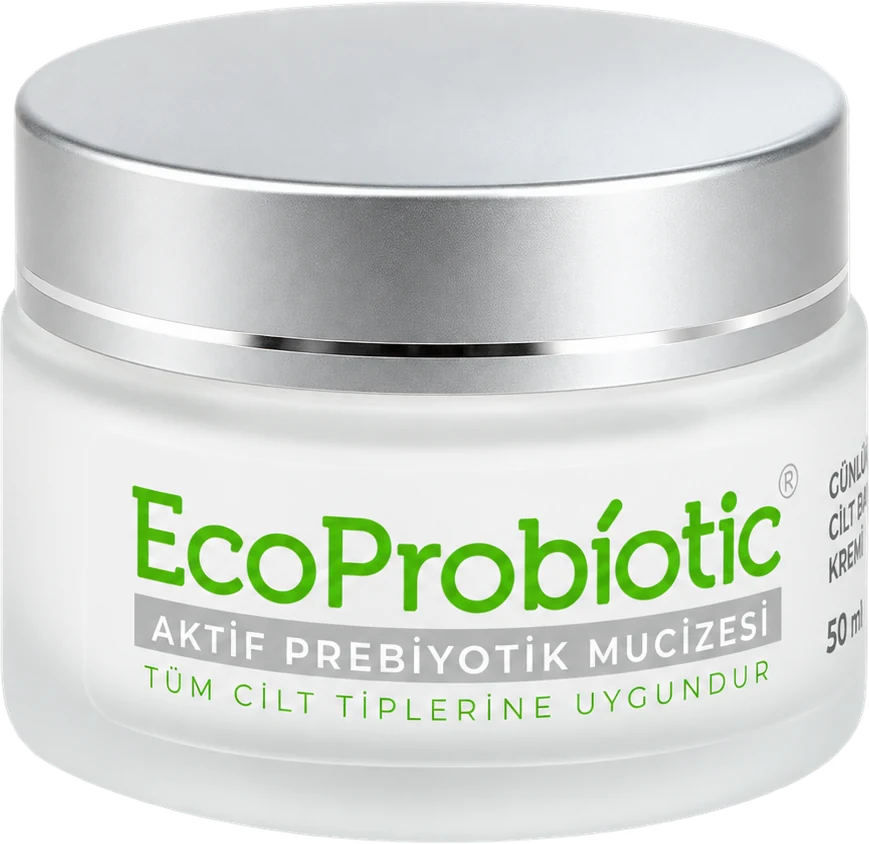 Moisturising01Prebiotic Face CreamA thin layer morning and evening; on shaving days, right after you shave. Moisturises the skin and supports its barrier.View ↗
 Scalp02Prebiotic ShampooFor an oily, itchy scalp. Removes oil and dirt and supports the scalp barrier; suitable for daily use.View ↗
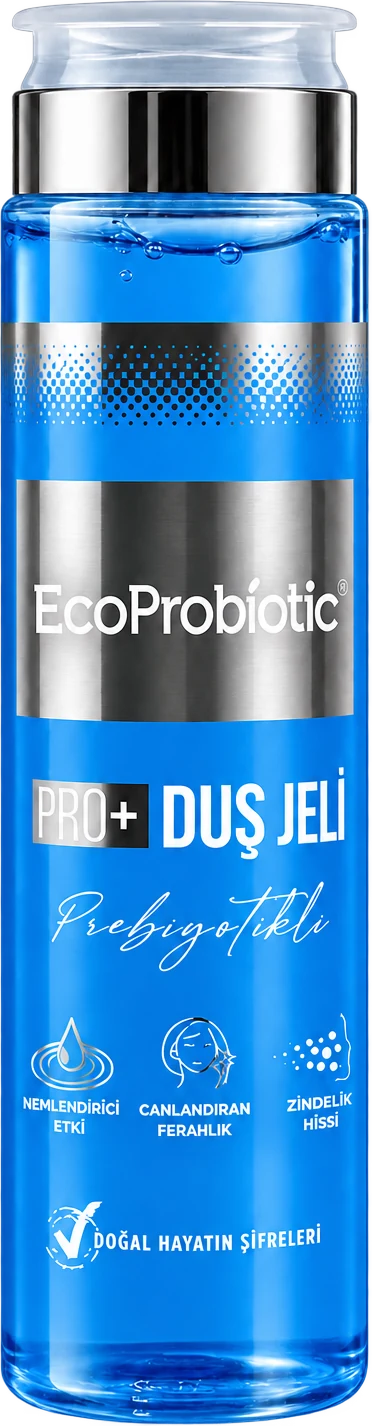 Body03Prebiotic Shower GelThoroughly cleanses the areas that hold sweat; moisturises the skin and supports its barrier. Morning or evening, every day.View ↗
Hair, scalp and beard
Hair and beard routine
5 steps
- 01
Your scalp can dry out
Your scalp also dries out more easily with age. If you no longer need to wash it as often, you can switch to every other day and choose a gentle, moisturizing shampoo.
- 02
Gray hair and beard
Graying of the hair and beard is largely genetic. Gray hairs can be coarser and drier; beard oil or a light balm keeps them soft.
- 03
If the hair loss continues
Male pattern hair loss can slowly progress at older ages too. With your dermatologist's evaluation, medical options and scalp care can be planned together.
- 04
Protect your scalp when dyeing
If you dye your hair or beard, do a patch test on a small area first. Itching, burning or redness can be signs of contact dermatitis.
- 05
Sun on thinning hair
An exposed crown and temples get as much sun as your face. A hat or a sunscreen suitable for the scalp can help reduce the risk of sunspots and burns.
Most common
Common concerns
Rosacea
Persistent redness, broken capillaries and pimple-like bumps on the nose and cheeks. It flares up with heat, alcohol and sun.
Read in the atlas →Sun damage
Deep lines, rough texture and sunspots. From this age on, regular skin checks of sun-exposed areas are important.
Read in the atlas →Dark spots
Brown spots on the cheekbones, forehead and backs of the hands. Their appearance can be reduced with daily sun protection and approaches your dermatologist recommends.
Read in the atlas →Seborrheic dermatitis
More common in men; it can persist as red, greasy flaking under the beard, between the eyebrows and on the scalp.
Read in the atlas →Male pattern hair loss
How it progresses varies from person to person. Early and regular monitoring gives you more options for protecting the hair you have.
Read in the atlas →Under-eye bags
With age, the fat pads under the eyes become more prominent. Balancing sleep, salt and alcohol helps reduce puffiness.
Read in the atlas →Daily life
Lifestyle
Move for your muscles
Strength training at least two days a week and regular brisk walking support muscle mass and hormone balance, and increase blood flow to the skin.
Weight and waistline
Obesity is one of the main factors that lower testosterone levels. Keeping your waistline in check is an investment in both hormone balance and heart health.
Alcohol and smoking
Heavy drinking lowers androgen levels and flares up rosacea; smoking breaks down collagen. Limiting both directly affects how fast your skin ages.
Take sleep and snoring seriously
Loud snoring, pauses in breathing at night and morning fatigue can point to sleep apnea. It affects both your hormone balance and your skin; talk to a doctor.
Protein and color on your plate
Enough protein, omega-3 sources and colorful fruits and vegetables support skin repair. Don't forget to drink water; dry skin sometimes signals a lack of fluids, not just a lack of care.
Popular searches
Most asked about 40s
Your questions
Frequently asked questions
01Does a drop in testosterone affect the skin?+
Testosterone contributes to skin thickness, oil gland activity and collagen structure. Its slow decline with age can show up as thinner skin that recovers more slowly. If fatigue, lower sex drive and mood changes occur together, you should talk to a doctor and get your blood levels checked.
02Why is my skin both oily and dry at 40?+
In men, sebum production changes little with age while the skin's ability to hold water decreases. That's why your T-zone can be shiny while your cheeks and forehead feel tight. A gentle cleanser and a moisturizer with ceramides help strike this balance.
03Why won't the redness on my face go away?+
Persistent redness on the nose and cheeks, visible broken capillaries and flushing that gets worse with heat can be signs of rosacea. Alcohol, hot drinks, sun and spicy food can trigger it. See a dermatologist for a diagnosis and the right approach.
04Can I stop my beard from turning gray?+
Graying is largely genetic and can't be reversed with skin care products. Quitting smoking and eating a balanced diet support overall hair health. You can soften coarser gray hairs with beard oil and balm.
05Is 40 too late to start using retinol?+
No. There's evidence that retinol supports lines, texture and collagen production in aging skin too. Start with a low strength, increase the frequency as your skin adjusts, and don't skip sunscreen during the day.
Scientific basis
Sources
- 01Age trends in the level of serum testosterone and other hormones in middle-aged men: longitudinal results from the Massachusetts male aging study.
Feldman HA, Longcope C, Derby CA, Johannes CB, et al. · Journal of Clinical Endocrinology and Metabolism · 2002 · doi:10.1210/jcem.87.2.8201
Showed that in men aged 40–70, total testosterone declines by about 1.6% a year and bioavailable testosterone by 2–3%, while DHT rises, and that chronic illness, obesity and heavy drinking lower androgen levels.
- 02Longitudinal effects of aging on serum total and free testosterone levels in healthy men. Baltimore Longitudinal Study of Aging.
Harman SM, Metter EJ, Tobin JD, Pearson J, Blackman MR · Journal of Clinical Endocrinology and Metabolism · 2001 · doi:10.1210/jcem.86.2.7219
Showed in 890 men that testosterone declines steadily with age, independent of illness, and that low testosterone reaches a prevalence of about 20% over age 60, 30% over 70 and 50% over 80.
- 03Age-related changes in male skin: quantitative evaluation of one hundred and fifty male subjects.
Luebberding S, Krueger N, Kerscher M · Skin Pharmacology and Physiology · 2014 · doi:10.1159/000351349
Showed in 150 men aged 20–70 that sebum production and water loss changed little with age, whereas skin hydration on the face and neck dropped markedly and facial skin pH rose.
- 04The prevalence of acne in adults 20 years and older.
Collier CN, Harper JC, Cafardi JA, Cantrell WC, et al. · Journal of the American Academy of Dermatology · 2008 · doi:10.1016/j.jaad.2007.06.045
Showed that 42.5% of men reported having acne in their 20s, 20.1% in their 30s, 12% in their 40s and 7.3% after age 50.
- 05Male pattern baldness: classification and incidence.
Norwood OT · Southern Medical Journal · 1975 · doi:10.1097/00007611-197511000-00009
Classified male pattern hair loss into stages in 1,000 adult men and showed that hair loss continues to progress over time, even at older ages.
- 06Seborrheic Dermatitis and Dandruff: A Comprehensive Review.
Borda LJ, Wikramanayake TC · Journal of Clinical and Investigative Dermatology · 2015 · doi:10.13188/2373-1044.1000019
Reviewed how seborrheic dermatitis and dandruff appear in areas rich in oil glands, how sebum, scalp yeast and individual sensitivity play a role together, and the approaches to diagnosis and care.
- 07Tobacco smoke causes premature skin aging.
Morita A · Journal of Dermatological Science · 2007 · doi:10.1016/j.jdermsci.2007.06.015
Reviewed how smoking reduces collagen production, increases the enzymes that break down collagen and elastic fibers, and is a major environmental cause of premature skin aging.
- 08Sunscreen and prevention of skin aging: a randomized trial.
Hughes MC, Williams GM, Baker P, Green AC · Annals of Internal Medicine · 2013 · doi:10.7326/0003-4819-158-11-201306040-00002
Showed that in women and men under 55, skin aging progressed 24% less after 4.5 years in those who used broad-spectrum sunscreen daily compared with those who used it occasionally.