At this stage
What happens to your skin?
01
Thick and oily, but not tireless
Men's skin is thicker than women's and contains more collagen and oil. That's why fine lines show up later. But sun, smoking and lack of sleep quickly wear down this advantage; damage you can't see in your 20s comes to the surface in your 30s.
02
Adult acne is surprisingly common
In a survey of more than a thousand people, 42.5% of men aged 20–29 reported having acne. At this stage pimples tend to concentrate on the jaw, neck and beard line, back and chest; sweat, helmets, tight collars and shaving friction can make them worse.
03
Your beard has settled in, and so have its problems
Shaving every day also takes off a thin layer of the skin's top layer. Coarse, curly hairs can grow back into the skin, leaving bumps, pimple-like inflammation and dark spots. If you grow a long beard, dryness, itching and flaking under the beard come to the forefront.
04
Your hairline starts talking
In genetically predisposed men, a receding hairline at the temples and thinning at the crown can become noticeable in their 20s under the influence of DHT. Male pattern hair loss is the most common progressive type of hair loss in men, and when it's noticed early there are more options.
05
The barrier is sensitive to lifestyle
Too little sleep, alcohol, hot showers and harsh soap increase water loss from your skin. A strong barrier tolerates acne creams and shaving better; a strained barrier pushes back with redness and itching.
From within
The effect of hormones
Testosterone is at its peak in your 20s and, through DHT, affects the oil glands, beard growth and the genetically sensitive follicles on your scalp. The same hormone plays a role in muscle growth, energy and motivation, which is why your lifestyle affects both your skin and your overall performance at the same time.
Sleep is the silent switch in this balance: in healthy young men, sleeping 5 hours a night for one week was shown to markedly lower daytime testosterone. Cortisol, which rises with work, exams and nightlife, can increase skin inflammation and flare up conditions like acne, seborrheic dermatitis and psoriasis. Using hormone-containing products at the gym can also lead to severe acne and faster hair loss; these products should not be used without a doctor's evaluation.
Focus
Priorities at this age
01
Sunscreen every day
A controlled study showed that skin aging progressed markedly less over 4.5 years in people who used sunscreen every day. This is the most valuable skin care investment of the decade.
02
Systematize your shave
Lukewarm water before shaving, a slick gel, a sharp blade, going with the grain and an alcohol-free aftershave. If you're prone to ingrown hairs, a trimmer that leaves short stubble may suit you better than a close shave every day.
03
Don't forget the skin under your beard
If you have a beard, wash it a few times a week, moisturize the skin underneath and apply beard oil or balm to the hair, not the roots. Itching and flaking mean the skin under your beard has dried out.
04
Track your hair early
Photograph your hairline every six months in the same light. If it's receding, talking to a dermatologist early gives you more options for keeping the hair you have.
05
Fewer products, stronger skin
There's no point adding active ingredients before you've nailed the basic trio of cleanser, moisturizer and sunscreen. The simpler your routine, the easier it is to stick with.
20s · Ages 20–29
Peak years: plenty of capital, and the spending has started
Step by step
Skin routine
4 steps
- 01
Gentle cleansing
Wash your face and beard line with a soap-free, slightly acidic gel cleanser. If you're going to shave, this step softens the hairs and makes shaving easier.
- 02
Shave (if needed)
Apply a slick shaving gel, let it sit for a minute or two, then go with the grain using a sharp blade and light pressure. Don't go over the same spot again and again, and rinse the blade after each pass.
- 03
Alcohol-free aftershave
Alcohol-based lotions sting and dry. An alcohol-free balm with panthenol, allantoin or glycerin can help soothe the small irritations shaving causes.
- 04
Moisturizer and sunscreen
After a light, non-comedogenic moisturizer, apply a broad-spectrum SPF 30–50 sunscreen. To save time, a moisturizer with SPF does both jobs in one step; include your ears and the back of your neck.
What you can add to your routine
Balance responds to habits
The bacterial community on adult skin has settled in. Over-cleansing, alcohol-based toners and frequent antibiotic use can disrupt this balance and your skin's comfort.
Your beard is a habitat too
Beard hair and the skin underneath, with sweat, oil and food residue, make a rich environment for microbes. Regular washing and drying keep this balance in check.
Care you can use in your routine
EcoProbiotic MenCare range ↗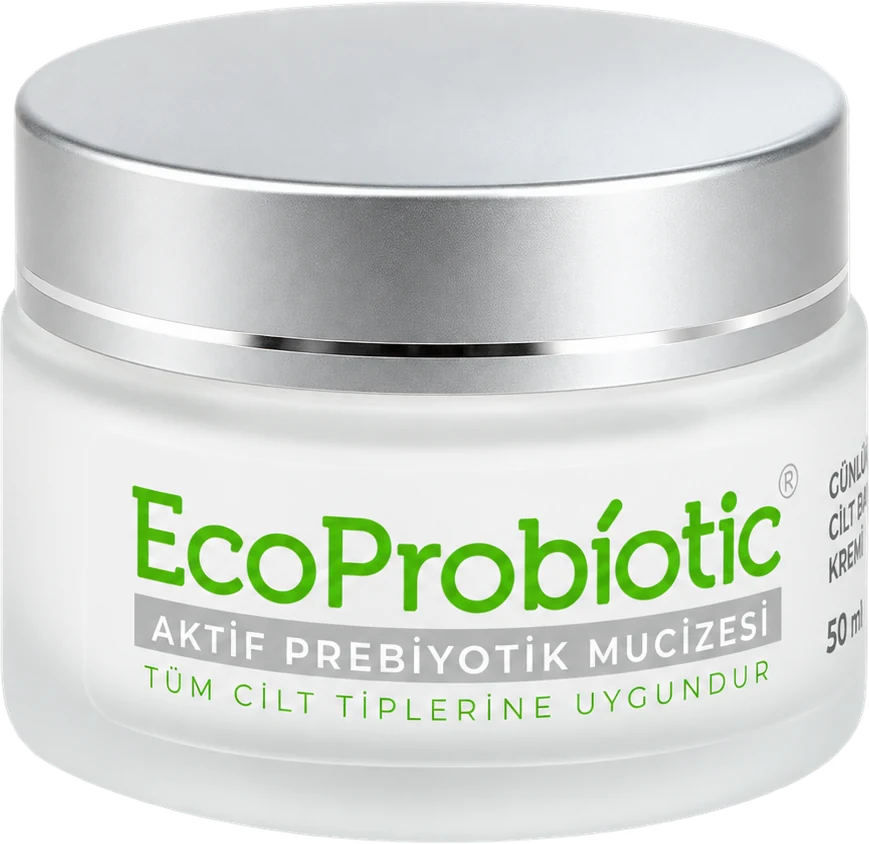 Moisturising01Prebiotic Face CreamA thin layer morning and evening; on shaving days, right after you shave. Moisturises the skin and supports its barrier.View ↗
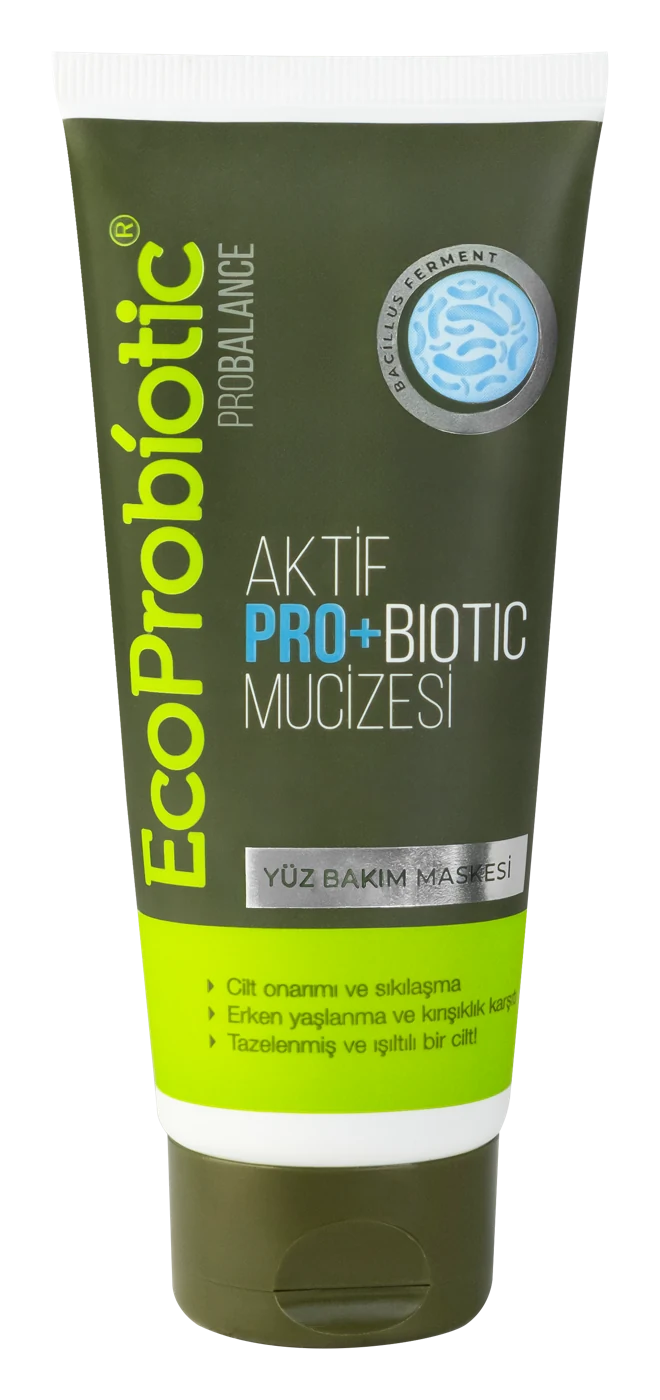 Weekly care02Prebiotic Volcanic Clay MaskOnce or twice a week, for ten minutes. Absorbs excess oil and leaves the skin matte and clean.View ↗
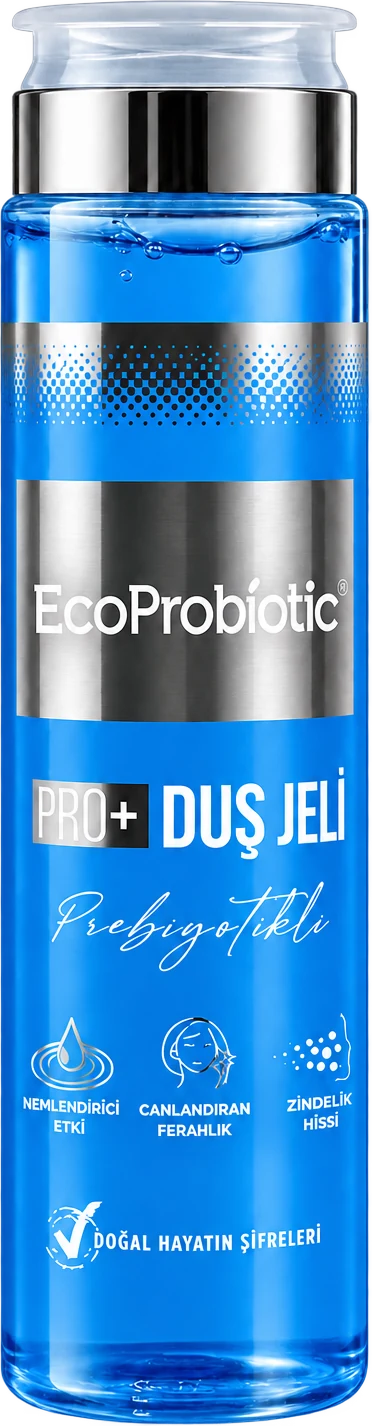 Body03Prebiotic Shower GelThoroughly cleanses the areas that hold sweat; moisturises the skin and supports its barrier. Morning or evening, every day.View ↗
Hair, scalp and beard
Hair and beard routine
5 steps
- 01
Think of your scalp as skin
Your scalp also has a barrier and a microbiome. Depending on how oily it gets, wash it every day or every other day with a gentle shampoo; frequent washing doesn't cause hair loss.
- 02
Dandruff and seborrheic dermatitis
Greasy, yellowish flakes and itching on your scalp and between your eyebrows may point to seborrheic dermatitis. Anti-dandruff (antifungal) shampoos can be used two or three times a week, left on for a few minutes.
- 03
Use styling products wisely
Apply wax, clay and gel to the strands, not the roots, and always wash them out at night. They can trigger pimples along your hairline and forehead.
- 04
Read your shedding correctly
Losing a few dozen hairs a day is normal. Widespread shedding that starts 2–3 months after intense stress or illness is usually temporary; slowly progressing thinning at the temples and crown suggests male pattern hair loss.
- 05
Helmet and beanie hygiene
A motorcycle helmet or sports beanie keeps your scalp sweaty and hot. Wash the liner regularly and don't sit around for long with sweaty hair.
Most common
Common concerns
Adult acne
It affects a significant share of men in their 20s and can flare up along the jaw and neck with sweat and friction.
Read in the atlas →Razor burn
Burning, redness and small bumps after shaving. It usually eases once your technique, gear and aftershave care are fixed.
Read in the atlas →Ingrown hairs
Bumps and dark spots caused by curly, coarse beard hairs growing back into the skin. Taking a break from close shaving is one of the most effective steps.
Read in the atlas →Beard folliculitis
Itchy, pus-filled bumps around beard roots. It can be triggered by dirty gear and frequent shaving; if it's widespread, it needs a doctor's evaluation.
Read in the atlas →Male pattern hair loss
A receding hairline at the temples and thinning at the crown. It progresses with genetics and hormones; seeing someone early gives you more options.
Read in the atlas →Seborrheic dermatitis
Red, greasy flaking between the eyebrows, beside the nose, under the beard and on the scalp. It flares up with stress and lack of sleep.
Read in the atlas →Daily life
Lifestyle
Sleep is testosterone's friend
7–9 hours of sleep a night supports both hormone balance and your skin's overnight repair. Even one week of short sleep has been shown to lower testosterone in young men.
Keep your plate balanced
Enough protein, fish, olive oil, walnuts, colorful vegetables and fiber-rich foods are the basic building blocks for skin and hair. Sugary drinks and fast food can make you more prone to acne.
Smoking and alcohol
Smoking reduces collagen production and increases the enzymes that break collagen down; alcohol dries out your skin and makes facial redness more noticeable. Every habit you drop in your 20s buys your skin years.
Stress management
Work and career pressure raise cortisol. Regular exercise, short walks and screen breaks help reduce how much stress shows on your skin.
Don't underestimate the sun
Sun from pickup soccer, cycling, riding a motorcycle and through the car window adds up. A hat, sunglasses and a sunscreen that also covers your ears and the back of your neck slow the buildup of spots and wrinkles in the long run.
Popular searches
Most asked about 20s
Your questions
Frequently asked questions
01Do men really need a skin care routine?+
Yes. Men's skin is oilier and thicker, and on top of that it's strained by shaving every day. A two-minute routine of cleanser, moisturizer and sunscreen helps reduce acne, razor burn and premature aging.
02Why do I get red after shaving?+
A dull blade, dry shaving, going against the grain and passing over the same spot again and again scrape off the skin's top layer. A wet shave with gel, a sharp blade, going with the grain and an alcohol-free aftershave can noticeably reduce redness.
03Is it normal to lose hair at 20?+
Losing a few dozen hairs a day is normal. A clearly receding hairline at the temples or thinning at the crown, however, may be the start of male pattern hair loss. If early baldness runs in your family, talking to a dermatologist without waiting gives you more options.
04Should men wear sunscreen?+
Absolutely. Most of the spots, wrinkles and sagging on your face are linked to the sun, and even though men spend more time outdoors, they use sunscreen less. An oil-free, fast-absorbing product or a moisturizer with SPF makes it easy.
05Do gym supplements cause acne?+
Hormone-containing products can lead to severe acne and faster hair loss; these products should not be used without a doctor's evaluation. Some people notice their acne gets worse with dairy-based protein powders; if you see such a link, observe your own skin and talk to your dermatologist.
Scientific basis
Sources
- 01The prevalence of acne in adults 20 years and older.
Collier CN, Harper JC, Cafardi JA, Cantrell WC, et al. · Journal of the American Academy of Dermatology · 2008 · doi:10.1016/j.jaad.2007.06.045
Showed that 42.5% of men reported having acne in their 20s, 20.1% in their 30s, 12% in their 40s and 7.3% after age 50.
- 02Male versus female skin: What dermatologists and cosmeticians should know.
Rahrovan S, Fanian F, Mehryan P, Humbert P, Firooz A · International Journal of Women's Dermatology · 2018 · doi:10.1016/j.ijwd.2018.03.002
Reviewed 57 studies and showed that sebum, water loss, blood circulation, pigment and skin thickness are generally higher in men's skin than in women's.
- 03Pseudofolliculitis barbae; current treatment options.
Ogunbiyi A · Clinical, Cosmetic and Investigational Dermatology · 2019 · doi:10.2147/CCID.S149250
Reviewed how coarse, curly beard hairs cut by shaving or plucked with tweezers grow back into the skin, leaving bumps, inflamed pimples and dark spots, and how the condition usually subsides when shaving is paused.
- 04Effect of 1 week of sleep restriction on testosterone levels in young healthy men.
Leproult R, Van Cauter E · JAMA · 2011 · doi:10.1001/jama.2011.710
Showed that limiting sleep to 5 hours a night for one week markedly lowered daytime testosterone levels in healthy young men.
- 05Androgenetic alopecia: a review.
Lolli F, Pallotti F, Rossi A, Fortuna MC, Caro G, et al. · Endocrine · 2017 · doi:10.1007/s12020-017-1280-y
Reviewed how male pattern hair loss is the most common progressive type of hair loss in men and results from genetically predisposed follicles gradually shrinking under the influence of androgens.
- 06Sunscreen and prevention of skin aging: a randomized trial.
Hughes MC, Williams GM, Baker P, Green AC · Annals of Internal Medicine · 2013 · doi:10.7326/0003-4819-158-11-201306040-00002
Showed that in women and men under 55, skin aging progressed 24% less after 4.5 years in those who used broad-spectrum sunscreen daily compared with those who used it occasionally.
- 07Brain-skin connection: stress, inflammation and skin aging.
Chen Y, Lyga J · Inflammation & Allergy Drug Targets · 2014 · doi:10.2174/1871528113666140522104422
Reviewed how psychological stress can increase skin inflammation through hormonal and nervous system signals, trigger or worsen many skin conditions, and contribute to skin aging.
- 08The human skin microbiome.
Byrd AL, Belkaid Y, Segre JA · Nature Reviews Microbiology · 2018 · doi:10.1038/nrmicro.2017.157
Reviewed how the skin microbiome varies by area (oily, moist, dry) and contributes to maintaining the barrier through constant communication with the immune system.