At this stage
What happens to your skin?
01
Dryness is very common
In a study of 756 people aged 65 and older, dry skin (xerosis) was found in more than half. A flaky, finely cracked, itchy dryness is typical, especially on the legs, and gets worse in winter.
02
Renewal and healing are slow
The time it takes the outer skin layer to renew itself lengthens markedly in later life. Small scratches, shaving nicks and friction wounds close much more slowly than in your younger years, which is why protecting your skin is easier than needing treatment.
03
Thin skin, easy bruising
As collagen and the fat layer under the skin decrease, skin gets thinner; bruises can form from minor bumps, especially on the arms and backs of the hands. This is more noticeable in people taking blood thinners.
04
The results of accumulated sun
A lifetime of sun shows up as spots, scaly lesions and an increased risk of skin cancer on the face, ears, a bald scalp and the backs of the hands. Any lesion in these areas that changes or doesn't heal should be shown to a doctor.
05
The microbiome is sensitive to frailty
In later life, changes in the skin microbiome have been shown to be linked more to frailty than to calendar age. Overall health, physical activity and nutrition directly affect your skin's defense crew too.
From within
The effect of hormones
Testosterone decline is more pronounced at this stage: in healthy men followed over long periods, low testosterone values were shown to reach a prevalence of about one in five over age 60, one in three over 70 and one in two over 80. In the skin, this can contribute to thinning, reduced elasticity and slower wound healing; muscle loss, fall risk and bone health are part of the same picture. Hormone evaluation and possible treatment options should only be discussed under a doctor's supervision.
Sleep becomes more fragmented at this age, and itching at night can disrupt it even further. Diabetes, kidney and thyroid disease, as well as many medications, can increase skin dryness, itching and sun sensitivity. New, widespread and persistent itching isn't always just dryness; it can be a sign of an underlying health problem, so you should talk to a doctor about it.
Focus
Priorities at this age
01
Moisturize twice a day
Using a cream with humectants like ceramides, glycerin and urea on your face and body helps reduce dryness and itching. The first three minutes after a shower are the most effective time.
02
Lighten up on cleansing
You don't need to soap your whole body every day. A gentle cleanser for the armpits, groin and feet is enough; for the legs and arms, lukewarm water alone is often fine.
03
Sun protection continues
Sun protection stays important in later life. A hat, long sleeves and sunscreen on exposed areas slow the buildup of new damage.
04
Regular skin checks
A dermatological check at least once a year helps catch lesions early, especially on sun-exposed areas.
05
Don't neglect your feet
Athlete's foot, thickened nails and cracked heels are common at this age. If you have diabetes, it's important to check your feet every day and show even small wounds to a doctor.
60 and over · Ages 60 and over
The senior shield: strengthen your thinning armor every day
Step by step
Skin routine
4 steps
- 01
Face with lukewarm water
In the morning, wash your face with lukewarm water or a very gentle, non-foaming cleanser. Pat dry with a towel without rubbing.
- 02
Shave (carefully)
On thin skin, an electric shaver reduces the risk of nicks. If you shave with a razor, use plenty of gel, keep your skin slightly taut and try to finish in a single pass.
- 03
Rich moisturizer
A rich moisturizer with ceramides, glycerin and prebiotics can help support your skin's barrier and defenses. Apply it to your ears and neck as well.
- 04
Sunscreen
If you're going outside, apply a broad-spectrum SPF 50 sunscreen to your face, ears, the back of your neck, the backs of your hands and any exposed scalp. Add a hat and sunglasses.
What you can add to your routine
Frailty affects the microbiome
In later life, changes in the skin microbiome have been shown to be linked more to overall frailty than to calendar age. Physical activity, nutrition and overall health strengthen your skin's defense crew too.
Less, and gentler, cleansing
Frequent, harsh cleansing reduces both the barrier and the beneficial bacteria of dry skin. Washing only the areas that need it with a gentle cleanser protects the balance.
Care you can use in your routine
EcoProbiotic MenCare range ↗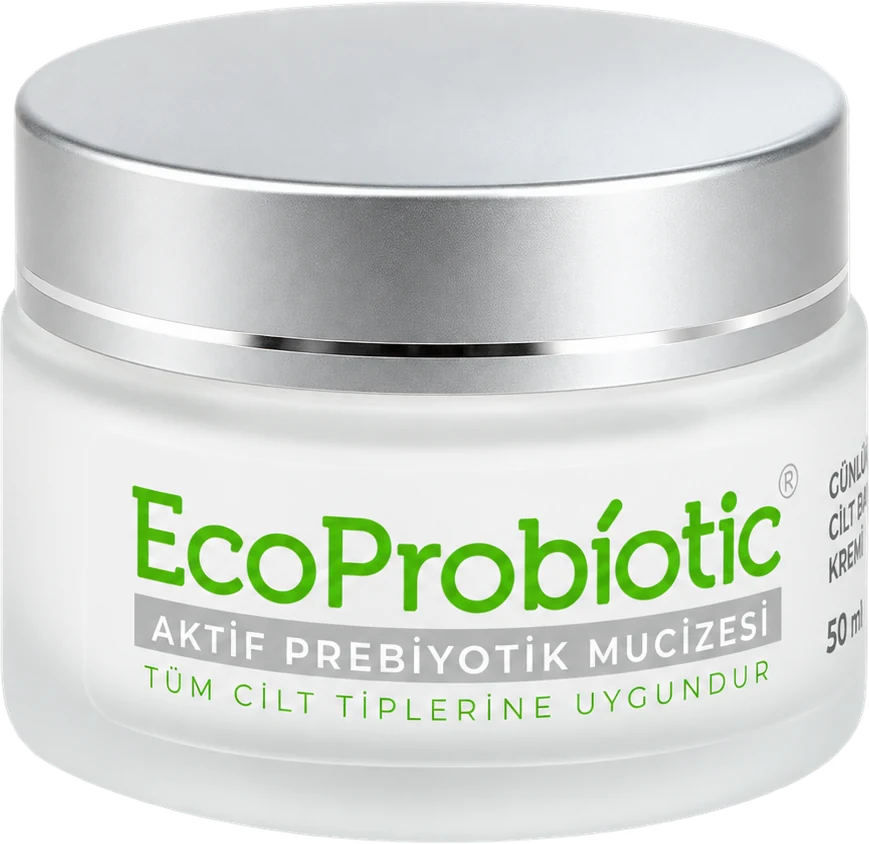 Moisturising01Prebiotic Face CreamA thin layer morning and evening; on shaving days, right after you shave. Moisturises the skin and supports its barrier.View ↗
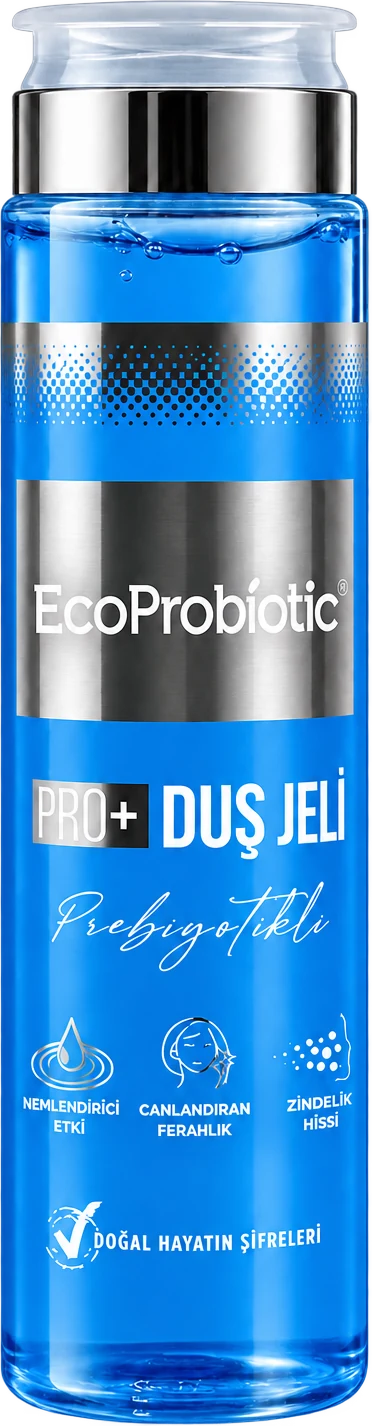 Body02Prebiotic Shower GelThoroughly cleanses the areas that hold sweat; moisturises the skin and supports its barrier. Morning or evening, every day.View ↗
Hair, scalp and beard
Hair and beard routine
4 steps
- 01
Wash less often, use a gentle shampoo
Because scalp oil decreases, washing a few times a week is usually enough. A fragrance-free, gentle shampoo helps reduce scalp dryness and itching.
- 02
A bald scalp is like a face
An exposed scalp is one of the areas that gets the most sun, and sun-related lesions are common there. Outside of indoor spaces, a hat should be a habit you don't skip.
- 03
Scalp itching
Flaking and itching can be signs of seborrheic dermatitis or psoriasis. Anti-dandruff (antifungal) shampoos can help; if it doesn't go away, talk to a doctor.
- 04
Beard and mustache
If you have a beard, wash it a few times a week and moisturize the skin underneath. Dry skin under the beard is prone to itching and flaking.
Most common
Common concerns
Sun damage
Scaly pink patches, sores that don't heal and changing spots. The risk of skin cancer increases in later life; regular checks are important.
Read in the atlas →Age spots and sunspots
Brown spots on the backs of the hands and the face. Most are harmless, but a spot that changes shape or color should always be evaluated.
Read in the atlas →Seborrheic dermatitis
Red flaking on the eyebrows, beside the nose and on the scalp. It can be more common in later life and with some neurological conditions.
Read in the atlas →Foot and nail fungus
Itching and peeling between the toes, and thickened nails. It's becoming more common in aging populations; special care is needed with diabetes.
Read in the atlas →Eczema and dry-skin eczema
Itchy, red, cracked areas caused by dryness in later life. Barrier-repairing care is the basic approach.
Read in the atlas →Psoriasis
Scaly plaques on the elbows, knees, scalp and near the lower back. It's a chronic condition and needs regular follow-up with a doctor.
Read in the atlas →Daily life
Lifestyle
Keep moving
Daily walks and light strength exercises slow muscle loss and support balance and circulation. Your skin's nourishment is directly linked to circulation too.
Water and protein
The sense of thirst decreases with age. A habit of drinking water spread throughout the day and enough protein at every meal support your skin's repair capacity.
Your home environment
In winter, central heating radiators dry out the air. Not overheating rooms and keeping indoor humidity balanced can help reduce skin dryness and nighttime itching.
Review your medications
Some blood pressure, cholesterol and diuretic medications can cause dryness, itching or sun sensitivity. With any new skin problem, tell your doctor about all the medications you take.
Social and mental health
Loneliness and stress affect sleep quality and immunity. Family, friends and regular social activities indirectly support your skin too.
Popular searches
Most asked about 60 and over
Your questions
Frequently asked questions
01Why does skin itch so much in older age?+
The skin's ability to hold moisture and its barrier lipids decrease, and renewal slows. Hot showers, harsh soap and dry indoor air make itching worse. A short lukewarm shower, a gentle cleanser and moisturizing twice a day usually bring relief. Widespread, persistent itching, however, can be a sign of an illness or a medication side effect, so it needs a doctor's evaluation.
02Why do I bruise so easily on my arms?+
In later life, skin gets thinner and the supporting tissue that protects blood vessels decreases; even minor bumps can leave bruises. Blood thinners can make this worse. If you have new, unexplained or very widespread bruises, talk to a doctor.
03Do I still need sunscreen at an older age?+
Yes. Sun damage builds up over a lifetime, and the risk of skin cancer increases in later life. A hat, long sleeves and sunscreen on exposed areas slow the addition of new damage.
04How should you shave older skin?+
On thin skin, an electric shaver reduces the risk of nicks. If you shave with a razor, soften your skin with lukewarm water, use plenty of gel, finish in a single pass with a sharp blade going with the grain, then apply an alcohol-free moisturizer.
05Which lesions should I see a doctor about right away?+
Sores that don't heal or that bleed, bumps that grow quickly, moles that change shape, color or size, and scaly spots on sun-exposed areas that don't go away should be shown to a dermatologist without delay.
Scientific basis
Sources
- 01Prevalence and risk factors for xerosis in the elderly: a cross-sectional epidemiological study in primary care.
Paul C, Maumus-Robert S, Mazereeuw-Hautier J, Guyen CN, et al. · Dermatology · 2011 · doi:10.1159/000334631
Found dry skin (xerosis) in 55.6% of 756 people aged 65 and older; advanced age, drying medications and a history of atopy increased the risk.
- 02Age-associated changes in human epidermal cell renewal.
Grove GL, Kligman AM · Journal of Gerontology · 1983 · doi:10.1093/geronj/38.2.137
Showed that renewal of the outer skin layer, which takes about 20 days in young adults, lengthens by more than 10 days in later life, with the slowdown accelerating especially after age 50.
- 03Associations of the skin, oral and gut microbiome with aging, frailty and infection risk reservoirs in older adults.
Larson PJ, Zhou W, Santiago A, Driscoll S, et al. · Nature Aging · 2022 · doi:10.1038/s43587-022-00287-9
Showed that microbiome changes in later life are linked more to frailty than to calendar age, and that skin microbiome balance is especially important during this period.
- 04Longitudinal effects of aging on serum total and free testosterone levels in healthy men. Baltimore Longitudinal Study of Aging.
Harman SM, Metter EJ, Tobin JD, Pearson J, Blackman MR · Journal of Clinical Endocrinology and Metabolism · 2001 · doi:10.1210/jcem.86.2.7219
Showed in 890 men that testosterone declines steadily with age, independent of illness, and that low testosterone reaches a prevalence of about 20% over age 60, 30% over 70 and 50% over 80.
- 05Age-related changes in male skin: quantitative evaluation of one hundred and fifty male subjects.
Luebberding S, Krueger N, Kerscher M · Skin Pharmacology and Physiology · 2014 · doi:10.1159/000351349
Showed in 150 men aged 20–70 that sebum production and water loss changed little with age, whereas skin hydration on the face and neck dropped markedly and facial skin pH rose.
- 06Tinea pedis: the etiology and global epidemiology of a common fungal infection.
Ilkit M, Durdu M · Critical Reviews in Microbiology · 2015 · doi:10.3109/1040841X.2013.856853
Linked the worldwide rise in athlete's foot to urbanization, widespread use of sports and fitness facilities, obesity and an aging population.
- 07The human skin microbiome.
Byrd AL, Belkaid Y, Segre JA · Nature Reviews Microbiology · 2018 · doi:10.1038/nrmicro.2017.157
Reviewed how the skin microbiome varies by area (oily, moist, dry) and contributes to maintaining the barrier through constant communication with the immune system.